
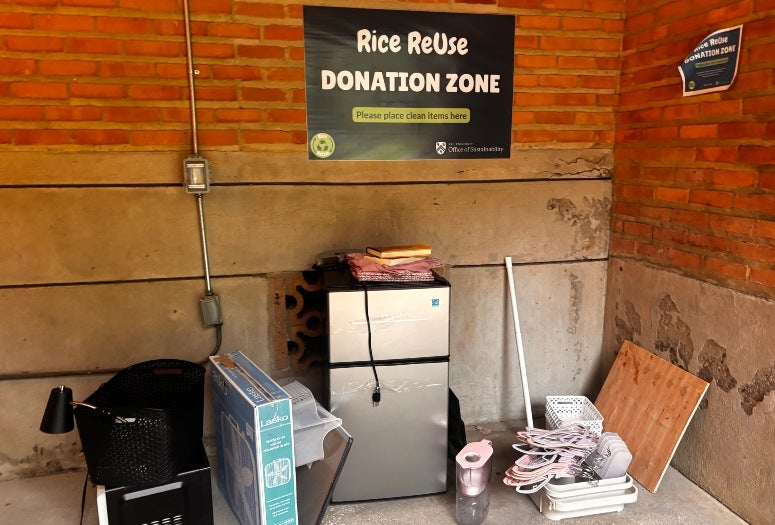
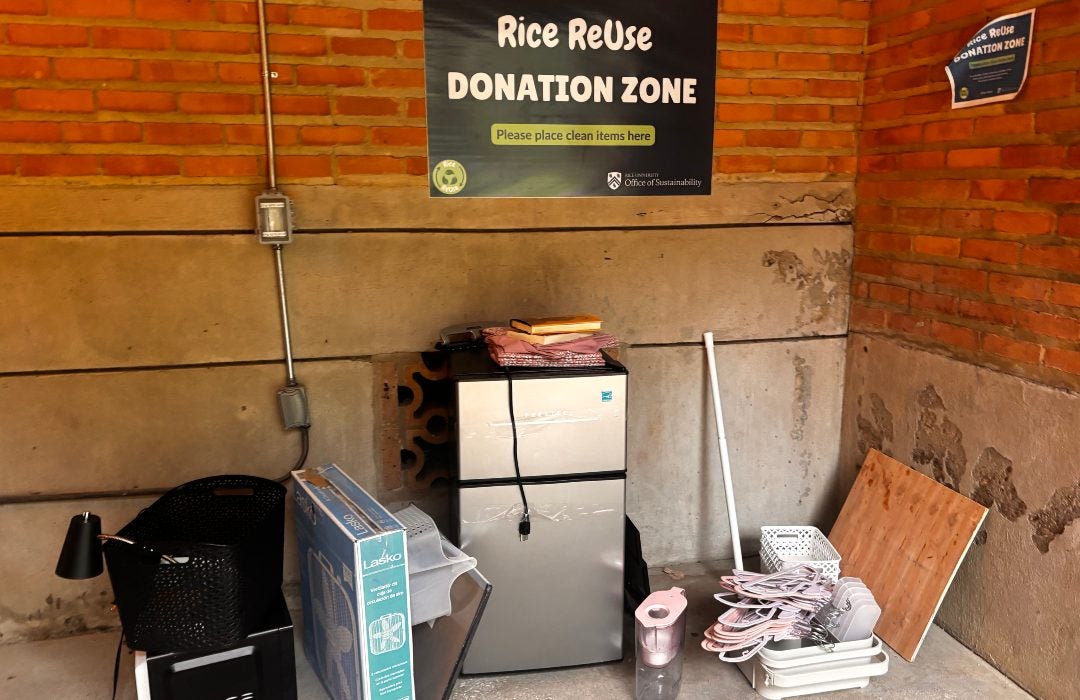
When students move out of Rice University residence halls each spring, usable furniture, appliances and other dorm essentials can be left behind. For Anne Kozlevchar, seeing those items headed for the trash sparked an idea: create a system to give them a second life.
That idea became Rice ReUse, a student-run initiative that collects unwanted dorm items, stores them over the summer and sells them at affordable prices to students during move-in.
Kozlevchar, a Baker College junior studying social policy analysis, first recognized the opportunity after her freshman year. While participating in a Moody Civic Immersion late-departure program, she saw discarded items accumulating across campus and students searching through them for things they could use.
“I was just really shocked,” Kozlevchar said. “All the stuff that we weren’t absorbing into our personal use was just actually going to go in the trash.”
She contacted the Office of Sustainability, Rice Housing, Dining and Hospitality and other campus organizations to find out whether a system existed to redirect usable items. When she learned there was no such program, she began exploring how to build one.
Through methods learned in courses at the Liu Idea Lab for Innovation and Entrepreneurship and under the tutelage of entrepreneurship lecturer Sophie Randolph, Kozlevchar interviewed more than 20 students to understand how they acquired dorm furnishings and what challenges they faced. She found that students had widely varying experiences: Some brought items from home, while others — particularly students coming from outside Texas — purchased furniture and appliances after arriving in Houston.
Students also described difficulties with informal student-to-student sales channels, where listings could quickly disappear or buyers could miss out. Rice ReUse offered a more organized way to connect surplus items with students who needed them.
A small pilot in November 2025 tested the concept. Rice ReUse collected donated dorm items at Baker and McMurtry colleges and held a small sale. The experience helped Kozlevchar refine the collection and sales process before expanding the program the following spring.
In 2026, nearly every residential college participated in the collection effort. Kozlevchar and a small but dedicated team of volunteers collected donations from residence halls and transported them to temporary storage locations before the items were stored off campus for the summer.
The effort culminated in an Aug. 15 sale that sold 367 items to 112 customers.
For Kozlevchar, the most rewarding part was seeing the demand firsthand.
“It was incredible just how many people had gotten the message and were willing to stand in the heat just to adopt one of these items,” she said.
Parents told the Rice ReUse team that the program saved money and made move-in more convenient. Some families used the sale as a first stop before shopping elsewhere for items they still needed. Students also expressed interest in helping sustain the program after Kozlevchar graduates.
Rice ReUse has since become part of the Rice Living Lab Program, which transforms the university into a dynamic testing ground where students, faculty and staff collaborate to address real-world sustainability challenges on campus.
Building the program also taught Kozlevchar that turning an idea into a working initiative requires flexibility.
“There’s sometimes no perfect outcome, but you just do the best you can with what you’ve got and the time frame that you have,” she said.
Kozlevchar said she hopes Rice ReUse will continue growing after she graduates. She also hopes students will eventually return their gently used items to the program when they no longer need them, creating a continuing cycle of reuse.
The initiative remains a small operation, though Kozlevchar said she is looking for additional students interested in sustainability, logistics and community engagement to join the effort.
By connecting students who have usable items with students who need them, Rice ReUse is addressing two campus challenges at once: reducing waste and making college life a little more affordable.