
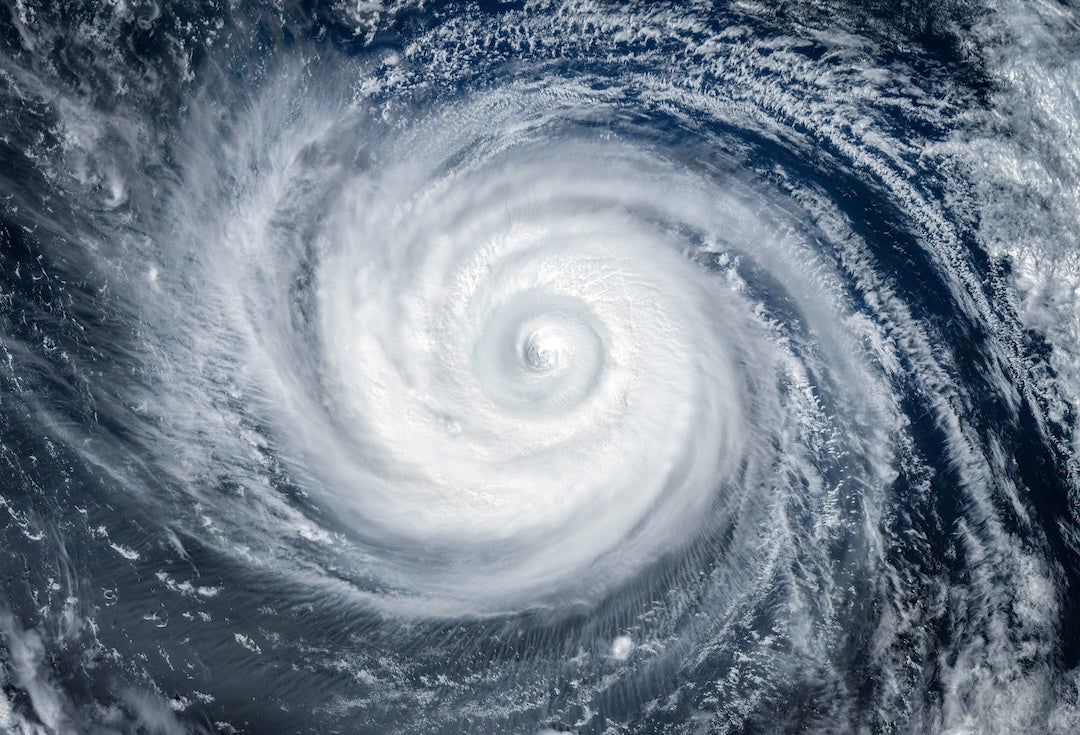
Rice University researchers Avantika Gori and Guha Balakrishnan are developing an open-source tool using NASA’s artificial intelligence weather and climate model Prithvi-WxC to simulate thousands of potential tropical cyclones and better estimate hurricane hazards and insurance risk.
The project, titled “Leveraging Large Earth Foundation Models for Probabilistic Hurricane Hazard Assessment,” addresses a central challenge in hurricane risk modeling: Major storms are rare, leaving researchers and insurers with limited historical data for estimating the likelihood and severity of future losses. By creating large sets of realistic simulated storms, the researchers hope to provide a clearer picture of potential wind, rainfall and property risks.
“AI gives us an opportunity to explore thousands of realistic storms that history alone cannot provide,” said Gori, an assistant professor of civil and environmental engineering and the project’s principal investigator. “Our goal is to turn those simulations into practical information that helps researchers and insurers better understand hurricane risk and how it may change.”
The work also seeks to address the insurance protection gap, which occurs when insurance coverage is insufficient to cover losses from disasters. Climate change and continued development in hazard-prone areas have contributed to rising insured losses, creating challenges for insurers and property owners.
“By enhancing the accuracy of natural hazard risk estimates, we hope to reduce uncertainty for insurers and reinsurers, enabling more transparent pricing and greater willingness to insure complex risks,” Gori said.
Simulating hurricanes that have not happened
A foundation model is trained on large amounts of data and can be adapted for different tasks. The Rice researchers will use NASA’s Prithvi-WxC foundation model, which was developed with IBM, to create synthetic tropical cyclones or computer-generated storms that represent events that could occur rather than storms that have already occurred.

An average Atlantic hurricane season produces 14 named storms, including seven hurricanes and three major hurricanes, according to the National Oceanic and Atmospheric Administration. The relatively small number of storms limits the historical record available for estimating the likelihood of rare but destructive events.
To expand that record, the Rice team aims to develop a dataset of about 10,000 synthetic cyclones. The researchers will test how many storms the tool can generate during different computing periods. The resulting dataset will allow them to examine a broader range of possible storm tracks, wind conditions and rainfall patterns.
A new method
Previous methods for generating synthetic storms have relied on relatively simple statistical tools. New AI weather models can generate storms quickly while better accounting for interactions between a storm and its environment.
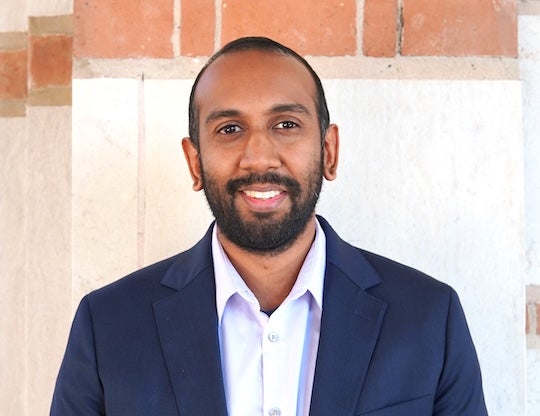
The research team will leverage Prithvi-WxC to simulate a storm’s path and surrounding weather conditions from its early stages until it dissipates. The researchers will then refine the simulations with physics-informed models to produce detailed estimates of wind and rainfall, including complex features such as spiral rainbands.
They are also designing the tool to evaluate hurricane hazards under different climate scenarios. This could help researchers and insurers assess how hurricane risks may change over time. The framework could eventually be adapted to analyze other natural hazards.
“Computer vision techniques can identify and learn complex patterns in data, and this project gives us an opportunity to combine those methods with our physical understanding of hurricanes,” said Balakrishnan, assistant professor of electrical and computer engineering and the project’s co-investigator. “Bringing those approaches together can help us build models that are useful while remaining grounded in how storms behave.”
Building more resilient communities
The simulations will allow researchers to estimate the probability of hurricane landfalls and the severity of wind and rainfall that different locations could experience over time.
The results will support portfolio-level risk assessment, or estimates of the combined financial exposure across a collection of insured properties. Insurance can help communities recover from major storms by distributing financial risk and providing resources to rebuild.
This project collaborates with CERCat, an industry consortium from Rice and Lehigh Universities that connects researchers with industry. It also advances two priorities in Rice’s Momentous strategic plan: building thriving urban communities and generating sustainable futures.
“Better risk estimates can reduce uncertainty about the hazards facing homes and communities,” Gori said. “More accurate and transparent information can help the insurance and reinsurance industry make better-informed decisions about complex risks, particularly in hurricane-prone areas.”
The interdisciplinary team draws together efforts supported by Rice’s Ken Kennedy Institute research clusters on AI for urban resilience and computer vision. Gori will contribute expertise in the physical processes that shape hurricanes while Balakrishnan will contribute expertise in computer vision techniques.
The research team plans to make the tool open source so others can examine, use and build on the framework.