
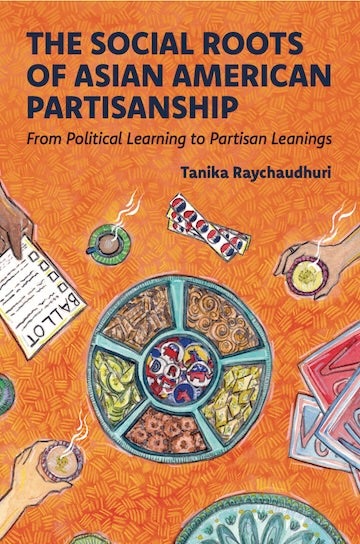
When political scientists study how Americans develop their political beliefs, they often begin with the family.
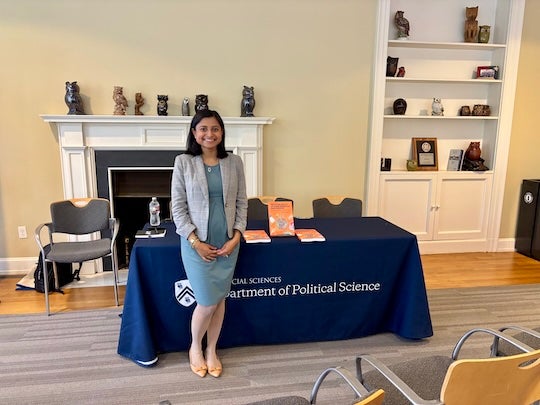
But according to Rice University assistant professor of political science, Tanika Raychaudhuri, that traditional explanation doesn’t tell the whole story for many Asian Americans.
Drawing on in-depth interviews, surveys and years of research, Raychaudhuri’s work argues that many Asian Americans develop political identities through friendships, workplaces and community networks rather than conversations around the family dinner table.
“I wanted to better understand how members of one of America’s fastest-growing racial and immigrant populations learn about the American political system and identify with political parties,” Raychaudhuri said.
The project began about a decade ago as Raychaudhuri’s doctoral dissertation. Inspired in part by her own experiences as the daughter of immigrants from India, she sought to better understand how members of one of America’s fastest-growing racial and immigrant populations come to learn about the American political system and develop their political identities.
Rather than treating Asian Americans as a single voting bloc, she examines both the diversity and shared experiences among communities with roots in East, South and Southeast Asia, including recent shifts in voting patterns while asking a broader question: How do people learn about politics in the first place?
Many long-standing theories emphasize parents as children’s primary political influence. Raychaudhuri found that pattern often differs for first- and second-generation immigrants.
“A lot of Asian Americans who I interviewed in the Houston area didn’t talk about American politics too much when they were growing up and instead learned about politics through social interactions with people outside of the home,” she said.
That observation became the foundation for what Raychaudhuri calls the “social transmission” of political attitudes: the idea that everyday interactions with friends, classmates, co-workers and neighbors can play a central role in shaping political beliefs.
“As immigrants come to the U.S., they often don’t have too much of a prior understanding of the political system and political culture,” Raychaudhuri said. “The existing frames of politics they are exposed to within local contexts can be really formative.”
The findings also suggest political identities are more dynamic than commonly assumed in diverse Asian American communities. As social networks evolve, so can political preferences.
“We’ve seen long-standing patterns of growing Democratic support in the Asian American community, but also some movement away from Democrats in recent election cycles,” Raychaudhuri said. “The dynamics of political learning are not predetermined in these communities.”
The work arrives as Asian Americans continue to be among the nation’s fastest-growing populations, making a deeper understanding of their political development increasingly important.
“Their political perspectives are really central to understanding the future of American politics, especially as elections are decided on very thin margins,” Raychaudhuri said.
Since joining Rice two years ago, Raychaudhuri has continued expanding her research from Houston, whose diverse Asian American population offers an ideal setting for studying emerging patterns of civic engagement.
“Houston has this large and diverse growing Asian American population, but it looks a little different from some other immigrant hubs like Los Angeles and San Francisco,” she said. “Being in Houston has been a great place for doing this work.”
Looking ahead, Raychaudhuri is shifting some of her attention from voting behavior to political representation. She is collaborating with Rice political scientist Rithika Kumar and a team of undergraduate researchers to build a database of South Asian candidates who have run for local office across the United States.
As Asian American communities continue to grow, Raychaudhuri said she hopes her research informs not only future scholarship but also how civic organizations engage immigrant communities.
“One big takeaway that civic organizations but also political parties might be able to draw from this research is that they can tap into immigrant peer networks to engage members of these communities in the political system,” she said.
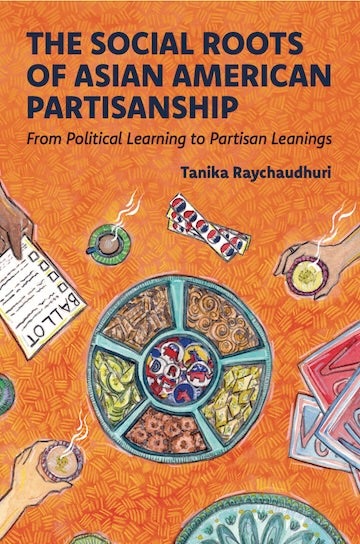
The research is detailed in Raychaudhuri's book “The Social Roots of Asian American Partisanship: From Political Learning to Partisan Leanings,” which recently won the best book in Race, Ethnicity, and Representation from the American Political Science Association.
“It was really exciting and such an honor,” Raychaudhuri said. “I’ve been working in this field for a while, and so many people have made important contributions. I’m really proud, but also humbled.”