
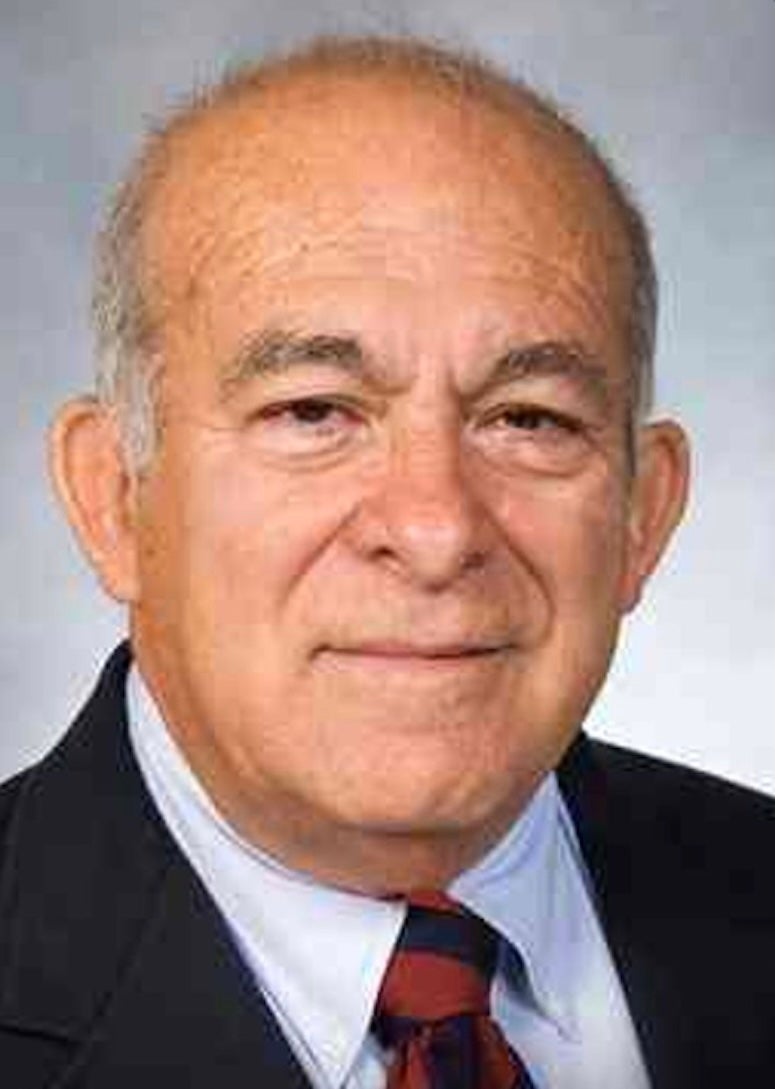
Dagobert “Bob” L. Brito, a longtime Rice University economics professor whose connection to the university spanned decades as a student, scholar and teacher, died Sept. 16 in Mexico. He was 85.
Brito was the George A. Peterkin Professor Emeritus of Economics and a Rice Faculty Scholar in International Economics at the Baker Institute for Public Policy. A three-time Rice alumnus, he earned his bachelor’s degree in economics in 1967 and his master’s and doctoral degrees in economics in 1970.
After teaching at Tulane University, Ohio State University and the University of Wisconsin-Madison, Brito joined the Rice faculty in 1984. He remained at Rice until his retirement in 2017, building a career distinguished by wide-ranging scholarship and a deep commitment to teaching and encouraging students.
“We send our deepest condolences to professor Brito’s family and loved ones,” said Rachel Kimbro, dean of the School of Social Sciences. “His unwavering dedication to his students and his field made a lasting mark on the Rice Economics community.”
Brito’s research crossed disciplines and explored questions spanning economics and public policy. His expertise included public economics, economic theory, energy economics, the economics of arms control and political science. His research interests included optimal tax theory, the economics of defense, energy economics, law and economics and technological change and the distribution of income.
“His passion was political economy,” said Flávio Cunha, chair of the Department of Economics. “He helped build the formal economics of arms races and nuclear proliferation. In his last years on the faculty, he was deeply enthusiastic about his work with Rice’s Nobel laureate chemist Robert Curl on the effects of technological change on inequality.”
Brito’s work appeared in leading academic journals including the American Economic Review, Econometrica, the Journal of Political Economy, the Journal of Public Economics, the Journal of Economic Theory and the International Economic Review.
Teaching was also central to Brito’s academic life. His commitment to students led Rice to establish the Dagobert L. Brito Award for Best Performance by a Recitation Instructor in Economics.
“He cared deeply about his students and teaching,” said Amy Dittmar, the Howard R. Hughes Provost and executive vice president for academic affairs. “The award is a reflection of his belief that teaching and encouraging students were among the most important parts of a professor’s work.”
Brito’s academic career also reflected the international perspective that shaped his life. Born in Mexico, he came to the United States as a toddler and grew up in Brownsville, Texas. He later served in the U.S. Army in Thailand. In 1987, he returned to Mexico as a visiting professor at the Instituto Tecnológico Autónomo de México through the U.S. Fulbright Program.
Away from academia, Brito’s family remembered a man whose curiosity extended far beyond economics. He loved photography, airplanes, travel and long conversations and was known for his desire to learn about nearly any subject.
Brito and his wife, Patricia, married in 1968 and spent more than 50 years together before her death in 2021. They traveled widely, entertained friends and built a life that his family remembered as filled with conversation, laughter and curiosity.
Following Patricia’s death, Brito returned to Mexico and lived with his sister in Metepec. He spent his final day watching Mexico’s Independence Day parade, an event his family said he had been eagerly anticipating.
Brito is survived by eight siblings and numerous nieces and nephews.
His family described his life as “long, interesting and wonderfully full,” one marked by intellectual curiosity, adventure and a lasting desire to understand the world around him.