
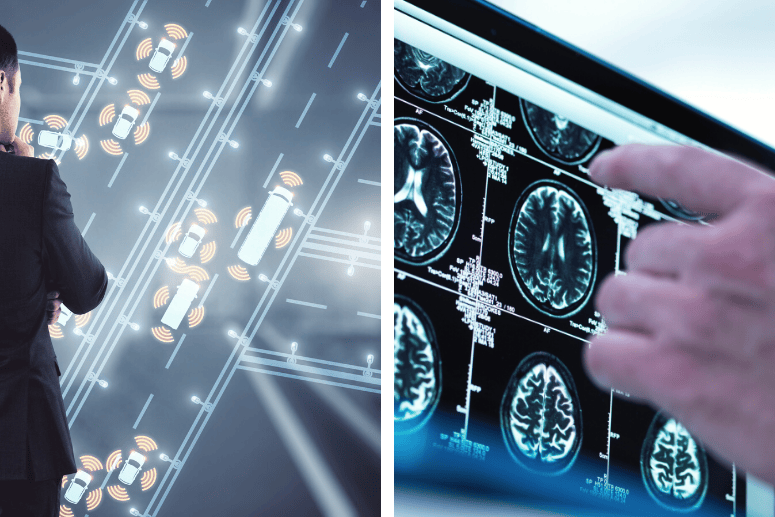
What happens when humans and artificial intelligence share control in high-stakes situations? How does the brain learn to read, and what happens when that ability is disrupted?
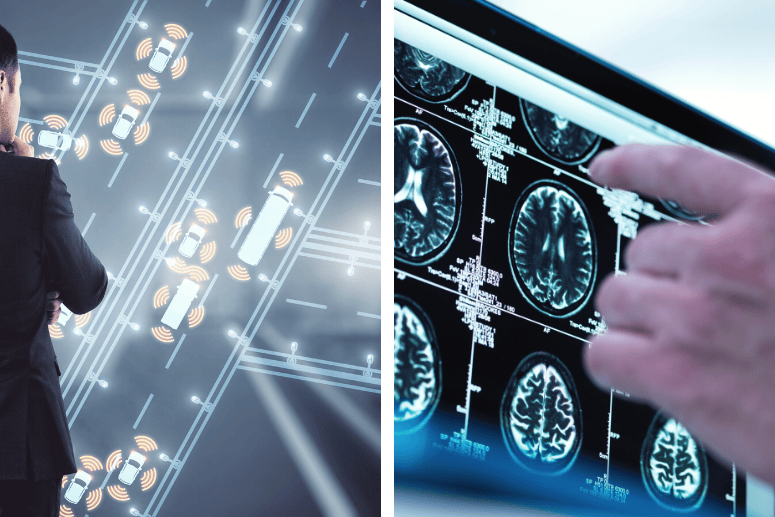
These questions are driving the work of two Rice University researchers recently named fellows of the Association for Psychological Science, one of the field’s leading international organizations.
The honor recognizes sustained contributions to psychological science and places Jing Chen and Simon Fischer-Baum among a select group of researchers whose work is shaping how science connects to everyday life.
At Rice, that work spans everything from improving the safety of AI-driven systems to expanding access to literacy for people around the world.
Making AI systems safer and smarter
Chen’s research focuses on a question that is becoming more urgent as technology advances: how humans and machines work together.
Her work follows a scientist-practitioner model, using theory-driven approaches to address real-world challenges in areas like automated driving, cybersecurity and unmanned aerial systems.

“At the center of my work is the interaction between humans and automated systems, including AI-enabled systems,” Chen said. “As automation becomes more integrated into complex environments, we need evidence-based approaches to design systems that support decision-making, improve safety and enhance human performance.”
Her research explores trust in automation, human performance limitations and how people interpret risk, all of which influence how effectively people interact with technology.
She is currently focused on how systems can dynamically shift responsibility between humans and automation in real time, an approach that could improve both safety and efficiency across industries.
Understanding how humans learn to read
Fischer-Baum’s research involves one of the most fundamental human abilities: literacy.
“My research focuses on the cognitive and neural basis of how humans are able to achieve literacy, to read and write,” he said.
His work spans both basic and applied science, from understanding how the brain supports reading to improving education and rehabilitation for individuals with brain injuries.
Fischer-Baum has studied a wide range of readers, including people who are blind, individuals with brain damage and users of different writing systems. One of his most influential areas of work examines how people read Braille, a field that has historically received limited attention in cognitive science.

“Braille is how many people who are blind or visually impaired access the benefits of literacy, yet it has largely been understudied,” he said.
Through long-term collaborations, Fischer-Baum and his colleagues, including Robert Englebretson from Rice’s Department of Linguistics, have helped build a growing research community focused on Braille reading and translating those insights into better educational practices and policies.
His recent service as a program officer at the National Science Foundation has also shaped his perspective, giving him a broader view of how psychological science connects to national research priorities.
To Fischer-Baum, the APS recognition reflects impact beyond his specialty and across the discipline as a whole.
“This honor indicates that my work is valuable not just to my subfield but to the entire field of psychological science,” he said.
From research to real-world impact
Together, Chen and Fischer-Baum’s work reflects a shared strength of Rice’s psychological sciences community: connecting foundational research to real-world challenges.
Whether improving how humans collaborate with AI or expanding access to literacy, their work shows how psychological science shapes the systems people rely on every day.
Fischer-Baum is now helping lead the development of the Rice Brain Institute’s Brain and Society initiative, which aims to strengthen those connections between discovery and impact.
“I think fundamental science needs to be connected to societal impact in concrete, specific and actionable ways,” he said.