

Quantum entanglement is a state in which particles are entwined with each other. In this entwined state, the properties of one particle influence the other, even when they aren’t physically close to each other. This phenomenon has often been observed in small quantum systems with only a few particles in them, where researchers can use it to store and process quantum information. Rice University professor Qimiao Si is interested in understanding and applying quantum entanglement to macroscopic systems with vast numbers of particles.
In a paper recently published in Nature Communications, Si described a method that could lead to not only better understanding of quantum entanglement in quantum materials but also more ready usage of quantum entanglement in macroscopic systems. His theory posits this can be done by coupling quantum materials to quantum light.

“In this theory, by placing matter in a small mirrored cavity and pushing it towards what is called the quantum critical point, we can then introduce photons and induce quantum entanglement in the photon-matter hybrid,” said Si, the Harry C. and Olga K. Wiess Professor of Physics and Astronomy and director of the Extreme Quantum Materials Alliance.
It has long been a challenge to create these cavity photon-matter hybrids. Theoretical work shows that in order to hybridize, the light and matter would have to have very strong interactions, which would be difficult to engineer. This new theory, however, proposes that this threshold for entering the hybrid entanglement state could be lowered by bringing the material close to its quantum critical point.
“You can think of the quantum critical point as the point in which a material can ‘choose’ between two different quantum phases,” said Yiming Wang, a Rice graduate student and co-first author of the study. “The material is in one phase. Only by reaching the quantum critical point can it transition into the second phase.”
In this new theory, researchers could amplify the entanglement of light and matter with nonthermal methods, relying instead on the forced proximity of matter to a quantum critical point. Nonthermal methods, like pressure or changing one chemical component for another, are used to push the material towards the quantum critical point. The closer the material gets to its quantum critical point, the more the threshold for strong quantum entanglement drops. If light is introduced into the mirrored cavity while the material is near its quantum critical point, it should be drastically easier to entangle the two.
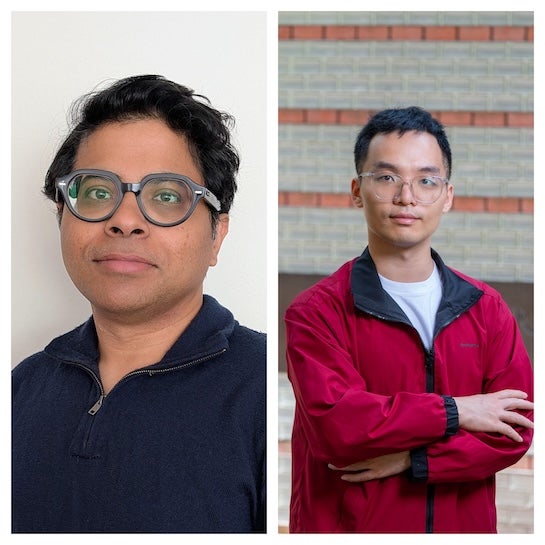
“Once the light and matter become entangled, their individual properties reflect each other,” said Shouvik Sur, former postdoctoral fellow at Rice and co-first author on this paper. “If the material enters the quantum critical point when entangled to light and transitions to the second phase, the light will transition as well.”
Experimental physicists could therefore use this method to not only cause entanglement of light and matter but to also study the entangled particles in a variety of phases using existing methods for both light and material. It also provides a way for researchers to use the quantum entanglement in next-generation quantum technologies.
Last year, Si’s group discovered that quantum entanglement is both present and enhanced in the quantum critical materials known as strange metals. That quantum entanglement could be an important resource for quantum technologies — if scientists could work out how to extract it. This new theory would allow extraction of the quantum entanglement using quantum light: After the photons and matter become entangled, the light can be extracted from the cavity. Such a system could allow for developing next-generation technologies like quantum sensing.
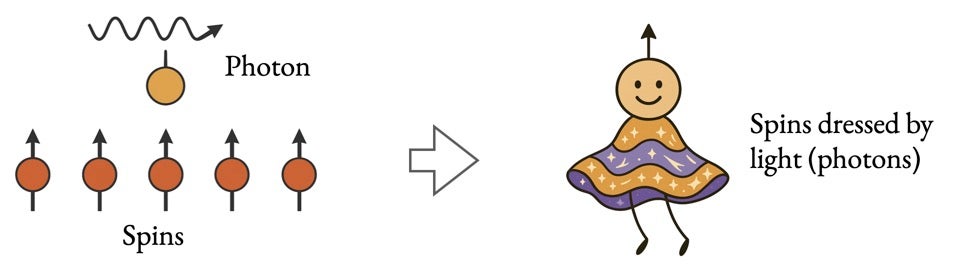
“Ultimately, this uncovers a pathway of using quantum light to retrieve matter’s quantum entanglement,” Si said. “This could lay the groundwork for extracting the resources of quantum entanglement and realizing new functionality out of quantum materials.”
The work was funded by the U.S. Department of Energy Office of Science’s Basic Energy Sciences program (DE-SC0026179), Air Force Office of Scientific Research (FA9550-21-1-0356), the Robert A. Welch Foundation (C-1411) and the Vannevar Bush Faculty Fellowship (ONR-VB N00014-23-1-2870).