

Rice University philosopher Amy Berg makes that case in “The Well-Rounded Life,” available beginning Nov. 10. Her broader argument holds that people who pursue a wide range of interests tend to live richer lives, ones that are more socially connected, happier and more resilient.
The idea may sound like common sense, yet philosophy has rarely examined it. When Berg searched the literature, she found just one article on being well-rounded published in 1987 and set out to build on it.

The book draws on Aristotle and Scottish philosopher David Hume, who wrote about how his hobbies mattered to his philosophical work, along with research in psychology and sociology and plenty of art, literature and pop culture. A 2023 summer stipend from the National Endowment for the Humanities along with funding from the Humanities Research Center and Rice Creative Ventures supported the project.
Berg’s chapter on why it’s OK to be bad at things began as a supporting argument. A life spread across many pursuits, she reasoned, almost guarantees uneven skill, so defending that life meant defending falling short of perfection in some pursuits. The chapter grew into the heart of the book, and Berg has found it resonates even with people who never cared much about being well-rounded, including the students she talks with about these ideas.
“I want people to get comfortable being bad at things, but I also know it can be really hard,” Berg said. “A cherished hobby is often the easiest place to accept mediocrity. It’s harder in your major or your career. But if you’ve had practice being bad at things, it becomes easier to accept when you’re wrong, to accept when you fail and to pick yourself up and try again. It’s all those kindergarten slogans.”
Berg says she has these conversations often, usually when students stop by to talk through their career plans.
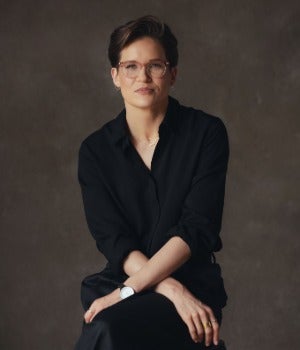
“This is all happening against the backdrop of really competitive med school and law school admissions, where grades matter,” Berg said. “There are difficult questions about how to live a good life in circumstances where the ideal life may just not be possible.”
The book takes those trade-offs seriously, weighing the well-rounded life against other types of living a person might pursue. It also points to a quieter benefit of variety, one Berg illustrates with “Calvin and Hobbes.”
In a series of strips, Calvin devours Chewing, a glossy magazine for gum enthusiasts. Cartoonist Bill Watterson, an avid cyclist, based the gag on the magazines from his own hobby.
“Look at a cycling magazine or a woodworking magazine or a magazine for any hobby, and you’ll see tremendous diversity within basically anything,” Berg said. “Cyclists have really specific gear. Woodworkers care about the kinds of saws they use. If you don’t look for that, you might think the thing you care about is especially interesting or valuable. But that value is lurking almost anywhere you look.”
Berg, an associate professor of philosophy who studies ethics and the philosophy of well-being, said she hopes readers will test the book’s ideas against their own lives.
“I’m not saying everyone should try to live as well-rounded a life as they possibly can,” Berg said. “Some people are probably better off focusing on something really specific. But you don’t know the best life for yourself until you’ve thought through the alternatives.”