
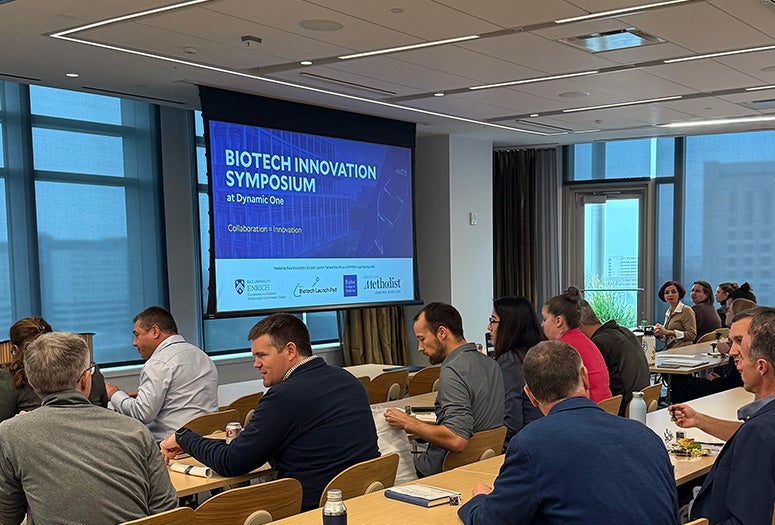
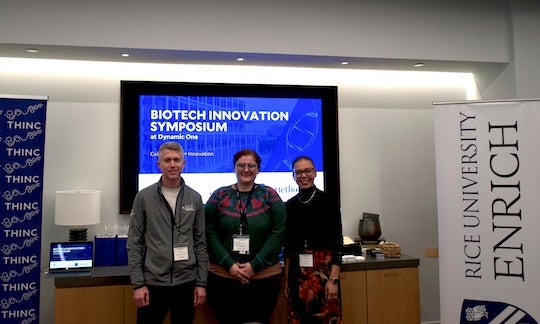
Researchers from Rice University, Baylor College of Medicine and Houston Methodist gathered in the Texas Medical Center’s Helix Park for the inaugural Biotech Innovation Symposium, an event designed to strengthen research collaborations among researchers and clinicians who can draw on the shared research infrastructure of the Dynamic One building.
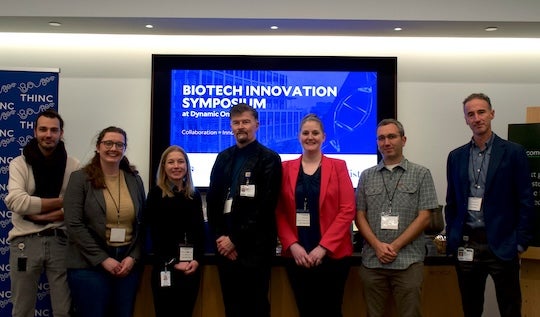
Hosted by Rice’s Educational and Research Initiatives for Collaborative Health (ENRICH) Office and the Rice Biotech Launch Pad in partnership with Baylor College of Medicine and Houston Methodist, the symposium created structured time for participants to learn about one another’s programs and identify opportunities to build joint projects. The agenda focused on three areas where cross-institutional teams are already advancing discovery and translation: RNA-based therapeutics and drug development, cardiovascular science and immunoengineering.
“We may run into each other in the elevator, but to really spark those conversations and interactions that lead to sustained collaboration, this kind of meeting is necessary — it is a connective act without which those critical partnerships may never actually form,” said Amanda Nash, an assistant professor of bioengineering at Rice who emceed the event.
Sharon Pepper, executive director of ENRICH, opened the symposium by describing ENRICH’s role as an engagement office that helps foster research collaborations and educational partnerships between Rice and health-related institutions across the Texas Medical Center. She said the goal of the gathering was to expand Rice’s portfolio of external collaborations by bringing together faculty from the institutions represented in the building and making it easier to identify complementary expertise.
Omid Veiseh, professor of bioengineering and director of the Rice Biotech Launch Pad, said the symposium reflected a shared commitment to building a biotechnology innovation ecosystem within Dynamic One, connecting academic research with pathways to translation. He noted that the Launch Pad, an initiative focused on accelerating the translation of university research into clinical applications, and RBL LLC, its affiliated venture creation studio, have a footprint in the building and described the initiative’s broader mission to accelerate Rice discoveries and technologies into clinical practice, in partnership with clinicians, entrepreneurs and industry.
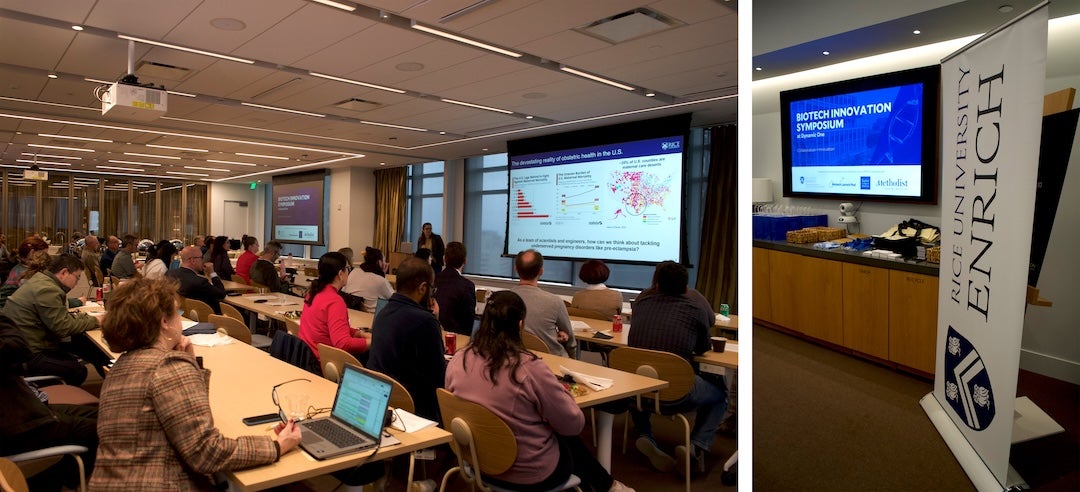
“As part of the motivation for the event is to … start creating more links, cross organizations of ideas and start putting proposals together and create an ecosystem for biotech innovation right here,” said Veiseh, who helped lead the event proceedings alongside Nash.
Rice faculty presentations highlighted work that aligns with the university’s strategic plan for the next decade, which calls for Rice to “lead innovations in health” through interdisciplinary research and partnerships that move discoveries toward real-world impact.
Nash described her lab’s translational research on extracellular vesicles and immune dynamics across aging, disease and therapeutic intervention with applications that include cancer immunotherapy, autoimmune disease and cardiovascular disease. Kelsey Swingle, assistant professor of bioengineering, presented translation-focused work engineering therapeutic and vaccine technologies at the intersection of biomaterials, immune engineering and reproductive biology, including applications in women’s health. Jeffrey Tabor, professor of bioengineering, discussed synthetic biology approaches that engineer bacteria to sense and respond to signals in their environment with medical applications that include diagnosing and treating inflammatory bowel diseases and cancers. Veiseh presented research that leverages synthetic biology, immunoengineering and materials science to develop cell-based platforms for real-time production of biologics.
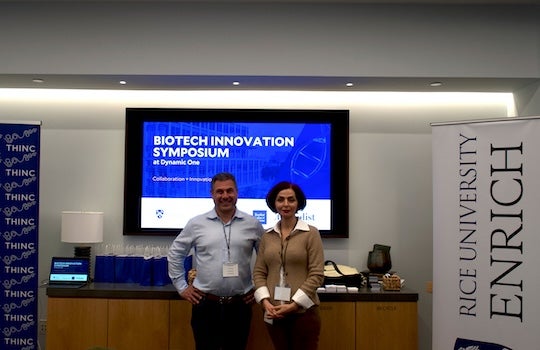
The symposium also included lab tours intended to help participants understand the shared infrastructure and resources available within Dynamic One and to support future collaborations among teams working on the same campus.
The focus on convening researchers at Dynamic One reflects a broader view of what it takes to build a thriving life sciences ecosystem in Houston: sustained collaboration, intentional coordination and the physical infrastructure that makes it possible for research, clinical expertise and commercialization pathways to intersect.
That theme carried into a recent webinar organized by RBL LLC in collaboration with STAT, which convened biotech leaders to examine the forces accelerating Houston’s emergence as an increasingly prominent center for life sciences. The discussion emphasized the region’s distinctive concentration of clinical care and research, the advantages of proximity across institutions and the growing set of spaces, capital networks and partnerships that can help move new technologies from discovery to the clinic.
RBL LLC CEO Paul Wotton pointed to the value of clinical institutional density and day-to-day access to clinical partners, describing how the Texas Medical Center environment can compress the distance between ideas and implementation.
“You’ve got this rare combination of clinical capacity, the ability to scale and manufacture a complicated medical product and a population of patients greater than anywhere else in North America,” Wotton said. “That proximity and communication lets you speed up the entry of a product into the clinic.”
For Rice, the symposium at Dynamic One and the broader conversation about Houston’s life sciences trajectory reinforce the premise that breakthrough work depends on more than individual excellence: It depends on building the connective structures — people, partnerships and places — that allow innovation to move faster, further and with greater impact.
- Access associated media files: