

“Innovation districts have a reverse Anna Karenina problem,” Rice University’s Adrian Trömel said at a CERAWeek panel on Rice’s innovation district, the Ion.
“Every unsuccessful innovation district is unsuccessful for the same reason — it tries to be Silicon Valley. Every successful innovation district is successful in its own way.”
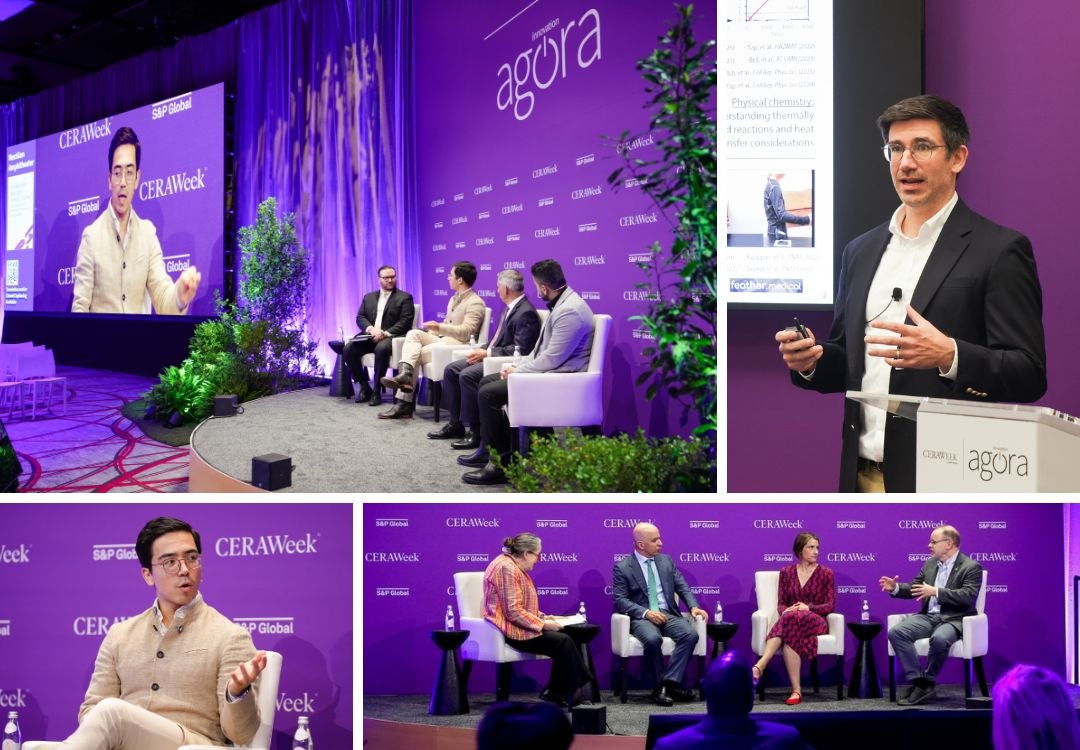
Trömel, Rice’s interim vice president for innovation and chief innovation officer, joined a panel with Rice alumnus and Helix Earth co-founder Rawand Rasheed to explain how the Ion’s success came from Houston’s unique features: a deep well of talent in the hard sciences, plenty of land to build upon and an incredible energy and space ecosystem. Rasheed gave concrete examples of how the Ion’s resources, collaborations and collisions supported his company’s growth from idea to implementation and, now, sales.
David Sholl, executive vice president for research, agreed, speaking on another CERAWeek panel focused on how innovation districts and collaboration can accelerate the pathway from ideas to impact.
“When it’s time to go to scale, you need to come to Houston,” he joked with Roger Martella, whose company’s headquarters are located in Kendall Square, a densely packed tech district adjacent to the Massachusetts Institute of Technology near Boston, highlighting Houston’s vast expertise in scaling and available land for building. Scholl also highlighted academia’s unique role in the private-public partnerships that innervate innovation districts.
“We can directly prioritize making a difference in the world and supporting the success of the startups before the financial aspects start changing the calculus,” he said.
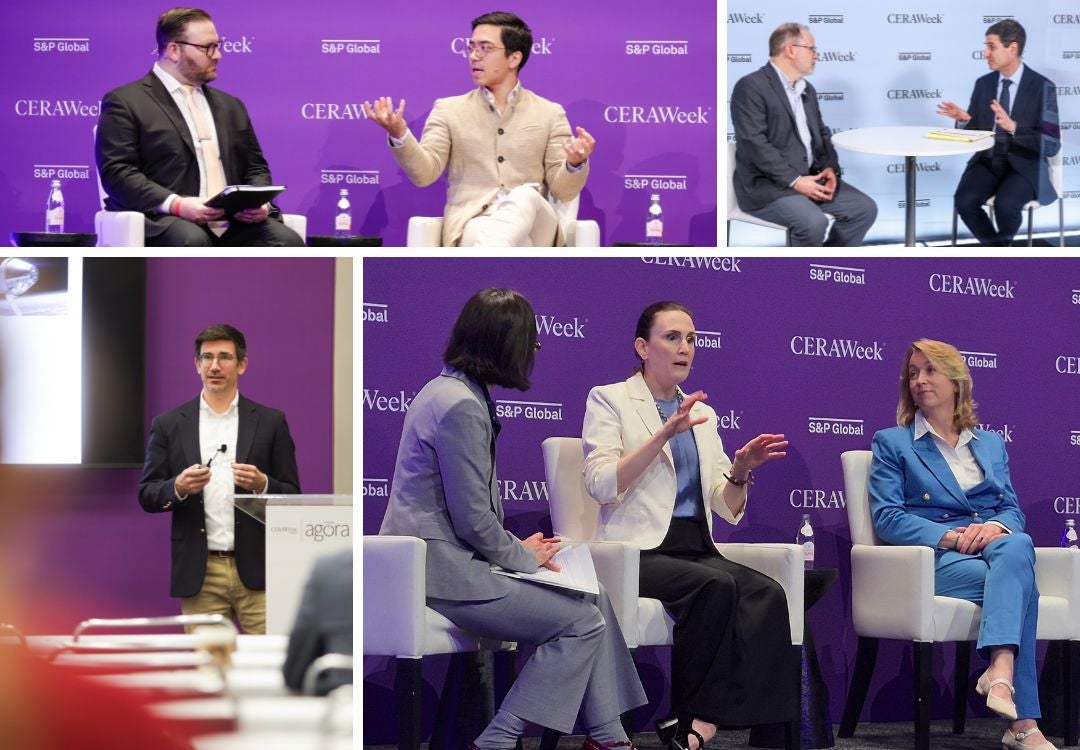
These efforts are built on interdisciplinary collaborations, from policy to research to industry, across a plethora of disciplines and focuses. In the Sparking Innovation panel, Marie Contou-Carrere, executive director of the Rice Carbon Hub, spoke to both the importance of this work and how the hub has made it successful.
“We’ve built a community that has grown well beyond Rice and has drawn in new partners and stakeholders, while partners like the TEX-E program, also represented on this panel, enable the actual transition from academia to startup,” Contou-Carrere said.
On the other side of the pipeline, Dan Preston, assistant professor of mechanical engineering and Rasheed’s former adviser, led a session about successful programs that have left his lab to become startup companies, including Helix Earth, which uses an advanced filtration technology developed originally for use in space craft to reduce intake air humidity levels in HVAC systems. When the project’s commercialization potential became clear, Rasheed took it from Preston’s lab to the Ion, where he found mentorship, investors and a distributor.
These conversations are the heart and soul of CERAWeek, one of the world’s largest energy conferences, held in Houston, the world’s largest energy ecosystem.