
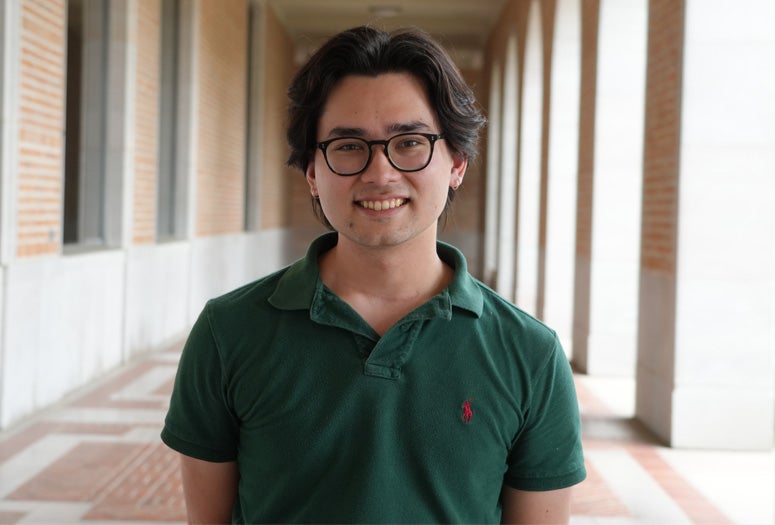
For Rice University junior Max Scholl, the humanities are not simply about studying books or ideas from the past. They are a way of understanding how the world works. An English and anthropology double major with a minor in French studies, Scholl is drawn to questions about how people interpret the world around them.
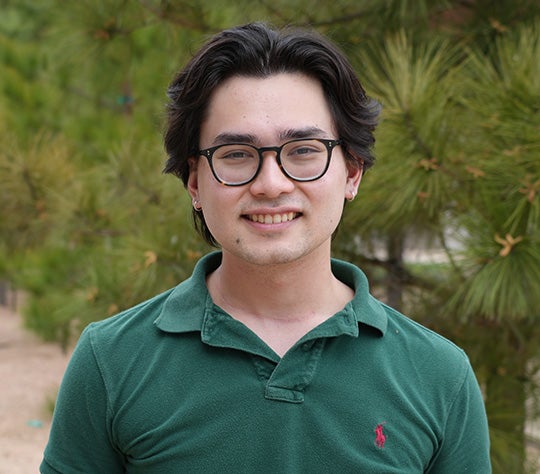
“I’m totally obsessed with that,” Scholl said. “I think that’s kind of what really drives me.”
Scholl co-founded the Rice Critical Humanities Collective (RCHC), an undergraduate discussion group supported by the Humanities Research Center (HRC). The collective grew out of the HRC Reading Lab in spring 2025 and offers students a space outside the classroom to wrestle with big questions about culture, politics and knowledge.
“It’s an undergraduate-led space outside humanities classrooms to talk about why critical thinking and working through these issues is really important in our current moment,” Scholl said.
The group meets regularly for themed lunchtime discussions open to students from across Rice’s schools and disciplines. In the RCHC’s first semester, Scholl and co-founder Hongtao Hu decided on artificial intelligence and education as a focus. This semester, discussions center on nationalism and identity, including a recent session examining Texas and the politics of borders.
“We have a lot of students from all the different schools on campus talking about these issues from their own angles, and it’s really illuminating for all of us,” Scholl said.
Scholl is also a member of the National Humanities Leadership Council, a program supported by the National Humanities Center that connects undergraduate humanities students from universities across the United States. Working with peers from several states, Scholl is helping develop a collaborative digital project about how literature is interpreted and used in political contexts. The group chose Homer’s “Odyssey” as its central text, examining how the ancient epic continues to shape political ideas and cultural identity today. Scholl’s contribution to the project involves looking back at Enlightenment thinkers and classical literature to explore how texts like the “Odyssey” influenced the development of modern ideas about democracy and freedom while supporting the political rhetoric and philosophy that bolstered colonialism.
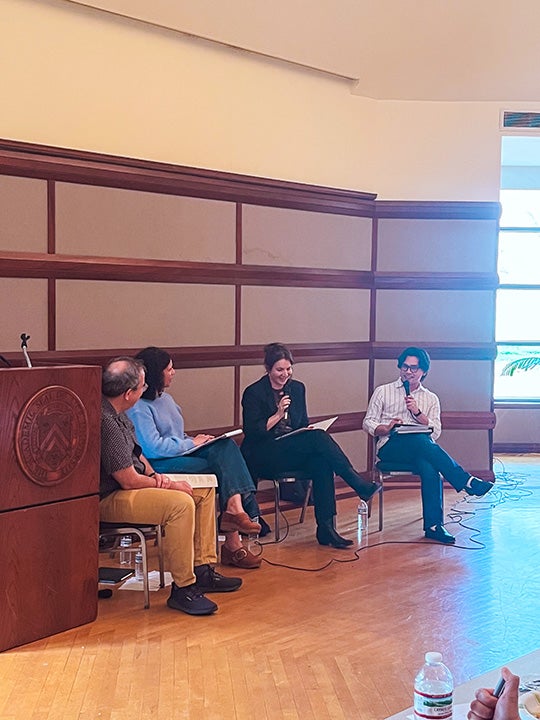
Research is another outlet for Scholl’s curiosity. With support from the Elizabeth Lee Moody Undergraduate Research Fellowship in the Humanities and the Arts, he conducted an independent research project under the supervision of Timothy Morton, the Rita Shea Guffey Chair in English and Creative Writing. The competitive fellowship provides humanities majors with funding, mentorship and a cohort community to pursue original research and creative work. Fellows receive a summer stipend to support projects of their own design and meet regularly with faculty and guest scholars to discuss humanities research and pressing contemporary questions.
“The fellowship gave me the time and the institutional support to carry out a research project of my liking,” Scholl said. “It allowed me to be as interdisciplinary as possible.”
Scholl looked at philosophical writings on absence and presence while studying artistic representations of the desert in film, literature and land art. A road trip through the American Southwest allowed him to encounter the landscape and site-specific artworks firsthand, raising new questions about how humans attempt to represent spaces that resist representation. The research that emerged from Scholl’s experiences argues how studying this subject can provide insights about how political authority operates in the present.
“Literary theory, it’s kind of everything for me,” Scholl said. “It’s literally how we understand the world today. I mean, it’s all about interpretation. It’s all about dialogue, conversation.”
Outside the classroom and research projects, Scholl also writes for the satire section of The Rice Thresher known as Backpage, a popular feature of the student newspaper that blends humor with commentary on campus life.
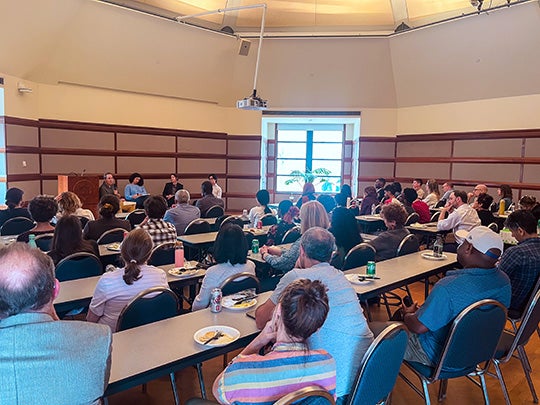
What connects all of these activities is Scholl’s fascination with ideas and the conversations that bring them to life.
“The best part of being at Rice actually is taking classes,” Scholl said. “I actually just love learning so much.”
A Houston native and member of Lovett College, Scholl said the university’s culture of intellectual curiosity drew him to Rice and continues to shape his experience.
“There’s just a distinct kind of nerdy intellectual vibe right here, which is never really pretentious,” he said. “People actually are just really into the things they’re into, and they love to talk about it for hours.”
Scholl said he is approaching his undergraduate years with urgency, eager to take advantage of opportunities to learn and collaborate. That means a schedule packed with classes, research and extracurricular commitments, but he embraces the pace.
“Super busy, like nonstop,” Scholl said. “No breaks. But I completely love it.”
Looking ahead, Scholl plans to pursue graduate study in the humanities and said he hopes to earn a doctorate focused on literary studies and interdisciplinary scholarship at the intersection of philosophy, political theory and the history of science and technology. He hopes to spend his career continuing to ask the kinds of questions that first drew him to the humanities.
“My generation is coming into political consciousness in a very, very rough time of American history,” Scholl said. “Everything is politics now. I’m interested in asking why that is and how we got here.”