
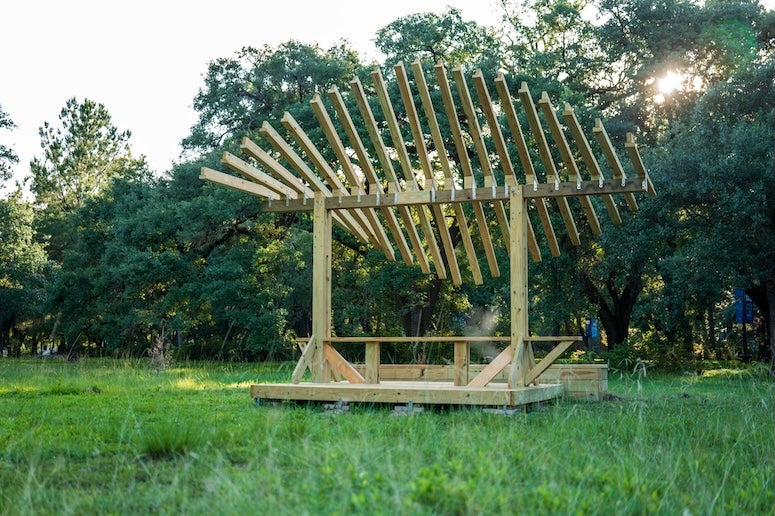
As Houston prepares to welcome the FIFA World Cup, the city is also advancing a broader sustainability legacy through the expansion of the Houston Green Corridor — a connected network of trails, transit, public spaces, native plantings, shade structures, water access and bike-support amenities linking East Downtown to NRG Stadium.
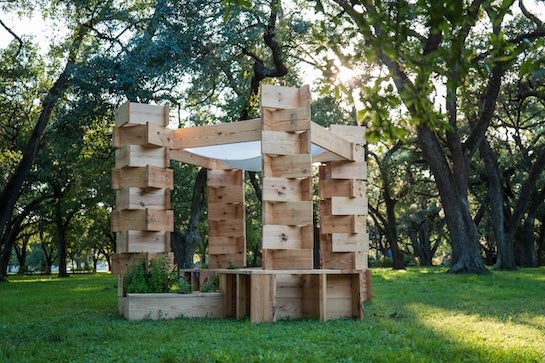
Rice University is proud to join this effort through the Rice-FIFA Sustainable Ecologies Installation, a temporary public-facing exhibit located in the oak groves near Entrance 1. Designed as both an artistic experience and a sustainability demonstration, the installation invites visitors to engage with the ecological, social and aesthetic value of Houston’s landscape.
The installation highlights the southern live oak, one of Rice’s defining campus features and a powerful symbol of resilience in Houston. Through a series of student- and staff-built design elements, the exhibit explores shade, biodiversity, heat mitigation, native plantings and public comfort. Each component serves as a small-scale demonstration of how design can support environmental performance while creating beautiful and welcoming civic spaces.
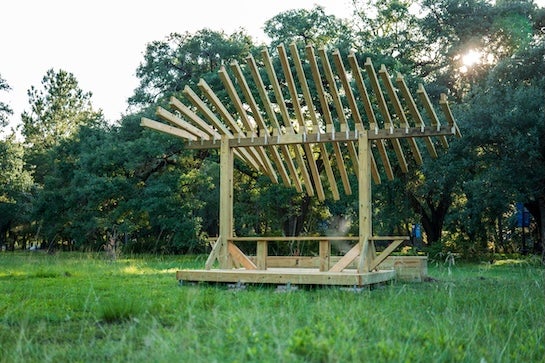
“These installations allow our students and the public to celebrate Houston while advancing a legacy of sustainability innovation,” said David Abraham, lecturer in biosciences and project lead. “We invite visitors, alumni, students and community partners to make them part of their World Cup experience.”
The installation demonstrates how universities can contribute to mega-event sustainability in ways that are local, visible and lasting. While temporary, the project is intended to inspire long-term thinking about how Houston can strengthen its public spaces, protect its tree canopy, improve comfort in extreme heat and create memorable places that connect people to sustainability.
During the World Cup, the Rice installation will offer visitors a place to pause, reflect and experience how art, ecology and thoughtful design can help shape a more sustainable Houston.