

As communities around the world grapple with aging infrastructure, water scarcity, emerging contaminants and the growing impacts of climate change, researchers at Rice University are advancing technologies aimed at making water systems more resilient, sustainable and adaptable.
That work took center stage June 1-5 as Rice’s WaTER Institute hosted the 20th International Water Association Leading Edge Conference on Water and Wastewater Technologies, which brought together more than 270 industry professionals and academic researchers from 27 countries under the theme Resilient Water in a Changing World. The conference is widely regarded as one of the premier global forums for emerging water and wastewater technologies.
Organized by the Rice WaTER Institute in partnership with the city of Houston and Rice, the conference featured plenary talks, technical sessions, workshops, poster presentations and industry tours designed to bridge the gap between scientific discovery and real-world implementation.
“Today’s theme is resilient water in a changing world, which is a timely subject,” said Pedro Alvarez, the George R. Brown Professor of Civil and Environmental Engineering and director of the Rice WaTER Institute. “We are delighted to host participants joining us from around the world. The program includes exciting technical sessions, workshops and tours, all designed to foster learning, collaboration and knowledge exchange.”
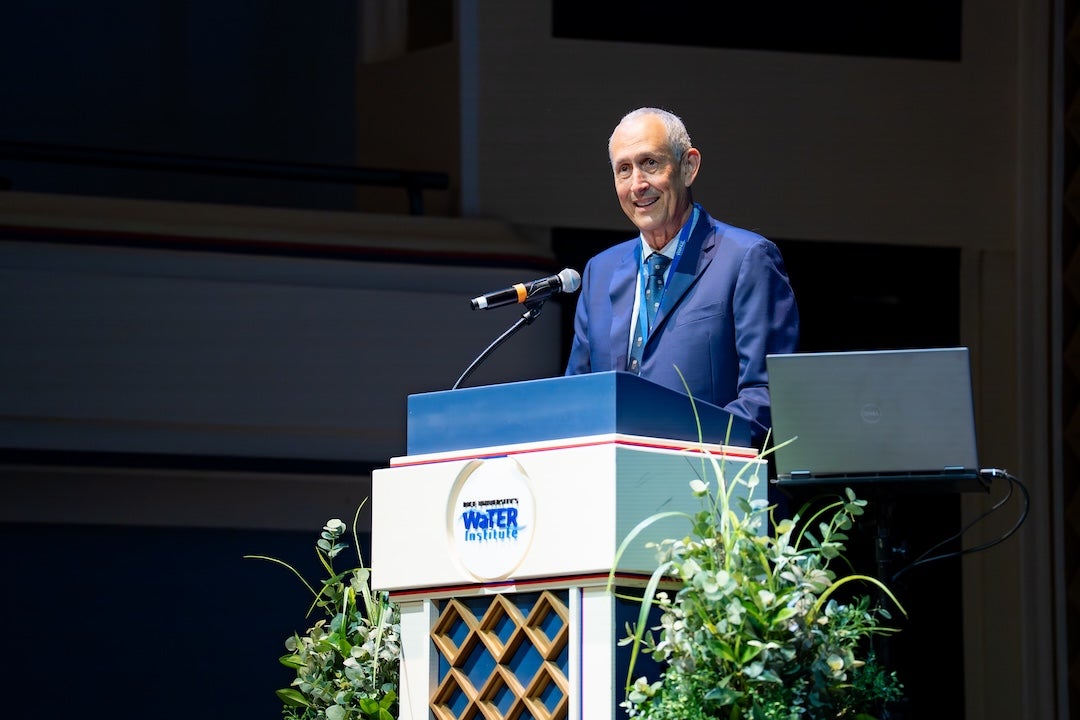
A global challenge with local relevance
Welcoming attendees to Houston, Rice President Reginald DesRoches emphasized both the urgency of global water challenges and the importance of collaboration in addressing them.
“Water is fundamental to human health, economic prosperity, environmental sustainability and quality of life,” DesRoches said. “Yet around the world, communities are grappling with growing pressures on water systems — from population growth and aging infrastructure to emerging contaminants, extreme weather events and the impacts of climate change.
DesRoches said addressing those issues will require broad collaboration across disciplines and borders.
“These challenges are complex, and no single institution, sector or nation can solve them alone” DesRoches said. “That is why gatherings like this one are so important. They create opportunities to share knowledge, challenge assumptions, build partnerships and accelerate the development of solutions that can improve lives around the globe.”
DesRoches highlighted water as a central component of Rice’s strategic plan and pointed to university research spanning advanced materials, membrane technologies, nanotechnology, artificial intelligence and catalysis.
“What makes this work especially powerful is its collaborative nature,” he said. “The most significant advances often occur when researchers work alongside industry partners, utilities, policymakers and communities.”

Houston Public Works director Randy Macchi noted that while many regions focus on water scarcity, Houston faces a different challenge: maintaining and modernizing one of the nation’s largest municipal water systems.
“Scarcity for us is not the problem,” Macchi said. “Resiliency is our problem.”
Macchi described a regional water network serving millions of residents across the Houston area and the challenges posed by aging infrastructure, water loss and rapid growth.
“There is a certain point in our society where we have to recognize that if we do not take advantage and make the investments that are necessary, we’ll find ourselves in a much costlier situation,” he said.
Rice research tackling water challenges from molecules to cities
The conference theme closely reflected the breadth of water research underway across Rice.
At the molecular scale, researchers are developing new approaches to destroy persistent contaminants such as PFAS, known as “forever chemicals,” using advanced catalytic materials and electrochemical technologies. Other teams are exploring how bacteriophages — viruses that naturally target bacteria — could be used to combat antibiotic-resistant microbes in water systems.
Rice researchers are also rethinking the science behind membrane-based desalination and water reuse, technologies that already provide drinking water to hundreds of millions of people worldwide.
During his plenary address, Menachem Elimelech, the Nancy and Clint Carlson Professor of Civil and Environmental Engineering and director of Rice’s Center for Membrane Excellence, described the need to expand water supplies through reuse and desalination.
“We don’t have enough fresh water,” Elimelech said. “The question is how do we increase the supply of water beyond the traditional sources? The solution is that we can use unconventional water sources — seawater, brackish water, agricultural runoff, industrial wastewater and municipal wastewater — and treat them, so they can be used again.”
Elimelech also argued that major advances will require fundamentally new membrane materials.
“What we need is true molecular design,” he said. “We need to design membranes from the bottom up rather than relying on materials that are more than 50 years old. That’s how we’ll overcome the limitations of today’s desalination and water treatment technologies.”
At a systems level, Rice researchers are investigating decentralized water treatment networks, autonomous water reuse systems and AI-driven monitoring platforms that could reduce vulnerabilities associated with centralized infrastructure. These efforts include the WaTER Institute’s campus-based living laboratory projects focused on rainwater harvesting, water reuse and resource recovery technologies.
The conference showcased many of the areas where the university is helping shape the future of water technology, said Eric Willman, executive director of the Rice WaTER Institute.
“When you think about resilient water in a changing world, there has to be some technical contribution to respond to that changing world,” Willman said. “Rice is in a great position to lead those technological challenges.”
He pointed to conference themes such as desalination, brine management, AI, decentralized water reuse and pollution control as areas where Rice researchers are making significant contributions.
The conference’s plenary speakers reflected the diversity of challenges facing the global water sector.
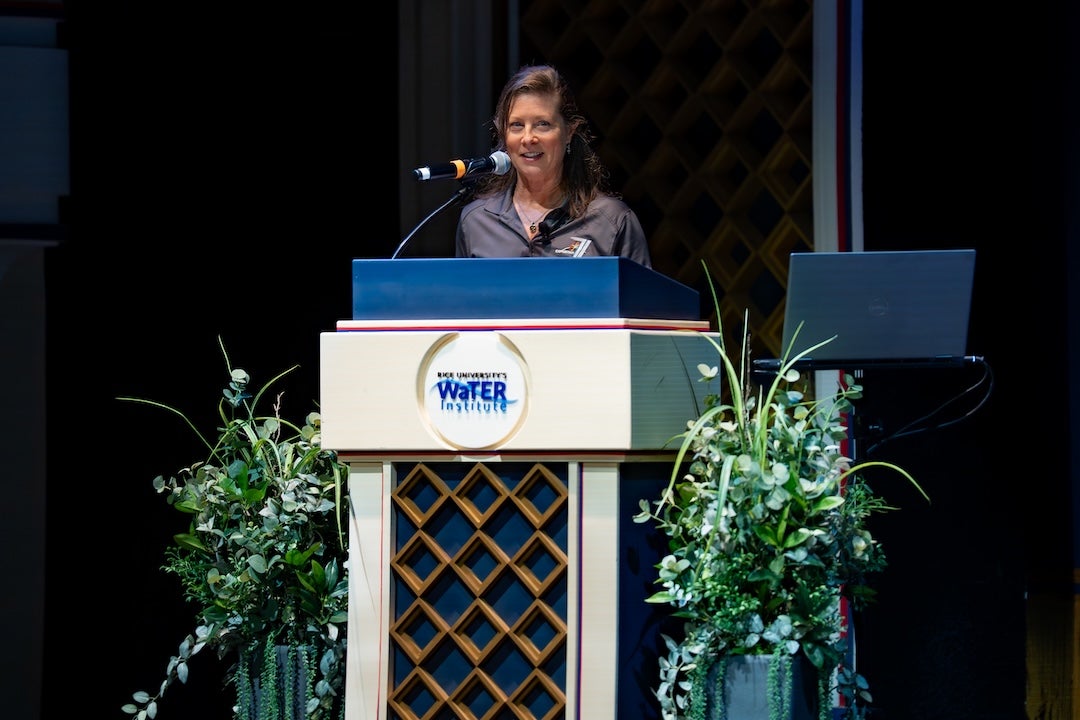
NASA astronaut Tracy Caldwell Dyson opened the plenary program with a presentation on water recovery and recycling aboard the International Space Station, highlighting the role resilience plays in sustaining human life in space. She also reflected on the unique perspective gained from orbit, where Earth’s vast interconnected water systems are visible from above.
Other plenary speakers included Mark van Loosdrecht of Delft University of Technology, whose presentation focused on transforming wastewater into valuable materials. Amanda Lake, chartered chemical engineer and global principal for water resource recovery at Jacobs in the U.K., spoke about reducing greenhouse gas emissions from wastewater treatment plants.
Meanwhile, Amy Childress, the Walt Singer Endowed Chair in Civil and Environmental Engineering and director of the ReWater Center at the University of Southern California, focused on integrating alternative water sources into resilient potable water supplies. The final plenary keynote was presented by water finance and market expert Christopher Gasson, who presented on the future of desalination.
Where science meets practice
Through workshops, attendees covered topics ranging from produced-water desalination and distributed treatment systems to AI, advanced pollution mitigation technologies and pathways toward net-zero wastewater treatment operations.
Technical sessions explored emerging membrane technologies, direct potable reuse, PFAS destruction, decentralized treatment systems, digitalization and automation, nutrient removal and energy-neutral wastewater treatment. These themes reflected the conference’s broader emphasis on integrating scientific innovation with practical implementation.
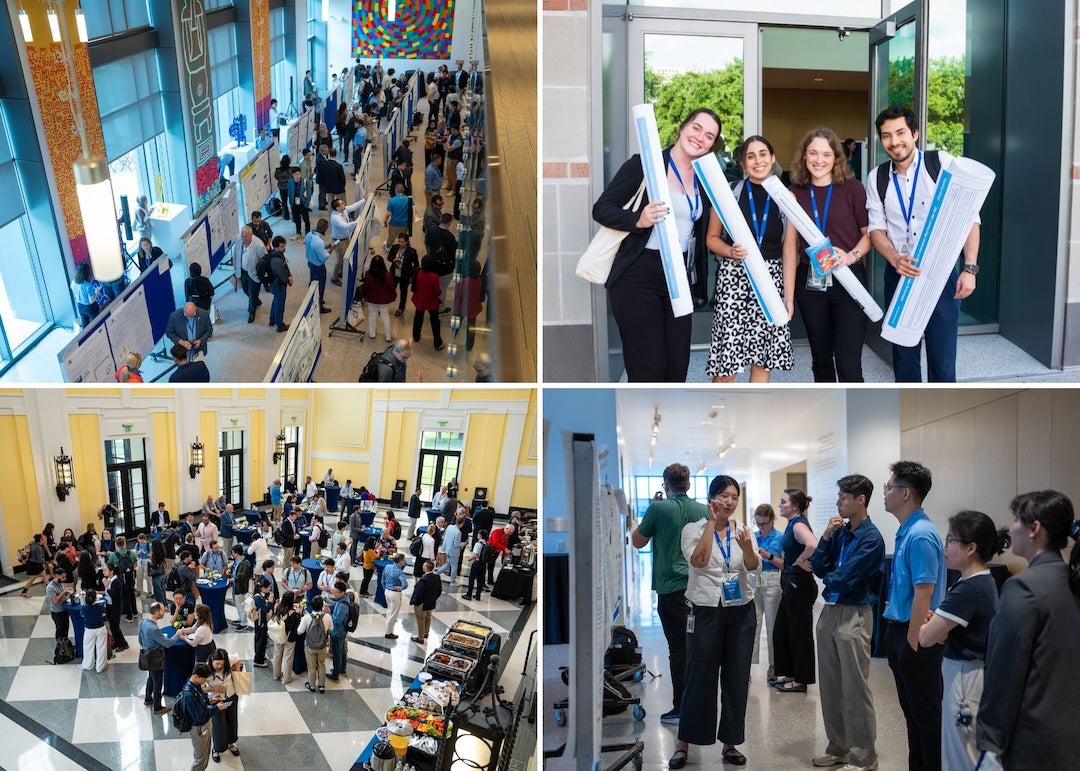
Ana Soares, co-chair of the program committee, said the conference has long served as a venue where “academia meets industry and science meets practice.”
That mission was reflected in participation from utilities, engineering firms, technology companies and academic institutions. Sponsors included Grundfos, Stantec, Yokogawa, Texas Water Trade, the city of Houston and the Water Environment Association of Texas.
Willman said those interactions are ultimately what make the conference so valuable.
“The power of a conference like this is the connections,” he said. “When people get together and exchange ideas and walk away with something they hadn’t thought about before, whether it’s for research or commercialization of technology, that’s the real value.”
Beyond presentations and technical sessions, attendees participated in networking events, a poster session featuring more than 110 research projects and tours of NASA’s Johnson Space Center and the Grundfos U.S. headquarters.
For Rice, hosting the conference represented more than a showcase of current research. It also underscored the university’s role as a global hub for water innovation.
“One of the core functions of any institute on campus is to bring the world to Rice,” Willman said. “We are literally bringing world experts to Rice to have this conversation.”