
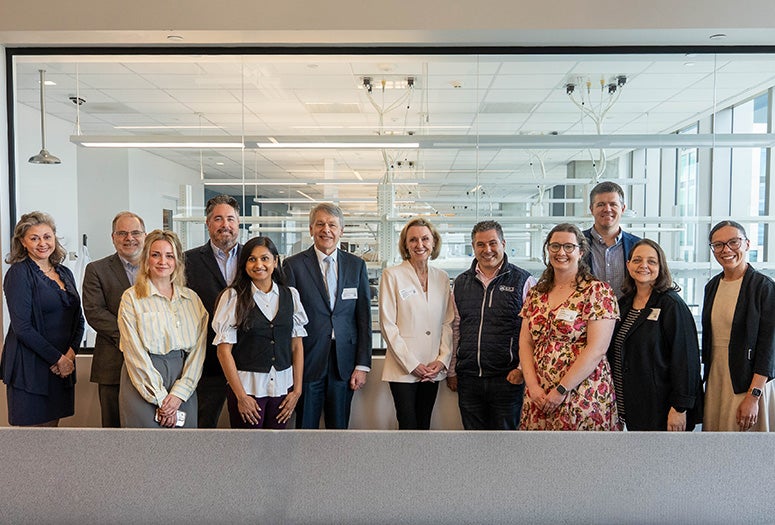
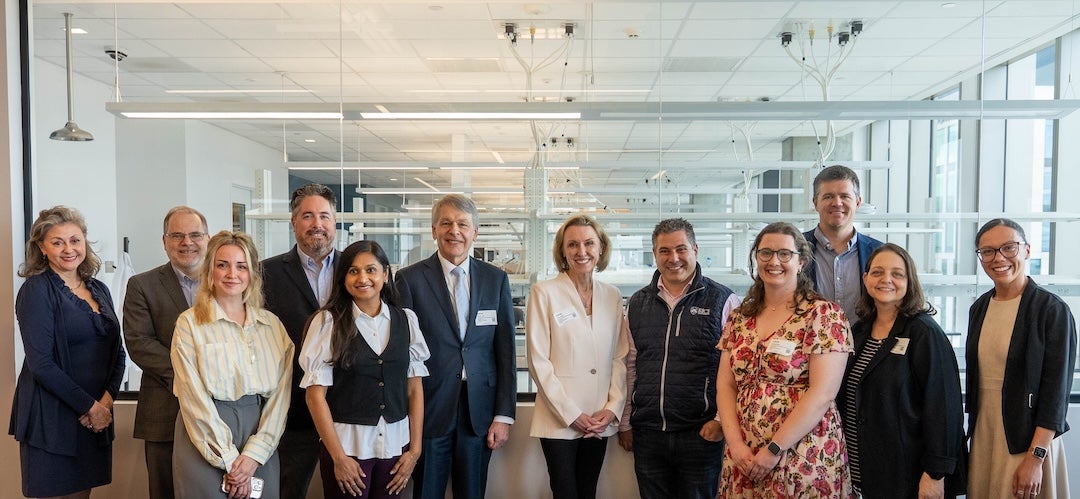
Rice University foregrounded its cancer research portfolio during a visit from Cancer Prevention and Research Institute of Texas (CPRIT) senior officials April 9. CPRIT’s delegation included Kristen Doyle, CEO; Heidi McConnell, deputy executive officer and chief operating officer; Scott Hiebert, chief scientific officer; and Ruth Rechis, chief prevention officer and communications officer.
“It has been transformative,” Doyle said, referring to Rice’s contributions to cancer research and its role within CPRIT’s broader portfolio. “You bring a different set of tools to the fight against cancer.”
The visit highlighted a strong alignment between CPRIT’s statewide mission and Rice’s strategic plan, which calls on the university to lead innovation in health by pairing interdisciplinary research with entrepreneurship and deep partnerships. Since its creation in 2007, CPRIT has awarded more than $4 billion across Texas through programs in academic research, prevention and product development. Rice has received approximately $107 million of that total, including 27 CPRIT Scholar recruitment awards that have helped build a concentration of expertise in cancer bioengineering and related fields.
“We are grateful for this enduring collaboration and shared commitment to translating research into real impact for patients and communities across Texas and beyond,” Rice President Reginald DesRoches said. “CPRIT has been a catalyst for partnerships we formed across the street in the Texas Medical Center with CPRIT Scholars driving a lot of the joint appointments and joint research grants.”
DesRoches highlighted that CPRIT awards foster long-term partnerships and are amplified through the work they make possible, one measure of which is additional funding committed to developing breakthrough methods to diagnose, track, treat and prevent the disease: For the 27 CPRIT Scholar faculty members at Rice, total awards amount to over $323 million.
The visit began at Helix Park’s Dynamic One, home to the Rice Biotech Launch Pad — a cornerstone of the university’s strategy to ensure discoveries are translated into real-world clinical products.
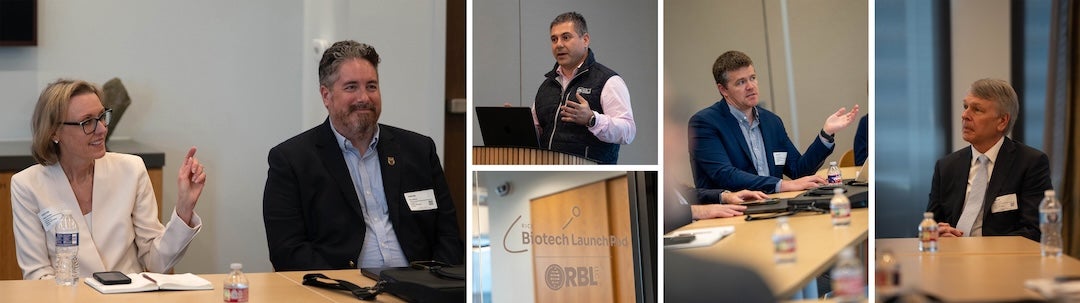
“We think about big, what-if ideas,” said Omid Veiseh, a professor of bioengineering at Rice and faculty director of the Rice Biotech Launch Pad. “We wanted to build the infrastructure such that as [researchers] make these discoveries … there’s a pathway for them to take those ideas and turn them into products that impact human health.”
Veiseh noted that building a durable biotechnology hub in Houston depends on assembling a full ecosystem — including clinicians, regulatory expertise, investors and experienced leadership — along with the kind of visible successes that attract sustained investment. The Launch Pad, working in tandem with a venture studio, RBL LLC, is part of the infrastructure supporting that developing ecosystem designed to compress the timeline from idea to therapy.
In addition to Veiseh, CPRIT officials met with several Rice researchers, including Amanda Nash, Kelsey Swingle and Kevin McHugh, as well as Martha Fowler, one of the inaugural Rice Venture Creation Fellows, and Rima Chakrabarti, RBL co-founder and managing partner. Fowler now leads Steer Bio, a company developing a regenerative therapy for lymphedema, illustrating how Rice is supporting early career scientists in translating research into ventures that address both cancer and its long-term effects. The project underlying Steer Bio was recently awarded up to $18.2 million in funding from the Advanced Research Projects Agency for Health.
“This is a truly unique venture in which Rice is at the forefront of moving research from the lab into a commercialization pipeline, and this kind of aggressive translation is exactly what Texas needs to lead in biotech,” Hiebert said. “Rice’s momentum builds on more than a decade of CPRIT investments in exceptional scientists, advanced core facilities and innovative approaches that move discoveries quickly toward products that can transform care for Texans. By leveraging these opportunities, Rice is accelerating progress and strengthening the statewide ecosystem we are building together — demonstrating the powerful impact Texas institutions can have when bold ideas meet sustained support.”
The visit continued at the Bioscience Research Collaborative, where the focus shifted to the depth of the university’s research enterprise and the partnerships that sustain it. Han Xiao, a professor of chemistry, bioengineering and biosciences, gave a presentation on the SynthX Center, launched in 2024 with Baylor College of Medicine’s Dan L Duncan Comprehensive Cancer Center to accelerate drug discovery and translation. Gang Bao, the Foyt Family Professor of Bioengineering and a professor of chemistry and materials science and nanoengineering, described the Cancer Bioengineering Collaborative, a partnership with The University of Texas MD Anderson Cancer Center advancing work in cell therapies, nanotechnology, cancer vaccines, artificial intelligence and molecular imaging, supported in part by shared infrastructure such as the CPRIT-funded Genetic Design and Engineering Center facility.
Cynthia Reinhart-King, chair of Rice’s Department of Bioengineering and the John W. Cox Chair of Bioengineering, underscored the strength of the field at Rice.
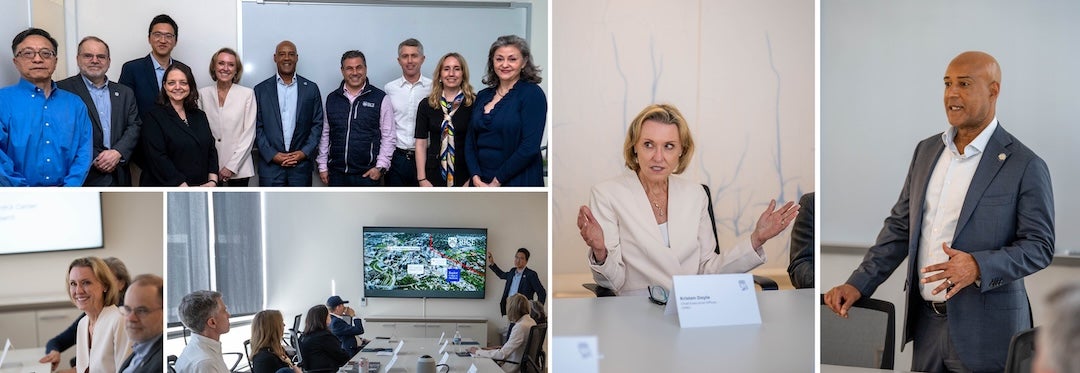
“I argue that our bioengineering department is the premier place to do cancer bioengineering in the country, if not in the world,” Reinhart-King said, noting the unusually high concentration of cancer-focused researchers within the department.
Jeffrey Tabor, professor of bioengineering and biosciences and incoming director of the Synthetic Biology Institute at Rice, described how engineered biological systems are opening new possibilities in cancer detection and treatment by programming living cells to sense and respond to disease.
Rice is advancing a connected approach to cancer research that links discovery, collaboration and translation, helping advance CPRIT’s commitment to make Texas a global leader in the fight against cancer while improving outcomes for cancer patients and helping grow the state economy.
“CPRIT’s commitment to prevention, research and building the state’s life sciences infrastructure is ultimately about ensuring Texans benefit from the most innovative ideas in cancer science,” Doyle said. “The significant progress at Rice demonstrates the power of that investment. Taking a collaborative approach brings us closer to a future where Texans working together will conquer cancer.”
- Access associated media files:
-
https://rice.photoshelter.com/galleries/C0000ozmLFGQBqew/G0000HO6x3TVw1Fk/260409-CPRIT-Visit_Jones
Photos by Jared Jones/Rice University