
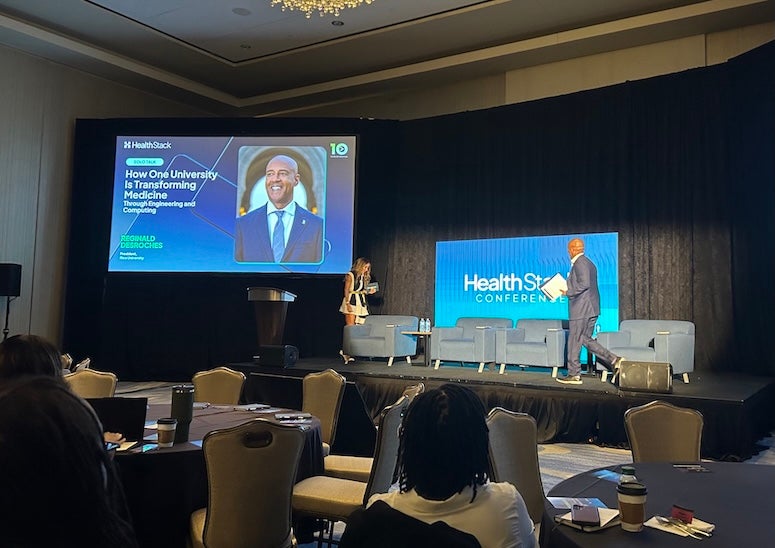
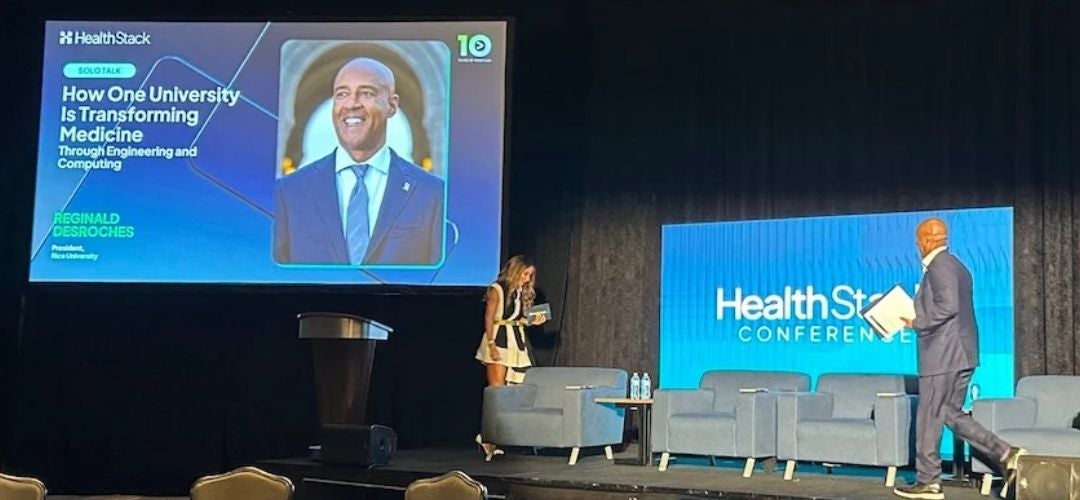
Rice University showcased its research, academic programs and role in Houston’s innovation ecosystem during the AfroTech Conference this month, connecting with prospective students and technology professionals while highlighting the university’s interdisciplinary approach to innovation.
President Reginald DesRoches addressed attendees Nov. 4 during a presentation on the intersection of engineering, technology and medicine, highlighting how Rice researchers are working with clinical partners to develop technologies that improve human health. Speaking at the HealthStack general stage at the Marriott Marquis, DesRoches emphasized the university’s proximity to the Texas Medical Center and the opportunities it creates for collaboration among engineers, scientists and medical researchers.
“To truly change health, you need an ecosystem,” DesRoches said, describing the partnerships among researchers, clinicians, hospitals, entrepreneurs and investors necessary to bring discoveries from the laboratory to patients. “If we want innovation to have an impact, we must build the bridge between discovery and delivery.”
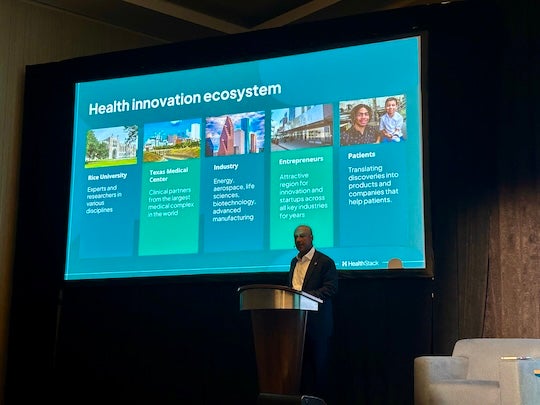
DesRoches highlighted several examples of Rice research advancing medical innovation, including brain-computer interfaces, AI-powered diagnostic technologies, implantable therapeutic devices and robotic rehabilitation systems. He also underscored the importance of making medical innovations accessible beyond those with the greatest resources.
“I believe we’re moving towards a future of medicine that is earlier, more precise and more personal,” he said.
Terrence Gee, Rice’s vice president of technology solutions and services and chief information officer, also joined a Nov. 3 fireside panel chat at the Innovation x Culture Summit exploring the intersection of innovation, culture and entrepreneurship in Houston.
“AfroTech draws people from across the country, some discovering Houston for the first time. The summit was a great opportunity to brag about a city where big challenges meet the expertise and entrepreneurial ambition to solve them, and to highlight Rice’s role in connecting those strengths through places like the Ion,” Gee said. “For founders working to turn promising ideas into businesses, my advice was simple: Clear beats clever. Help customers understand the problem you solve, how your solution makes their work easier and what risks it introduces or reduces. When you clearly understand their world and make your value unmistakable, you give prospects a reason to champion your idea.”
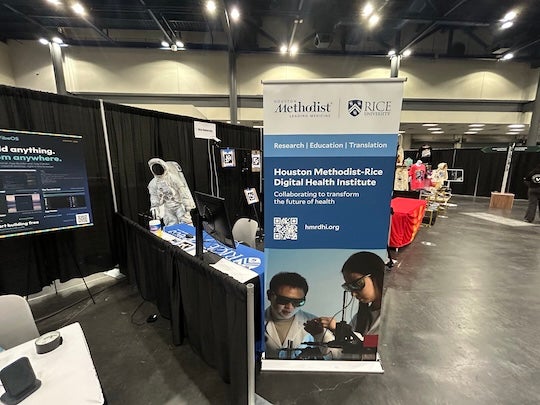
Rice participated in AfroTech’s education technology exhibition area, where university representatives shared information about academic programs, research and opportunities for prospective students. The university’s booth attracted a steady stream of visitors, including graduate students interested in computer science, engineering, architecture, business and other STEM fields, as well as attendees seeking scholarship information.
Representatives discussed Rice’s engineering and MBA offerings and the Rice Investment financial aid initiative, directing prospective students to resources about academic opportunities and affordability. A creative touch to the university’s outreach was Rice Krispies treats featuring QR codes linking to a Rice News story about CRISPR proteins developed at the university that expand gene-editing access for heart disease research.
“It was a great opportunity to connect directly with students and other attendees, hear about their academic interests and experiences and learn more about what they are looking for in a university,” said Ose Anetor, director of digital media strategy for Rice’s Office of Public Affairs.