
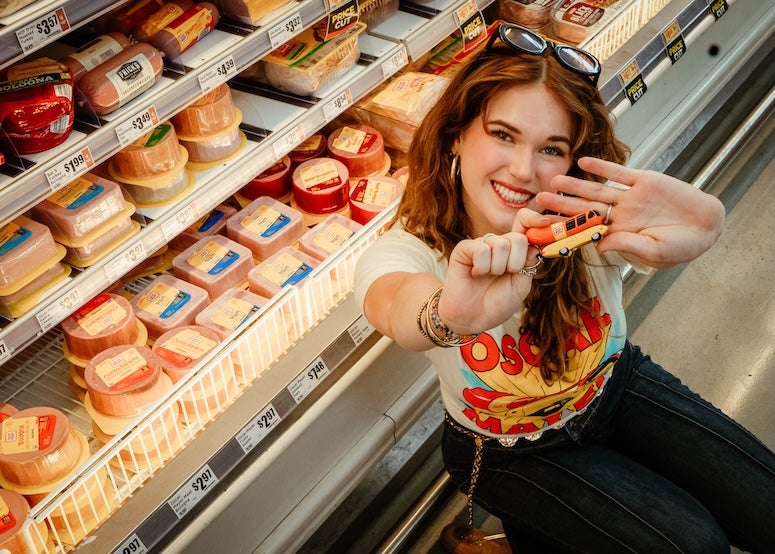
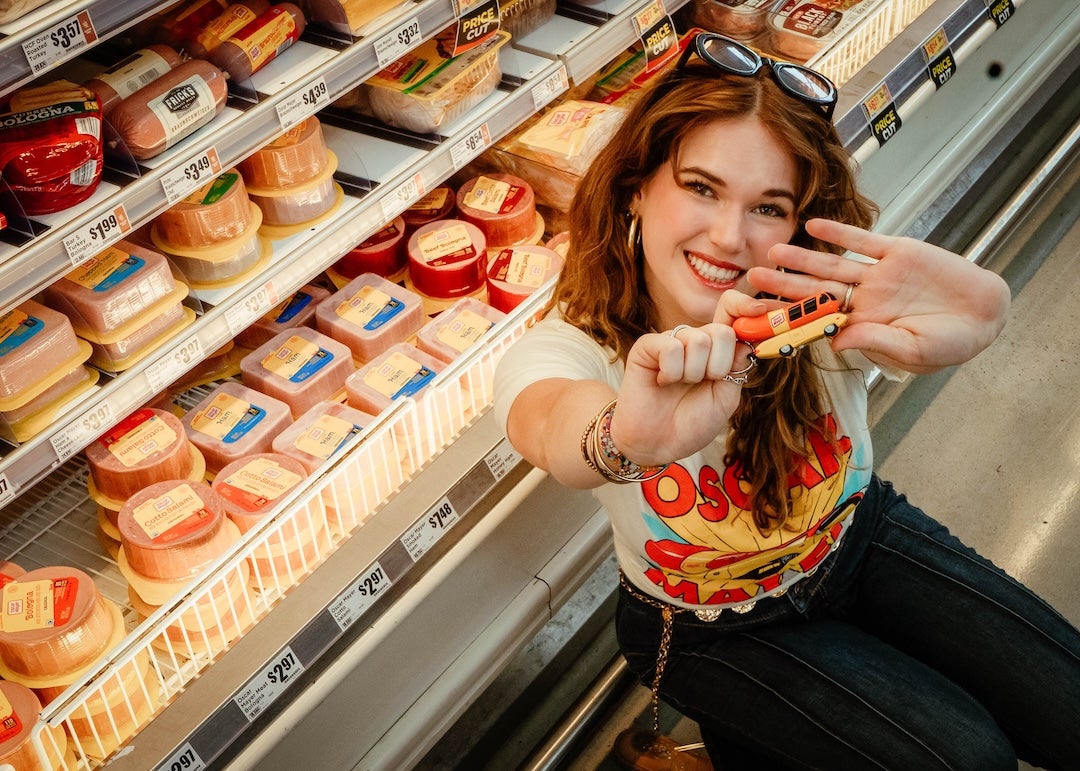
For many Rice University graduates, postcollege plans might involve graduate school, consulting firms or engineering rotational programs. For Taylor Schultz, it means spending the next year traveling the country inside a 27-foot-long fiberglass hot dog.
Schultz, who graduated this spring with a degree in chemical and biomolecular engineering and served as president of Duncan College, was selected as one of just 12 recent graduates nationwide to become an official Oscar Mayer “Hotdogger” — the brand ambassadors who drive the iconic Wienermobile across the U.S. promoting the company through events, social media and experiential marketing.
“It really couldn’t be a more perfect role for me,” Schultz said. “I wanted a year to figure out what this creative pivot looks like for me and what it looks like to pursue the kind of work I’m passionate about.”
The Wienermobile, first created in 1936 by Carl Mayer during the Great Depression, is one of America’s most recognizable promotional vehicles. Six Wienermobiles travel across the country each year, staffed by pairs of “Hotdoggers” who represent the Oscar Mayer brand through appearances, content creation and community events.
Schultz said the application process was unlike any traditional job interview she’d ever experienced.
“They flew me to Chicago, and part of the interview was basically a PR screen test,” Schultz said. “They had me speak directly to camera, sing the jingle, talk about social media ideas and pitch content concepts. They really wanted people who could create experiences and connect with others.”
That combination of creativity, communication and logistics is exactly what drew Schultz to the role.

Although she began her time at Rice studying biology with dreams of becoming a science communicator, Schultz eventually switched her major to chemical engineering after conversations with mentors at Rice’s Center for Career Development. Along the way, however, she discovered that her favorite experiences consistently involved leadership, storytelling and community building.
“I realized I loved talking to people and creating things for people,” Schultz said. “I designed marketing materials for chemical engineering events, organized college programming and really fell in love with bringing people together.”
Schultz credits much of her preparation for her role as a Hotdogger to her years in student government at Duncan College, where she served as freshman representative, secretary, vice president and eventually college president.
“That experience was probably the strongest part of my application,” Schultz said. “Being a college president meant balancing behind-the-scenes logistics and conflict resolution while also being outwardly positive and approachable for everyone around you.”
Hotdoggers must simultaneously handle demanding travel schedules, professional brand representation and constant public interaction, which is a balance Schultz said felt surprisingly familiar.
“They told us, ‘You might just be grocery shopping, but people will still recognize you as the Wienermobile driver,’” she said. “And I was like, ‘That’s honestly kind of like being a college president at Rice.’ People still know who you are, they still come to you with problems, and you still have to show up with energy and enthusiasm.”
While Schultz acknowledged her decision to pivot away from a traditional engineering path surprised some people, she sees the role as an opportunity to combine technical thinking with creativity. She said she hopes the yearlong experience traveling across her assigned region will help shape a future career in experiential marketing, event production or creative strategy.
“There are so many new technologies changing how people experience events and spaces,” she said. “I think it’s really exciting to be at the intersection of creativity and technical problem-solving.”