
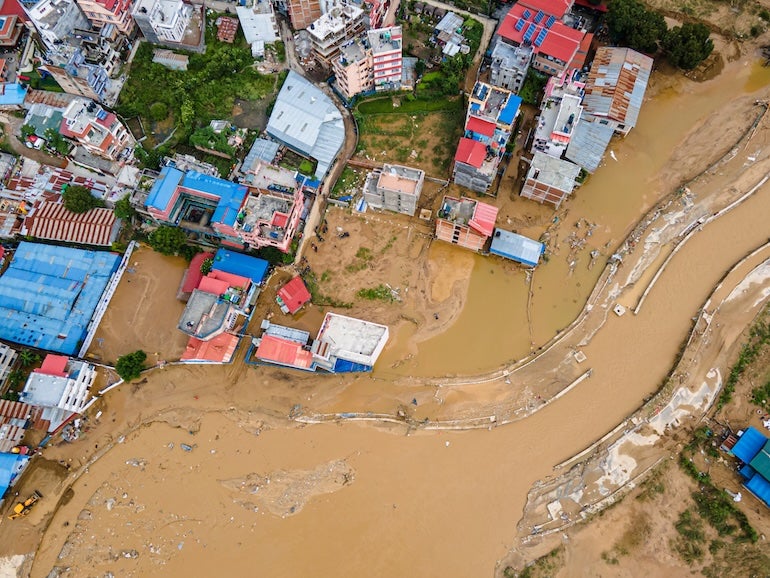
As rescue efforts continue following catastrophic flooding along the Nepal-Tibet border, Rice University experts are available to discuss the climate science behind changing glaciers and the cultural consequences of their loss.
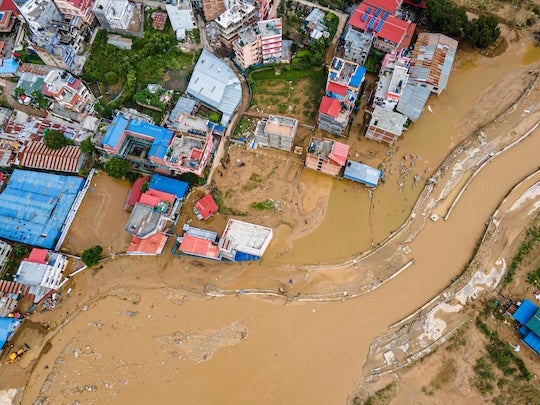
The disaster followed the collapse of rock and ice high in the Himalayas, sending water, mud and debris through communities below. The catastrophe has killed hundreds and left many more missing, including Americans who were traveling on pilgrimage to Mount Kailash, one of the world’'s most culturally and spiritually significant mountains.
Cymene Howe, associate chair and professor of anthropology at Rice, studies human-caused climate change and the social and cultural significance of ice. Her research examines what disappearing glaciers mean not only environmentally but also for the people and communities whose histories, identities and ways of life are intertwined with them. Howe can discuss the cultural consequences of glacier loss and the connections between climate change, landscape and human experience.
Dominic Boyer, professor of anthropology at Rice and co-director of the Center for Coastal Futures and Adaptive Resilience, studies climate mitigation and adaptation and the societal consequences of environmental change. Together with Howe, he created the Global Glacier Casualty List, a project documenting glaciers that have disappeared or are critically endangered around the world. Boyer can discuss the accelerating loss of glaciers and why their disappearance has consequences far beyond the physical loss of ice.
Howe and Boyer recently explored the human toll of global glacier loss in a commentary published in “Science,” highlighting the effects on ecosystems, water resources, cultural heritage and communities around the world.
Sylvia Dee, associate professor of Earth, environmental and planetary sciences at Rice, is a climate scientist whose research examines climate change and Earth’s hydrological cycle. Dee uses climate models and other tools to understand how a warming climate can alter weather and climate extremes. She can discuss the broader connections between global warming, changing glaciers and extreme events, as well as what scientists can and cannot yet conclude about climate change’'s role in a specific disaster.
Andrew Hoffman, assistant professor of Earth, environmental and planetary sciences at Rice, is a glaciologist who is actively working with collaborators outside Rice to understand the mechanics of this week's glacier collapse.
The team is analyzing radar satellite imagery that Hoffman said should help reveal how the glacier collapsed, an important step toward understanding why it happened and assessing the potential risk of additional collapses in the region.
Hoffman can discuss glacier dynamics and what scientists are learning about the Nepal collapse.
"These efforts are also aimed at understanding the ongoing risk of more glacier collapse in the same region, which is not uncommon," Hoffman said.
To schedule an interview with our researchers, contact media relations specialist Kat Cosley Trigg at kat.cosley.trigg@rice.edu.