
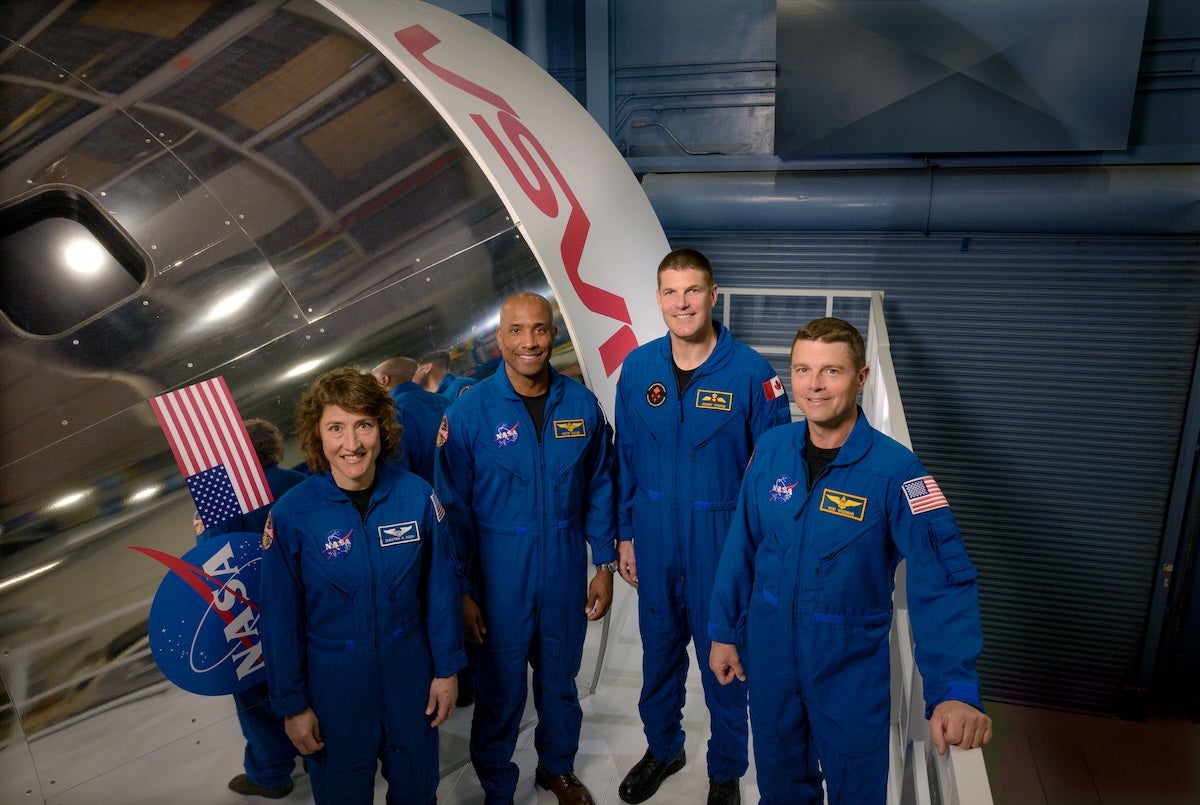
NASA is targeting a launch as early as April 1 for Artemis II, the first crewed mission to travel beyond low Earth orbit since 1972. The roughly 10-day mission will send four astronauts on a lunar flyby to test spacecraft systems for future missions.
Experts from Rice University, a long-standing partner in U.S. space exploration, are available to share insight on key aspects of the mission.
Solar activity and space exploration
Expert: David Alexander, professor of physics and astronomy, director of the Rice Space Institute (RSI) and executive committee member of the Texas Aerospace Research and Space Economy Consortium
Expertise: Solar physics, exoplanetary science and space exploration, including:
- Solar activity and its impact on space missions.
- Discoveries from the International Space Station.
- Future developments at Houston Spaceport and the Texas Space Commission.
Space travel and space weather
Expert: Patricia Reiff, professor of physics and astronomy and associate director of outreach programs at the RSI
Expertise: Space plasma physics and space weather, including:
- Solar flares, auroras and cosmic rays.
- Radiation storms during the current solar maximum.
- Predicting space weather to protect astronauts and spacecraft.
- Analyzing when auroras might be visible in Texas.
Astronaut health and performance
Expert: John DeWitt, director of applied sports science
Expertise: Human performance in space, including:
- Astronaut health before, during and after missions.
- Preventing muscle and bone loss in microgravity.
- Long-duration mission preparation, including Mars-class missions.
Artificial Intelligence in space exploration
Expert: Sanjoy Paul, executive director of Rice Nexus and director of the Artificial Intelligence Houston Institute
Expertise: AI applications in space missions, including:
- Monitoring spacecraft operations and astronaut health.
- Cybersecurity for in-space computing and edge data centers.
- AI in space operations.
- AI-based space startups.
Science policy, research governance and space science leadership
Expert: Kenny Evans, fellow in science, technology and innovation policy at Rice’s Baker Institute
Expertise: Science and technology policy, including:
- Governance of the global research enterprise and U.S. science leadership.
- The politics of scientific expertise that inform federal science priorities.
- Research security policy and implications for national space research programs.
- The role of science policy in shaping long-term space exploration planning.
Planetary surface exploration, future missions, Mars surface and rover operations
Expert: Kirsten Siebach, assistant professor of Earth, environmental and planetary sciences
Expertise: Planetary geology and robotic exploration, including:
- How robotic exploration on Mars informs planning for future human missions to the moon and Mars.
- Mars’ water history and surface activity.
- Curiosity rover operations in Gale crater and Perseverance rover operations in Jezero crater.
Human adaptation to life in space
Expert: Scott Solomon, evolutionary biologist, teaching professor of biosciences and author of “Becoming Martian: How Living in Space Will Change Our Bodies and Minds”
Expertise: Biological and psychological effects of living in space, including:
- Long-term changes to the human body and mind in space.
- Impacts of space tourism and off-Earth settlement.
- Evolutionary changes to bacteria and other microbes in space.
- Human reproduction and development of children born beyond Earth.
To schedule an interview with any of Rice’s experts, contact media relations specialists Marcy de Luna at marcy.deluna@rice.edu and Rachel Leeson at rachel.leeson@rice.edu.