
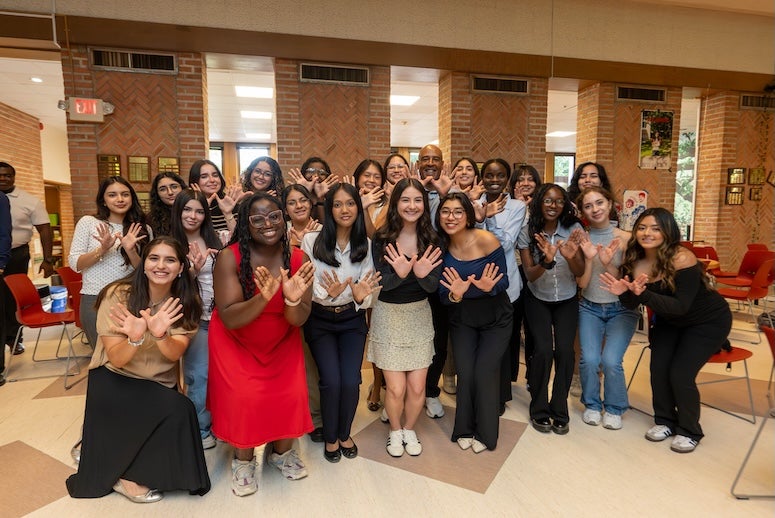
Before their first semester at Rice University begins, 38 incoming students are already getting a taste of what it means to be a Rice student: tackling demanding STEM courses, learning how to study collaboratively, meeting faculty and building a community they can rely on when classes begin in the fall.
They are part of the Rice Emerging Scholars Program, or RESP, an intensive residential program designed to prepare first-year students for the pace, depth and rigor of STEM education at Rice.
Now in its 15th year, RESP is more than a summer bridge program. Its comprehensive approach combines six weeks of rigorous academic preparation with personalized advising, mentoring and other support that continues throughout students’ time at the university.
“RESP is about showing students from the very beginning that they belong at Rice and are capable of doing hard things,” Rice President Reginald DesRoches said. “As a first-generation college student, I benefited from a similar program that helped prepare me for the academic rigor of Berkeley and taught me the importance of community and asking for help. These students have already proven they are ready for the challenges ahead, and Rice is committed to helping them thrive.”
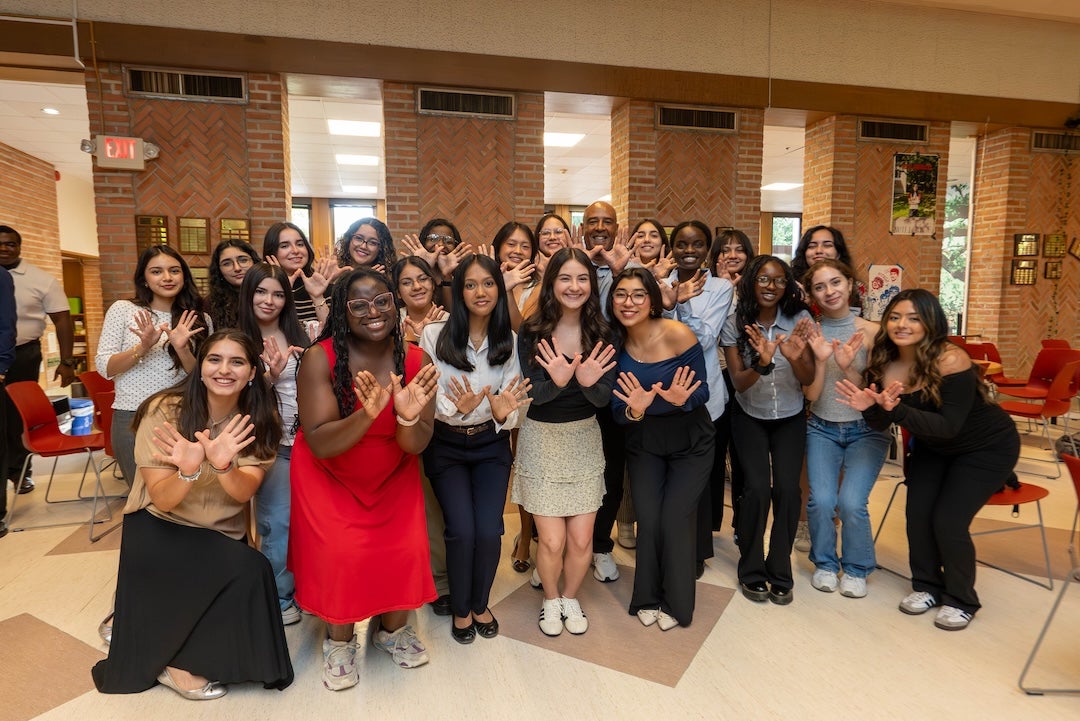
RESP was created to help talented students who may have attended high schools with fewer advanced coursework, tutoring or other academic resources to help make the transition to Rice’s demanding STEM curricula. The goal is not to make the work easier but to give students experience, strategies and support that can help them succeed once the academic year begins.
“These classes are not remedial in any way,” said Angel Martí, professor of chemistry, bioengineering and materials science and nanoengineering, chair of the Department of Chemistry and faculty director of RESP. “They’re presented with the same rigor and the same pace students will experience during the semester. The purpose is not only to reinforce concepts they may need during their first year but to help them get used to the rigor and fast pace of Rice and figure out the tools they need to be successful.”
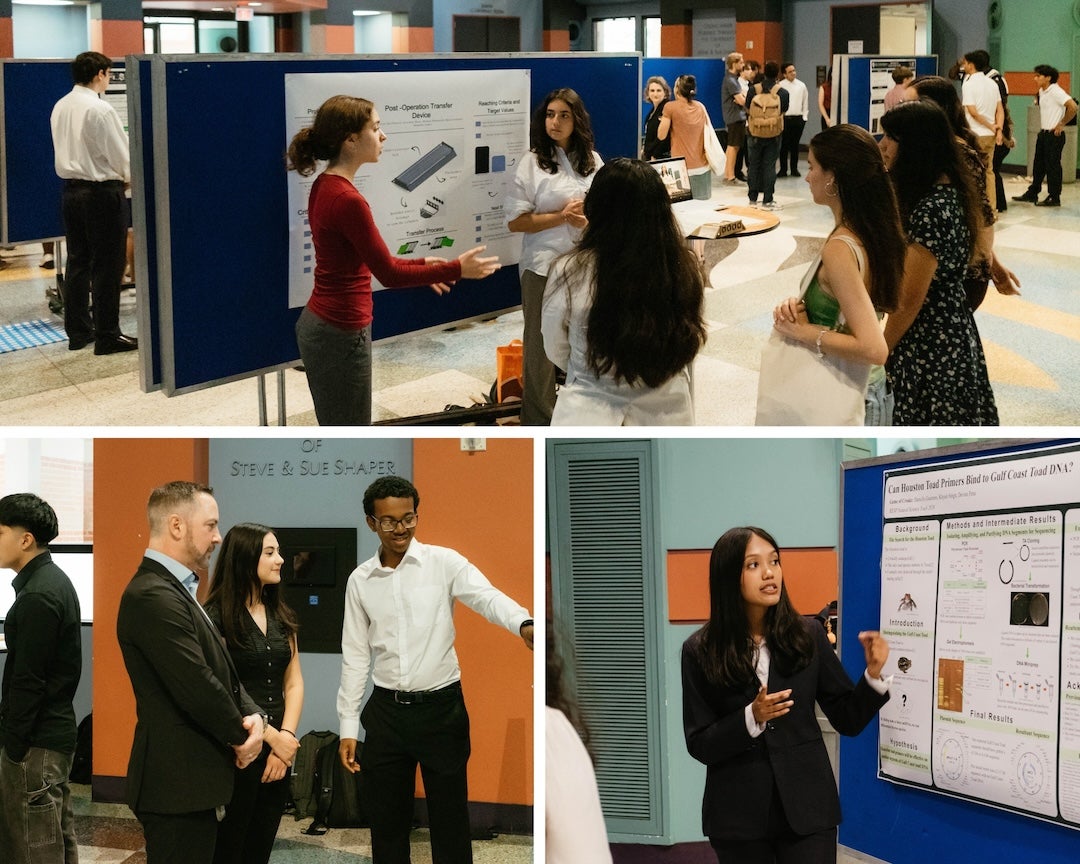
During the six-week summer program, scholars attend classes Monday through Friday in engineering, natural sciences or computer science, taught by Rice faculty members or alumni. They also spend several hours each week working in groups, where they practice collaborative problem-solving and learn how to study alongside their peers, and they complete hands-on projects that culminate in a symposium presentation at the end of the summer.
For incoming freshman Dahlia Ornelas, the experience has made the transition to college feel much less daunting.
“RESP gave me a beautiful introduction to what college is like,” Ornelas said. “I feel like if I didn’t have this, I would have been blindsided by my first fall semester. RESP really gave me an idea of what I need to do to be successful at Rice and even beyond into my career.”
Incoming freshman Valeria Garcia said the program has helped her develop academically while also giving her confidence that she will have a support system once the semester begins.
“I’ve been able to grow academically as well as personally,” Garcia said. “I’ve learned from my peers, I’ve learned how to work in groups, and I’ve learned how to study. This program has definitely eased my nerves, and I’ve been able to learn more about myself as a student. I’m very grateful to be at a school that really cares about the success of its students.”
That sense of belonging is central to RESP.
Alongside their coursework, scholars participate in academic and social programming designed to introduce them to Rice and the available resources. This summer, activities have included a campus scavenger hunt, a Rice Engineering alumni luncheon, meetings with academic support, financial aid and bursar staff, a faculty fair and a trip to Kemah Boardwalk.
The program is offered at no cost to participants, including room and board, and students receive a stipend. That structure is intentional, ensuring that students who could benefit most from RESP are able to participate regardless of financial circumstances.
Of the 38 students in the 2026 cohort, 30 are Pell-eligible, 22 are QuestBridge students and 21 are first-generation college students. While many come from communities across Texas, the cohort also includes students from Arkansas, Rhode Island, California, Arizona, New York, Florida and Illinois.
Incoming freshman Ahad Rahman said the program has helped him understand that succeeding at Rice will require resilience as much as academic ability.
“This program helped me understand what it takes to succeed — that failure will come, but it’s how you bounce back from failure that really dictates how happy and successful you are within your major,” Rahman said.
Rahman said he hopes to study engineering and eventually develop medical devices that improve quality of life for people with neuromusculoskeletal conditions. He sees a connection between that goal and the community he has already found at Rice.
“Rice is really big on a culture of care, and I want to build something that benefits people at Rice and beyond,” Rahman said. “I want to bring that same idea and mission to a larger scale and give back to communities like the one I grew up in.”
RESP’s work does not end when the six-week program concludes. Throughout their undergraduate experience, participants receive individualized advising and mentoring on everything from coursework and study strategies to communicating with professors and finding research opportunities.
“RESP is about giving students the opportunity to see what they’re capable of and making sure they have the support to reach that potential,” said Jorge Gómez Fernández, associate director of RESP. “By the end of the summer, they’ve learned not only how to navigate challenging coursework but how to lean on one another, ask for help and use the resources around them. Our hope is that they carry that confidence and community with them throughout their time at Rice.”