
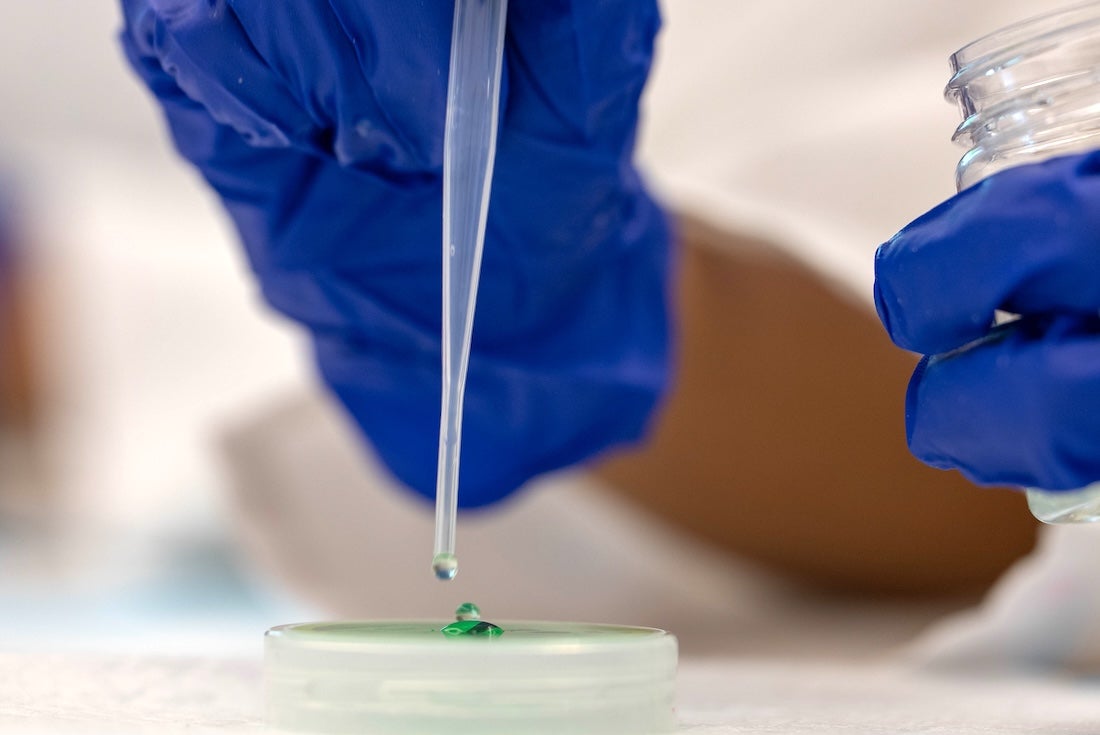
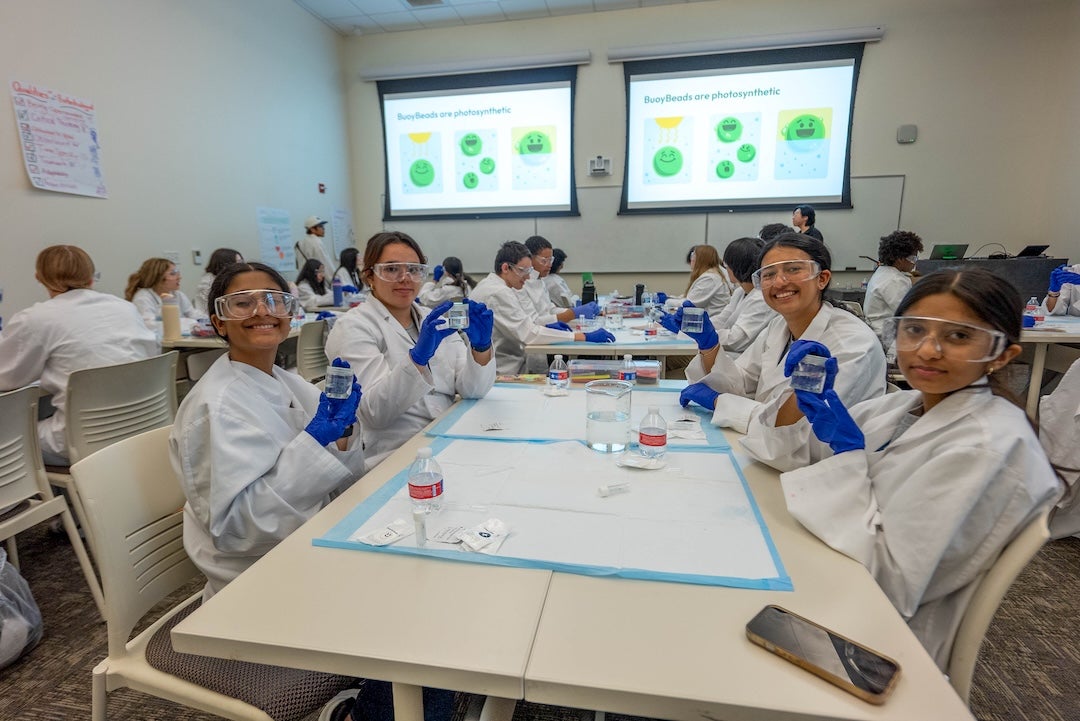
A hands-on biotechnology kit developed at Rice University allows high school students to create living materials while exploring advanced science concepts typically taught at the university level.
The kit, called BuoyBeads, was created in the laboratory of George Lu, an assistant professor of bioengineering, in collaboration with Rice’s Center for STEM Engagement (R-STEM). Students combine a live, naturally occurring, nonhazardous strain of cyanobacteria with a few simple laboratory solutions, following a six-step process to encapsulate the living cells in a polymer bead. The project has received $100,000 from Citgo over two years to expand production and classroom distribution.
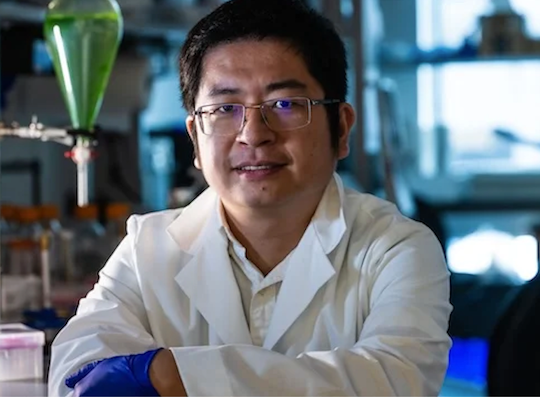
“BuoyBeads grew from our effort to bring advanced biotechnology out of the research laboratory and into classrooms where students can explore it directly,” Lu said. “The kit gives students an opportunity to combine several areas of science, solve problems and see how those ideas connect in the real world.”
Designed for classroom instruction, the activity makes emerging biotechnology visible and approachable while connecting biology, chemistry, physics and engineering. It also introduces students to applications in environmental cleanup, medicine and sustainable construction.
From laboratory concept to classroom kit
The idea originated about four years ago when Lu’s research team observed that the bacteria used in its work could remain viable in low-resource environments. This resilience suggested the organisms could support a classroom activity without requiring the specialized conditions of a university laboratory.
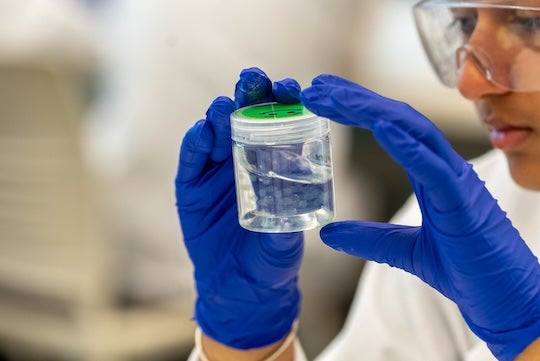
R-STEM helped initiate the educational effort and recruit teachers for early classroom testing. Alumnus Eugene Chung, who earned his doctorate at Rice in August 2025, led the kit’s development as a graduate student in Lu’s lab and continues to oversee the project.
Chung tested the kit with two science teachers through R-STEM’s teacher fellowship network. The team initially assembled fewer than 100 prototype kits using flexible laboratory funds.
“I wanted to create a science, technology, engineering and mathematics outreach model that could reach more students without depending on large groups of volunteers traveling to individual schools,” Chung said. “A kit that teachers can use in their own classrooms makes the experience more scalable and puts the learning directly into students’ hands.”
Citgo support expands production
Citgo provided an initial $50,000 grant and renewed the project with another $50,000 for a second phase. The funding supported materials, professional branding, website development, classroom evaluations and equipment designed to automate production.
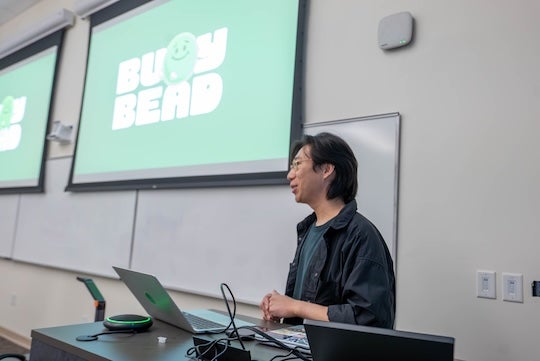
“Citgo’s support brings more than the resources needed to produce the kits,” Lu said. “Through its longstanding STEM education programs, Citgo has already built a strong network of teachers and high schools, which greatly facilitates our ability to distribute BuoyBeads and reach classrooms at a much larger scale.”
With the first year of Citgo funding, the team produced about 600 kits by hand. New equipment is expected to increase production capacity from roughly 600 kits a year to as many as 600 kits a month. Each Citgo-sponsored kit will be provided to teachers at no cost.
“Promoting STEM education in public schools is a cornerstone of Citgo’s community investment efforts,” said Kresha Sivinski, Citgo’s vice president of human resources and support services. “Through our partnership with Rice University, we are expanding access to innovative, hands-on learning experiences that inspire students to explore science while providing educators with enhanced curriculum resources that strengthen connections between classroom concepts and real-world applications.”
Building a broader biotechnology program
BuoyBeads have been distributed to seven schools, primarily in Houston, with additional deliveries to Brownsville, Texas, and to three teachers in Louisiana. The project has also been featured in two teacher workshops and Rice’s Biotechnology Summer Academy for three summers, hosting more than 100 students.
Teachers receive a manual, classroom presentation and supporting illustrations that connect the activity to university research. Between 80% and 90% of workshop attendees have typically registered to receive kits after participating, Chung said.
“Our immediate goal is to distribute 2,000 kits and continue improving the activity through teacher and student feedback,” Chung said. “The longer-term vision is to create expansion kits that show how living materials can be programmed to perform useful functions.”
The Rice team plans to continue administering BuoyBeads while exploring expansion kits that introduce students to more advanced areas of biotechnology, including nanotechnology and additional real-world applications.
“Every student deserves the opportunity to experience science as something they can create, not just read about,” Chung said. “We hope BuoyBeads inspires the next generation of innovators by making biotechnology hands-on, approachable and accessible.”