
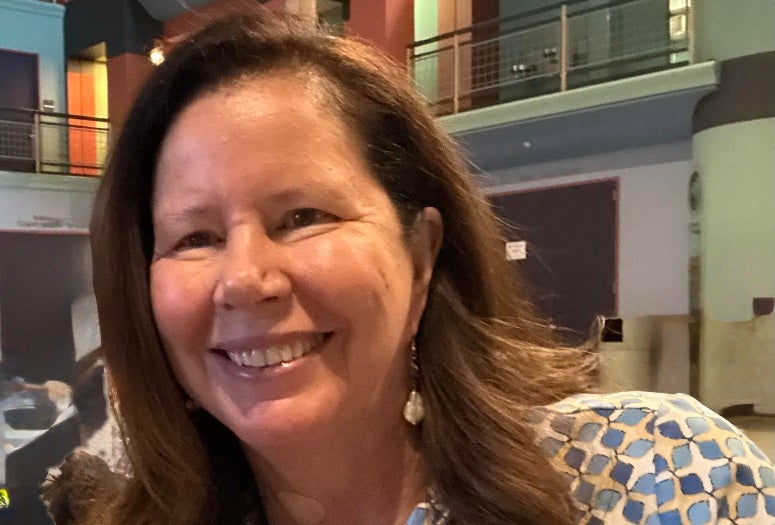
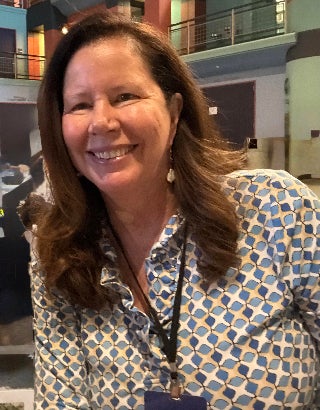
Rice University is recognizing Carolyn Nichol for 19 years of service. She is the director of the Office of STEM Engagement (R-STEM), providing strategic leadership for a team of 14 professionals dedicated to advancing excellence in teaching and learning. She oversees the design and delivery of innovative STEM education, leadership and mentoring programs serving learners of all ages. Nichol also leads efforts to secure and steward funding from federal and state agencies, foundations and private donors to strengthen STEM education in Houston and beyond. Additionally, she is an associate research professor in the Department of Chemistry. Her last day is March 31.
Q: What is your favorite time of year at Rice and why?
A: Summertime. While Houston’s heat and humidity can be intense, summer is when the Rice campus comes alive in a different way. Through the Rice Office of STEM Engagement, we welcome K-12 students, teachers and community college students into our classrooms and labs through more than two dozen programs offered during the summer and academic year. These include weeklong STEM enrichment programs, research internships and professional development for K-12 educators that support both instructional excellence and leadership growth. Summer is also a special time to experience the breadth of Rice’s research, highlighted by the many poster sessions presented by our student and teacher interns.
Q: Share your most memorable, standout moments during your time at the university.
A: It is hard to choose just a few, but several moments stand out. One was when I began teaching in bioengineering at Rice in 2002. Having previously taught at the University of Texas at Austin and the University of Houston, I was immediately struck by how engaged and curious Rice students were. The smaller class sizes and lively office hour conversations allowed me to really get to know my students, and becoming a Jones College associate further deepened my appreciation for how talented, thoughtful and creative Rice students are.
When I started working in STEM education in 2007, I had the immense honor of working with John Hutchinson and learning from him about what makes a great teacher. Observing his teaching style and understanding his Socratic approach to teaching chemistry opened my eyes to what STEM education could look like. I was also able to dive deeply into the great need in our community for science enrichment, the disparities that exist across our schools and school districts, and work to design programs to improve education that have been particularly rewarding. One moment I will never forget was during a professional development session John was leading for high school chemistry teachers. It was a cold Thursday evening, and yet Dell Butcher 180 was almost full of educators who I had enticed to attend using food, a small stipend and the opportunity to learn about advances in nanotechnology. However, that evening after a brief discussion of quantum dots, John launched into a deep discussion about how they actually work. Afterwards, an elderly teacher turned to me and said, “I am so happy. I’ve been teaching chemistry for 20 years, and I never really understood quantum levels until today. That was amazing.” That moment captured for me how transformative strong teacher preparation can be for both educators, and I believe that strengthening teachers’ knowledge base provides them with the skills to improve their students’ success and has a huge impact on attitudes toward and interest in science.
Having the opportunity to speak with Bob Curl, the Nobel Prize in chemistry winner, has been one of the highlights of my career. I recall the first time I met with him, and I was terrified to walk into his office. But rather than intimidating, Bob was the kindest man, and we ended up having an expansive conversation that touched on everything from buckyballs to climate change modeling to education. It has been amazing to work with him and all the brilliant researchers at Rice and helping to share their research with the public.
Finally, some of my most memorable experiences came from seeing Rice through the eyes of a mother. Both of my children are Rice graduates, and seeing the Wiess and Brown college students come out and help us unpack our minivan on move-in day was amazing. Watching my children thrive at Rice reinforced for me what a special place it is. The culture of caring here is real, and it has made me even prouder to be part of the Rice community.
Q: How have you seen Rice evolve over the years?
A: Rice has grown in remarkable ways. When I first began teaching here, about half of the undergraduate population came from Texas, and the total number of undergraduates was smaller than that of Lamar High School just down the street. Since then, the undergraduate population has doubled, graduate programs have expanded substantially and the student body has become far more diverse.
Beyond its physical and demographic growth, Rice’s research impact has expanded dramatically. For example, through my work as the education director for the NSF NanoEnabled Water Treatment (NEWT) Center, I saw firsthand the power of collaboration and innovation. Faculty such as Pedro Alvarez and Qilin Li exemplify how Rice’s commitment to research on global and local challenges, such as providing clean water to everyone everywhere, has led to groundbreaking technologies that reduce energy use and costs in water treatment, ultimately saving lives.
Q: How have you evolved because of your experience at the university?
A: My life and career have evolved in ways I never anticipated. When I started teaching at Rice as a chemical engineer and bioengineer, I was focused on technological developments at the micro- and nanoscale. However, working in STEM education shifted my perspective to the human scale — opening my eyes to the needs and inequities in our community and deepening my understanding of the challenges many students face.
One experience that has stayed with me involved a high school student who fell asleep during one of our summer programs many years ago. When I asked what was going on, he explained that he had been working until 2 a.m. at McDonald’s and then waking up at 6 a.m. to take the bus to campus, so he could participate. That moment fundamentally changed how I thought about access and opportunity. It motivated me to pursue grant funding to provide transportation and stipends for students from low-income families, enabling them to fully engage in our programs without having to juggle multiple jobs, and to support professional development for their teachers, so they have the resources to implement what they learn.
At its core, this work is about lowering the barriers people face when they seek to learn. Experiences like this have shaped me into a more empathetic educator and leader and have driven my commitment to securing funding that expands meaningful STEM opportunities, particularly for students and teachers in underserved communities. Connecting directly with learners and educators across Houston has inspired me to build and grow R-STEM so that we can broaden access to high-quality STEM education in Houston and beyond.
Q: What advice would you give to employees to make the most of their time at the university?
A: Say yes, and get involved. Rice offers extraordinary opportunities to learn from experts and broaden your perspective. Attend talks at the Baker Institute or the Ken Kennedy Institute, where topics range from global policy to artificial intelligence. Go to seminars even if you think you might not fully understand the subject or if your schedule feels too full. You will almost always leave having learned something new and having met interesting colleagues.
Step away from your desk and get to know the Rice culture. Connect with the college system by becoming an associate. Volunteer as a Beer Bike judge. Attend student events, from volleyball matches to powderpuff football, and support the arts by attending student plays and dance recitals. One of the best things about Rice is that it is large enough to offer a rich array of cultural and intellectual experiences yet small enough that you are likely to know some of the people on — or behind — the stage.