
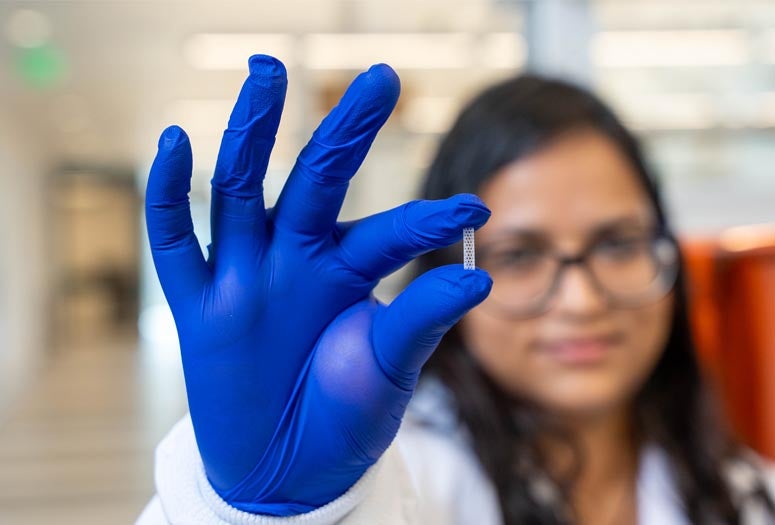
Biologic medicines can be powerful treatments for many diseases, but their cost can limit access. According to the U.S. Food and Drug Administration, biologics account for just 5% of prescriptions but 51% of drug spending. Researchers at Rice University, with the support of the Rice Biotech Launch Pad, have developed an implantable “living pharmacy” using engineered protein producers (EPPs) that could one day deliver these medicines continuously for months or years from a single procedure.
According to the new study published in Science Advances titled “Once-yearly cell-based therapy for sustained and dose-tunable delivery of monoclonal antibodies,” engineered cells enclosed within a specially modified biomaterial continuously produced therapeutic monoclonal antibodies for one year across multiple preclinical models. The retrievable system also allowed researchers to stop treatment or adjust dosing by removing or replacing the implant.
The work addresses a key challenge for implantable cell therapies. The body’s foreign body response can cause inflammation and scar tissue to build up around an implant, restricting the movement of nutrients and therapeutic proteins and ultimately reducing cell survival and drug production.
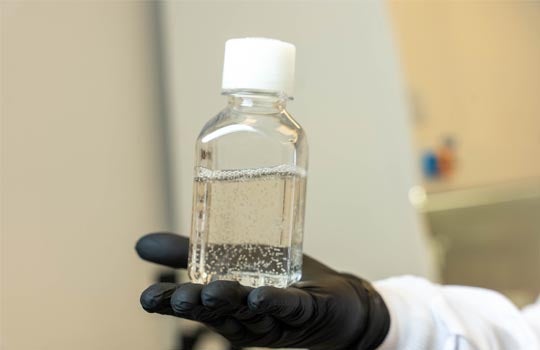
“We have created an entirely new approach for the development and use of therapeutic antibodies,” said Robert S. Langer, co-founder of Duracyte and professor at the Massachusetts Institute of Technology. “By combining engineered cells, biomaterials and an implantable device, this approach has the potential to create a living pharmacy that provides long-lasting production of biologic medicines while maintaining a level of control that is important for therapeutic use.”
This platform is being developed by Duracyte, which is advancing the platform toward clinical development with the publication providing a foundation for further work on safety, biocompatibility, device design and therapeutic applications. The researchers also used human pharmacokinetic modeling to assess the potential for clinically relevant antibody levels and demonstrated a minimally invasive device designed to support dose adjustment and treatment cessation. Because EPPs can be engineered to produce different proteins, the platform could ultimately support a range of biologic medicines.
The platform was also designed to be adaptable across therapeutic targets. Researchers engineered the same human cell line to produce 13 different monoclonal antibodies spanning oncology, autoimmune disease and infectious disease, including ipilimumab, pembrolizumab, adalimumab, 3BNC117 and PGT121. The antibodies retained their intended biological activity, demonstrating the platform’s potential as a modular approach to mAb delivery.
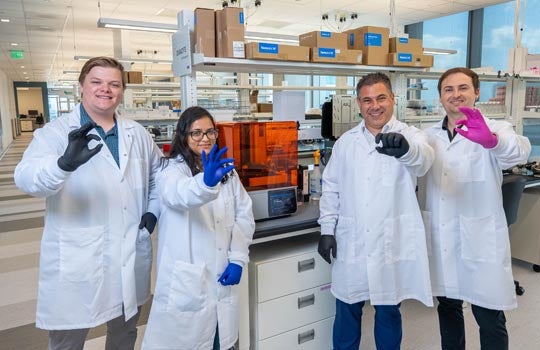
“The potential of this platform is similar in some ways to the promise of reusable rockets for space travel which significantly reduced cost and time to manufacture,” said Omid Veiseh, professor of bioengineering at Rice University and corresponding author of the study. “Rather than repeatedly manufacturing and delivering a biologic from outside the body, EPPs could produce therapeutic proteins continuously inside the patient. If this approach can be successfully translated, it could offer a more efficient way to deliver biologics with the potential to reduce some of the costs associated with manufacturing and repeatedly administering these medicines.”
The potential economic impact comes at a time of growing concern over the cost and accessibility of biologic medicines. A recent report highlighted by The Wall Street Journal found that 90% of major biologic drugs expected to lose exclusivity over the next decade have no lower-cost competitors in development, underscoring the need for new approaches to how these medicines are produced and delivered.
The study was led by co-first authors Cody Fell, Anthony E. Davis and Shalini Pandey of the Department of Bioengineering at Rice in Houston. This work was supported by the Gates Foundation (INV-051204) and the Advanced Research Projects Agency-Health (AY1AX000003 and 1047648-490467).