
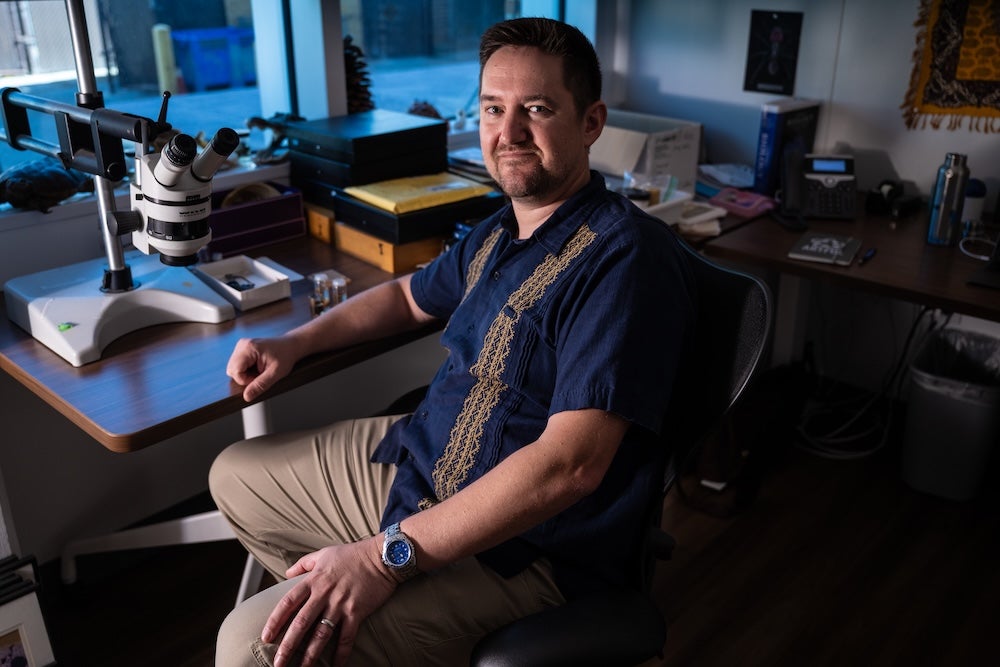
NASA’s plan to return an astronaut with a serious medical condition along with three crewmates from the International Space Station to Earth marks the first evacuation for a medical emergency in the space agency’s 64-year history of human spaceflight, space agency officials said. Scott Solomon, a teaching professor of biosciences at Rice University, is available to comment on how space affects the human body and the medical risks associated with life in space.
Solomon is a biologist and science communicator who teaches courses in ecology, evolutionary biology and scientific communication. His research and educational focus make him uniquely positioned to explain the biological challenges astronauts face in space, including how future missions to the moon and Mars may affect human health and reproduction.
Solomon is the author of the forthcoming book, “Becoming Martian: How Living in Space Will Change Our Bodies and Minds,” set to be published Feb. 17. The book explores the physical and mental effects of space travel, the potential for human evolution beyond Earth and the role of synthetic biology in helping humans adapt to extraterrestrial environments.
“One of the biggest challenges of going further into space is that medical emergencies become much more serious, largely because this type of evacuation becomes difficult or even impossible,” Solomon said.
To schedule an interview, contact Marcy de Luna, senior national media relations specialist, at marcy.deluna@rice.edu, or Chris Stipes, executive director of news and media relations, at chris.stipes@rice.edu.