
What makes technology feel intuitive?
Why do some digital tools seem effortless to use while others leave users frustrated?
Those questions have guided Cary Jensen for more than four decades.
Long before “user experience” became a common phrase, Jensen was studying how people think, perceive information and interact with technology. The lessons he learned at Rice University became the foundation for a career spent helping developers build better software while helping others understand the importance of the technology.
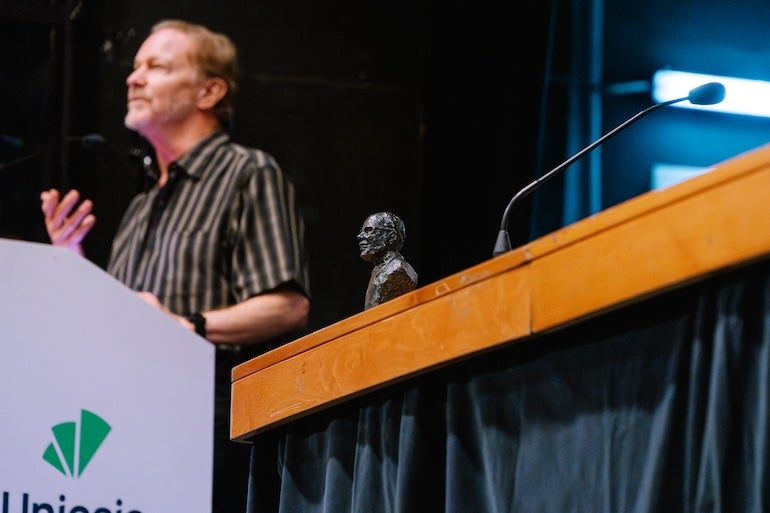
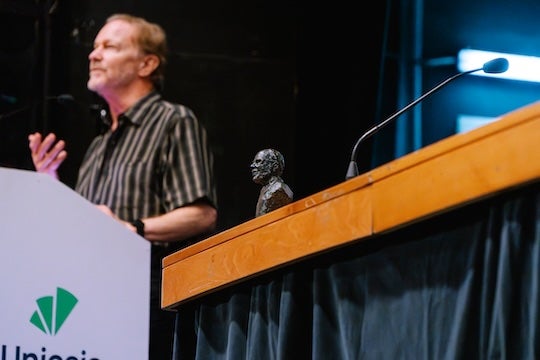
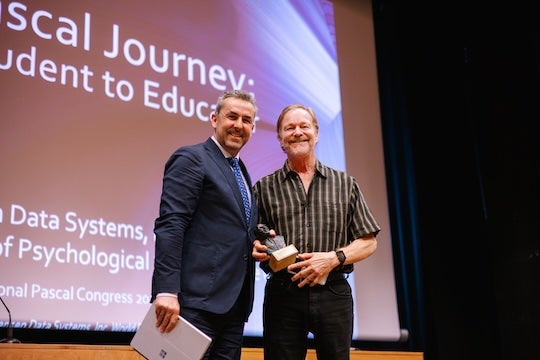
That work recently earned Jensen, who received his doctorate in psychology from Rice in 1987 and now serves as an adjunct faculty member, the Niklaus Wirth Award for Most Valuable Contributor at the International Pascal Congress 2026 in Salamanca, Spain. Named for Swiss computer scientist Niklaus Wirth, creator of the Pascal programming language, the award recognizes individuals whose sustained contributions have advanced the Pascal and Delphi software development communities.
“This was a complete surprise,” Jensen said. “I felt deeply honored. I was moved that my colleagues have been so affected by my work.”
Jensen credits the recognition to the foundation built at Rice.
“I came to Rice to study human factors psychology,” Jensen said. “While my interests were firmly in the application of psychological research to the design of the systems and interfaces with which humans interact, I ended up doing basic research on human perception.”
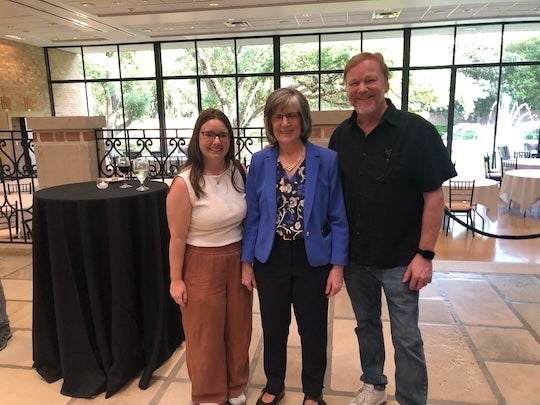
Working with professor emeritus Randi Martin as her first doctoral student, Jensen developed a strong appreciation for statistics, experimental design and the scientific method, skills that would later shape his career.
“Cary was very energetic and engaged as a graduate student,” Martin said. "He was independent and always found a way around any obstacles that might arise during a research project.”
Martin said those same qualities carried into Jensen’s career.
“Even though the training he received with me was on doing basic research in cognitive psychology, Cary was able to make use of this training in branching out into these technical areas,” Martin said.
After earning his doctorate, Jensen and his wife, fellow Rice doctoral alumna Loy Anderson, founded Jensen Data Systems. What began as a research and statistical consulting business evolved into software development, technical publishing and professional education.
Over the next three decades, Jensen authored more than 25 books, led workshops around the world and built an international reputation for helping developers solve problems, communicate ideas and build technology that better serves the people using it.
Today, Jensen has come full circle as an adjunct faculty member at Rice, where he shares those same lessons with graduate students preparing to launch careers of their own.
“I am keen to share the many lessons I learned over our years in business with the next generation of graduate students who will be building the foundations of our future,” Jensen said.
Martin said Jensen’s international recognition reflects the lasting impact of his work.
“This is a high honor, akin to obtaining a lifetime achievement award in more traditional academic disciplines,” Martin said. “I am very proud of him and glad that I was able to provide some initial guidance in launching this outstanding career.”
“When you share your knowledge, you are not only affecting the people you communicate with,” Jensen said. “You are also adding to the body of knowledge from which later generations will learn.”