
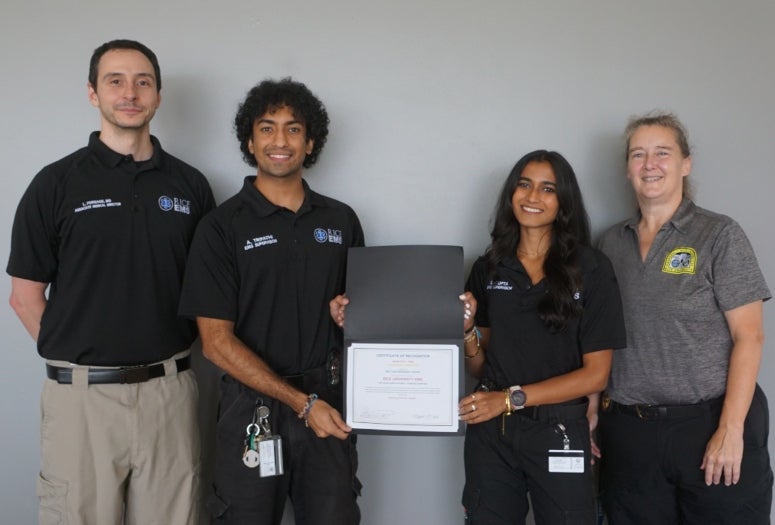
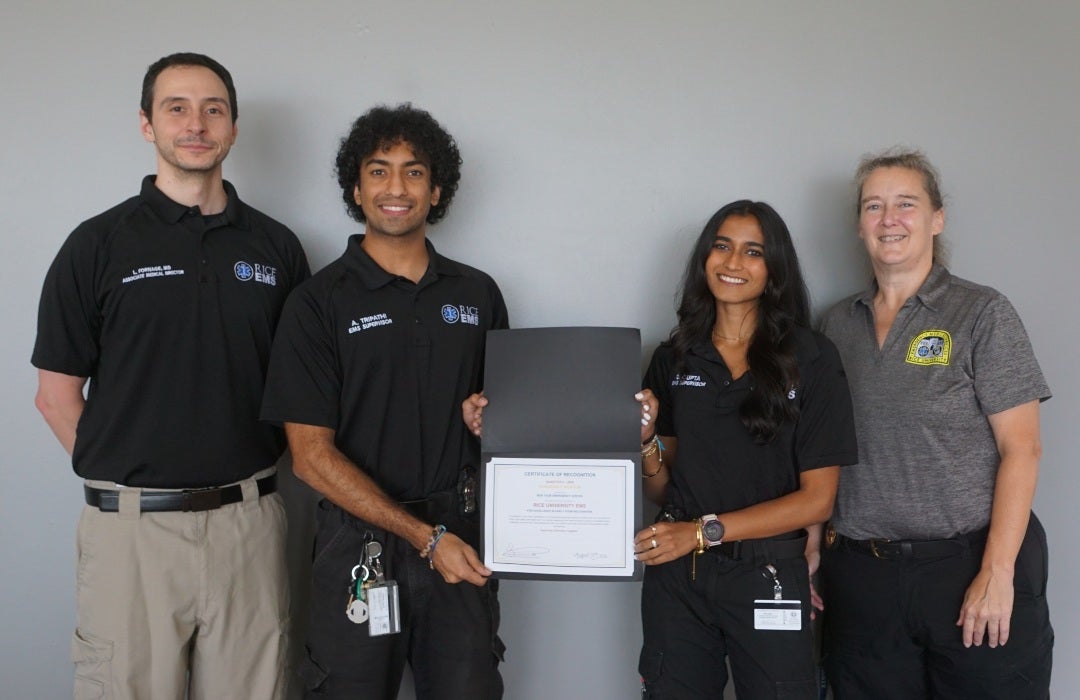
A call for a possible seizure became a life-threatening cardiac emergency when Rice University Emergency Medical Services (REMS) responders identified signs of a heart attack in a campus visitor and quickly coordinated transport for specialized care.
Rice student volunteer EMTs junior Dia Gupta and senior Abhishek Tripathi were among the first to arrive. The patient was awake but appeared significantly altered after losing consciousness.
The responders began assessing possible causes of the episode, including seizure and syncope. They obtained an electrocardiogram, which revealed an ST-elevation myocardial infarction (STEMI) — a type of heart attack caused by an acute blockage of blood flow to the heart.
The finding prompted the team to accelerate its response. An ambulance had already been requested early in the assessment, and REMS notified Houston Fire Department (HFD) and Ben Taub Hospital of the STEMI.
Using the Pulsara communication platform, the team transmitted clinical information and alerted the hospital while the patient was still on campus. That advance notice allowed the receiving team to prepare for the patient’s arrival and emergency cardiac treatment.
“If we are thorough at the beginning, especially since we’re the first agency on scene, that allows communication to HFD and then Ben Taub,” Tripathi said.
The patient was transported for emergency treatment, including care in the cardiac catheterization lab, and ultimately returned home.
For the REMS responders, learning about the patient’s outcome was particularly meaningful.
“We don’t find out oftentimes what happens to the patient,” Tripathi said. “Hearing that they’re still able to go out and be here today was super impactful.”
Gupta said the experience underscored the importance of recognizing cardiac emergencies quickly.
“Knowing that he had to go to the catheter lab and that he came out of all of it and he’s all safe and sound, that really stuck with me,” she said.
Ben Taub subsequently recognized the response as an example of timely care and effective partnership, including early recognition of the emergent condition, prompt response by HFD and quick notification by REMS before the patient left campus in the ambulance to the emergency room and cardiology teams, and excellent care in the hospital lead to a great outcome for the patient.
The case also illustrates the role REMS plays across the Rice community. The student-run service responds to medical emergencies involving students, faculty, staff and visitors on campus.
“We are always there for them,” Gupta said. “We’re like a safety net.”
REMS members provide emergency assessment and care at no charge on campus and coordinate with HFD and area hospitals when patients require additional treatment.
The organization is composed of approximately 75 student members, including duty crew members and students who serve as in-charge responders. The in-charge responder oversees the medical response, coordinating patient assessment, treatment, transportation and additional resources.
That responsibility gives Rice students an opportunity to develop clinical and leadership skills while preparing for careers in medicine.
Gupta, who plans to attend medical school and pursue studies in surgery, said her experience with REMS has taught her how to interact with patients and apply medical knowledge in real situations.
Tripathi also plans to attend medical school and said REMS has provided opportunities to lead emergency responses and make clinical decisions.
The STEMI call, however, offered a particularly powerful reminder of why that training matters.
“It really reminds you that what we do has a purpose,” Gupta said. “Every single hour of training ... every person that we help, it can make a difference in their life.”