
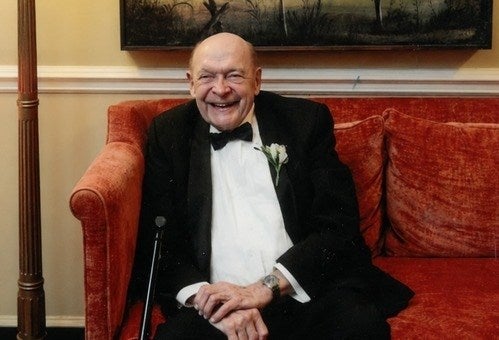
Frank Martin Fisher Jr., a Rice University professor emeritus of ecology and evolutionary biology, passed away at the age of 95 on June 23.
“Fisher’s legacy truly is the difference that one person can make,” said Thomas Killian, dean of the Wiess School of Natural Sciences. “His research contributed to a new view of environmental sciences, helped reduce methane emissions in rice paddies and built understanding of the Gulf Coast wetlands. His mentorship influenced countless students at Rice, sparking curiosity and a love of the outdoors while sharing his incredible depth and breadth of knowledge.”
Fisher was born Oct. 16, 1931, in Louisville, Kentucky, and spent his childhood on his family’s farm in southern Indiana. His experiences there engendered a love of nature and animals that shaped his research and career.
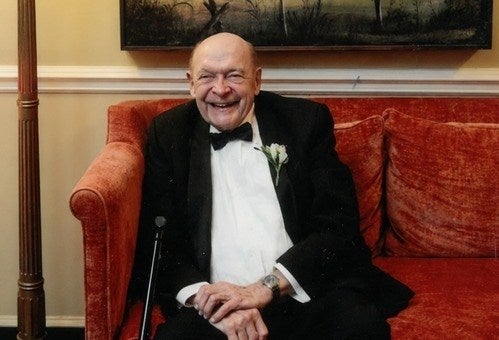
After receiving his doctoral degree from Purdue University in 1961, Fisher accepted a professorship at Rice University, where he taught for over 50 years. He began his career with a focus in invertebrate zoology and a particular interest in parasitology. Over the years, he became fascinated by the wetlands of the Texas Gulf Coast, which led him to study climate sciences.
This work led Fisher, in collaboration with the late Ron Sass, another professor of ecology and evolutionary biology, to develop new methods of rice paddy management, reducing methane emissions to almost zero. This work, which began in the late 1980s, informed global climate models and mitigation strategies. It stood in the forefront of a new way of thinking about environmental scholarship, one in which the environmental was conceptualized as a system, rather than focusing on individual elements.
In the field, Fisher was known for his creative and practical ingenuity. He designed and built his own instruments, finding new ways to measure critical parameters for his experiments. While he brought many students into the field, inspiring a love for and understanding of wetlands ecosystems, he was also an exceptional lecturer.
His research, teaching and mentorship influenced countless scientists. More than a scientist and professor, Frank was a true teacher. Whether he was explaining wetland ecology, identifying a bird in flight or recounting a story from decades past, he inspired curiosity. Through his research, teaching and hobbies, Fisher spent his life helping ensure that the wetlands remained wild, the water stayed clean and waterfowl populations remained resilient.
In 2002, after nearly 50 years of service at Rice, Fisher was named a professor emeritus. His legacy will continue to inform and inspire conservation work at Rice.