
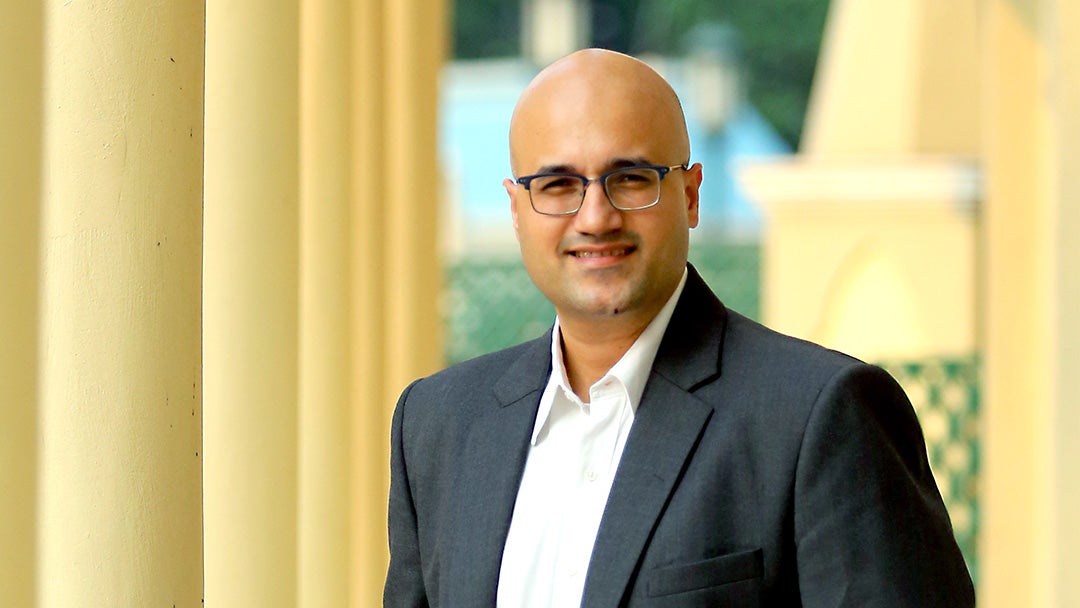
For Raghav Wahi ’10, the path to Rice University began with mentorship. Drawn by the work of materials scientist Pulickel Ajayan, the Benjamin M. and Mary Greenwood Anderson Professor of Engineering, Wahi came to Houston from India to pursue advanced research in materials science and nanotechnology, a decision that would shape both his career and his outlook on global collaboration.
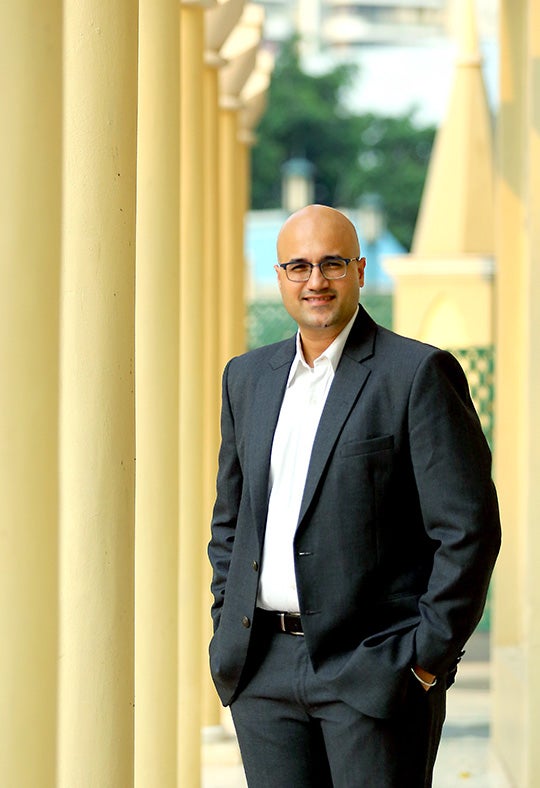
“Professor P.M. Ajayan has been one of the pioneers of nanomaterials working on carbon nanotubes since the early days, but more than that, he is an amazing human being,” Wahi said. “I will always be grateful to him for the role he played in my coming to Rice.”
Beyond the lab, Rice’s environment mattered too. Houston’s warm climate, multicultural setting and global-city sensibility made the transition feel natural for a student arriving from India.
Apart from his many peers and mentors, Wahi shared that he looks back fondly on time spent in the multi-cultural Rice Graduate apartments and support from the Wellbeing and Counseling Center and Office of International Students & Scholars (then run by Adria Baker).
Wahi describes his time at Rice as both rigorous and welcoming, particularly as an international student entering a high-level research environment. He credits the university with providing a gentle but demanding induction into advanced research, supported by faculty mentors and peers across disciplines.
“Rice gave me exposure to truly cutting-edge research while also being incredibly supportive as a foreign student,” Wahi said. “It was a lovely experience that taught me a great deal, and I would recommend students from all over the world to engage with Rice.”
After earning his degree, Wahi’s career took him through research laboratories in India, Germany and the United States. Today, he is cofounder of VoltQ, where his work focuses on strengthening manufacturing ecosystems across the U.S., Europe and India. His current efforts center on workforce development for emerging industries including solar power, renewable energy, battery storage and rare earth materials.
That global perspective aligns closely with the mission of Rice Global India, which aims to foster innovative collaboration, research and teaching in India. As an alum, Wahi hopes to see the initiative expand digital access to Rice-quality education, particularly for students who may not otherwise be able to access world-class academic resources. He also points to the potential of AI-driven tools to deliver free education in vernacular languages, helping reach underserved communities at scale.
Looking back, Wahi frames his Rice experience with lasting gratitude — not just for the technical training, but for the opportunity itself. His trajectory reflects the kind of enduring, two-way global connection Rice Global India seeks to cultivate, grounded in mentorship, research excellence and real-world impact.
Learn more about Rice Global India here.