

In a study published this week in Nature Physics, Rice University’s Qimiao Si collaborated with researchers from TU Wien in an experiment that showed quantum entanglement of a quantum critical metal.
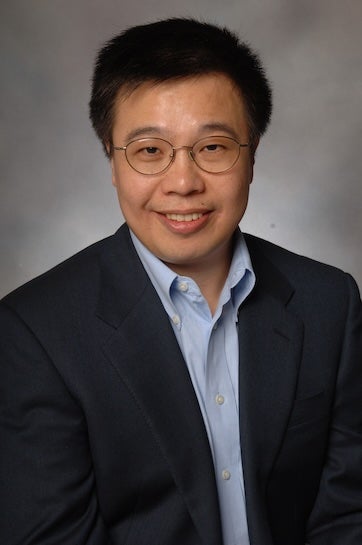
“In quantum critical metals, electrons act so collectively that they lose their individual identity,” said Si, the Harry C. and Olga K. Wiess Professor of Physics and Astronomy and director of Rice’s Extreme Quantum Materials Alliance. “Our work allows for a new way to understand this collective state of matter.”
Si’s group previously published a theory on quantum entanglement in a highly collective material, like a strange metal. In such a material, the electrons are entangled, meaning that their quantum states affect each other even if they are not physically close. In this new work, Si collaborated with experimental physicist Silke Paschen at TU Wien to measure the entanglement.
“This new collaborative work shows that in a highly collective quantum material, like strange metals, the electrons are particularly highly entangled,” Si said.
By interrogating strange metals, which are quantum metals that defy the normal rules of electricity, the team was able to characterize the entanglement state. They found that a particular characteristic of entanglement, called the spin quantum Fisher information, was at its highest at the quantum critical point, a phenomenon that allows quantum materials to move in between two different phases.
“Experimental determination of the enhanced quantum entanglement in strange metals is really gratifying,” Si said. “We want to use this work as a launching pad to develop a framework that uses entanglement to explore ways to advance new capacities for quantum information.”
The work at Rice was funded by the U.S. Department of Energy’s Basic Energy Sciences program (DE-SC0026179), the Air Force Office of Scientific Research (FA9550-21-1-0356), the Robert A. Welch Foundation (C-1411) and the Vannevar Bush Faculty Fellowship (ONR-VB N00014-23-1-2870).