
Over 20,000 earthquakes are located worldwide each year, but the vast majority of those are small — many too small to be felt by humans. Scientists have historically assumed most of these small earthquakes break as small, circular ruptures in which the rocks in a fault slip past each other in a single, smooth motion, and the crack spreads outward from one point like a ripple in a pond, different from how most major earthquakes behave.
Recently, however, a team of researchers, including Jonathan Ajo-Franklin, Sangwoo Han and YoungHee Kim, used a new approach to study these tiny earthquakes. Their findings, published in Science, reveal that there’s much more happening than what meets the seismograph.

Ajo-Franklin, professor and chair of Earth, environmental and planetary sciences at Rice University and co-lead author on this paper, has pioneered the use of a technique called distributed acoustic sensing (DAS) to collect seismic data from underground fiber optic cables. The technique provides measurements at many points along the cable, offering a much more detailed picture of how the earthquake unfolded than traditional seismometers alone can. Han, the study’s first author who is now a postdoctoral researcher at the University of Washington, combined these data with seismic recordings and computer models to reconstruct when and where the slips occurred on the fault.
“I came to Rice to study with Ajo-Franklin as a visiting researcher when I was a graduate student in YoungHee’s lab,” Han said. “This turned into an opportunity to combine his expertise in distributed acoustic sensing with our rupture analysis skills. Together, we saw something neither group could have seen alone.”
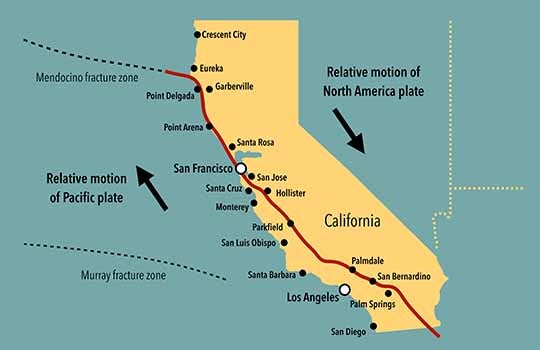
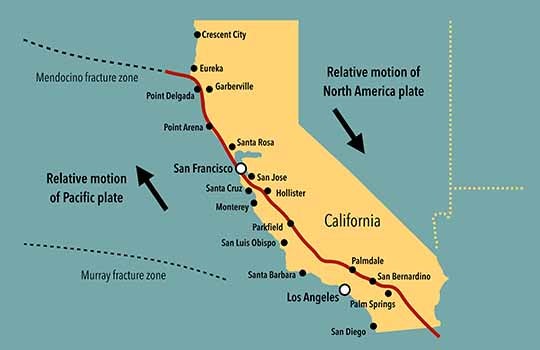
The team collected faint signals from a 28-kilometer fiber optic cable laid alongside a fault line in California’s Brawley Seismic Zone. Over three hours, they recorded 16 small earthquakes with the largest registering at magnitude 2. To their surprise, this small magnitude 2 earthquake ruptured in two stages and in two separate places on the fault. The stages were separated by a mere 42 milliseconds, a difference that could only be captured with DAS and fiber optic array measurements.
“Our data suggest that the first rupture actually triggered the second,” said Kim, professor of geophysics at Seoul National University and co-lead author of this study. “The two locations, while separate, are right next to each other. In fact, from the data, the 16 earthquakes may have been linked with stress from one event potentially causing another event in a close location.”
The magnitude 2 earthquake wasn’t a simple circular rupture. Instead, it looked like a fragmented failure in which a fault breaks in multiple places instead of one. This pattern has been seen in larger earthquakes in the area, which happened over a longer timespan, making it easier to record using standard seismological equipment. But this is the first time that this kind of rupture has been recorded in such detail in a small earthquake — perhaps because, until now, scientists haven’t been able to record events on the right timescale with the right type of array.
Precise rupture analysis on small earthquakes could provide more insight into larger ones. On average, about 16 magnitude 7 or greater earthquakes occur worldwide each year, compared to tens of thousands of smaller earthquakes. If smaller earthquakes can exhibit some of the same complex rupture behavior as larger ones, they could be a rich source of data for better understanding the relatively rare but far more concerning larger quakes.
“Forty-two milliseconds is not very much time at all, especially in geological terms,” Ajo-Franklin said. “Yet it could be enough to completely change how we’re viewing the most common type of earthquakes. What else are we missing in those milliseconds that we previously haven’t been able to accurately record?”
This work was supported by the National Research Foundation of Korea (RS-2022-NR070842 and RS- 2022-NR069023), the Basic Science Research Program through the National Research Foundation of Korea (RS-2025-25423005) and the Imperial Valley Dark Fiber project, supported by the Office of Energy Efficiency and Renewable Energy, Geothermal Technologies Office, U.S. Department of Energy (DE-AC02-05CH11231) with Lawrence Berkeley National Laboratory (LBNL) and by Lawrence Livermore National Laboratory (DE-AC52-07NA27344).