
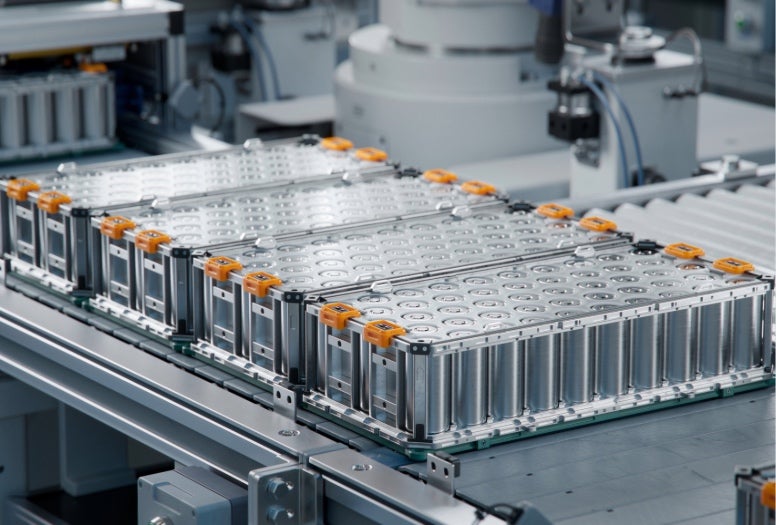
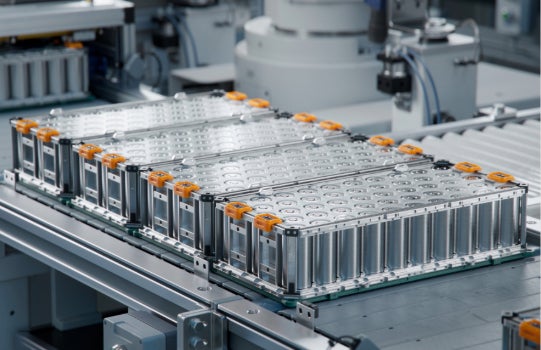
Lithium-ion batteries, like those found in cars, cell phones and cameras, often have anodes made of graphite. During charging, lithium ions move into the graphite anode. How quickly they can move through the graphite is one of the key factors limiting how fast a battery can charge. James Tour’s lab at Rice University has recently developed a new kind of synthetic graphite, one that supports much faster charging and can be produced in a fraction of a second.
“This method could help make future electric vehicle batteries charge faster while reducing the cost and environmental impact of battery manufacturing,” said Tour, the T.T. and W.F. Chao Professor of Chemistry and corresponding author on this study. “Our analysis suggests it could reduce energy consumption and greenhouse gas emissions by more than 80% compared with conventional graphite production.”

The study, recently published in Advanced Materials, describes a method that uses a small amount of a nickel compound and an extremely short, powerful electrical pulse. The nickel compound is added to petroleum coke, a low-cost carbon residue from oil refining. A single electrical pulse then briefly heats the mixture to about 2,500 C, triggering its rapid transformation into graphite — the same form of carbon found in pencil leads. But in this case, the process produces highly ordered, low-defect graphite with promising properties for fast-charging battery anodes.
Graphite is a two-dimensional material, meaning that it is created from layers of horizontal structures only one atom thick stacked on top of each other. In graphite, each layer is comprised of carbon atoms neatly ordered into hexagons. When the research team added a little bit of nickel compound to the petroleum coke, the carbon atoms were able to quickly organize around the tiny nickel particles.
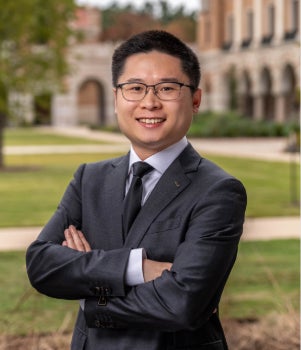
“The nickel acts almost like a temporary construction worker, helping the carbon atoms organize themselves into a highly ordered, layered graphite structure,” said Haojie Zhu, postdoctoral associate and first author of the paper. “Usually, creating graphite requires prolonged heating at extremely high temperatures for long periods, but this method allows us to do it in just two-tenths of a second.”
The nickel slightly expanded the interlayer spacing in the graphite, providing greater access for subsequent lithium entry during charging. When the team tested this nickel-formed graphite on a lithium-ion battery, they found it significantly outperformed conventional graphite for charging, tolerating a rate equivalent to a four-minute charging time. And it retained 80% of its capacity after 1,000 charge and discharge cycles, where the battery was fully drained and then charged up again.
“This method addresses two major challenges simultaneously: improving battery fast-charging performance and simplifying the production of a key battery material,” Tour said. “Imagine charging your battery in four minutes.”
The team found that the benefits of nickel-assisted graphite production remained even after more than 99% of the residual nickel was removed. This suggests that the main advantage comes from how nickel helps build the graphite structure rather than simply from nickel remaining in the material.
Surprisingly, more heat did not necessarily mean better graphite: At excessively high temperatures, much of the nickel was lost, while lower temperatures resulted in less ordered graphite.
“We identified the Goldilocks region for graphite preparation,” Tour said.
“What I find especially exciting is that a process lasting just 0.2 seconds can produce graphite with such impressive fast-charging performance,” Zhu said. “Making better materials is not always about using more energy or processing them for longer but about applying the right conditions at exactly the right moment.”
This work was funded by the Air Force Office of Scientific Research (FA9550-22-1-0526), the U.S. Army Corps of Engineers, ERDC (W912HZ-21-2-0050, W912HZ-24-2-0027), the Department of Energy NERSC award (BES-ERCAP0027822, B.I.Y.) and the Welch Foundation (C-2065).