
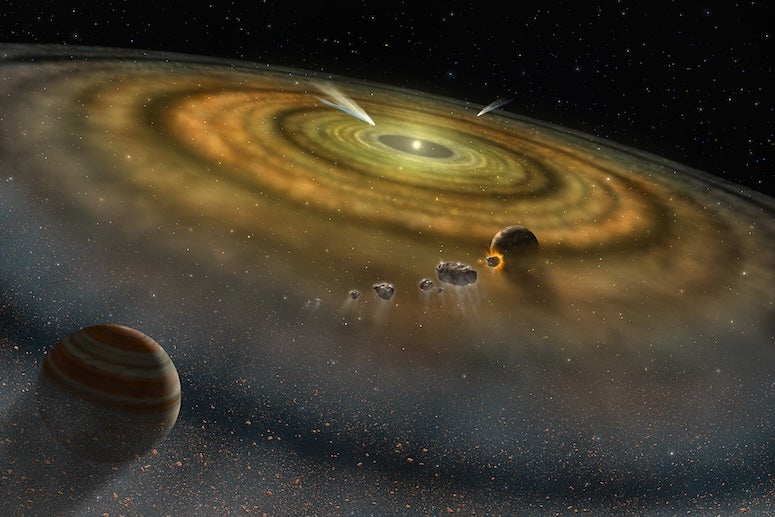
Habitable planets require life-essential elements, like nitrogen and phosphorus. Understanding how those elements ended up in a planetary body can give insight into the formation of the solar system and Earth. Rice University researchers recently published a paper in Science Advances showing that the nitrogen and phosphorus composition of iron meteorites are different from the composition found in later asteroids known as chondrites.
“We recreated the crystallization of iron meteorites in the lab and used the known chemical composition of iron meteorites available to us,” said Debjeet Pathak, a graduate student and the corresponding author on the paper. “That allowed us to determine the chemical composition of the small planetary bodies, called planetesimals, from which the iron meteorites came from.”
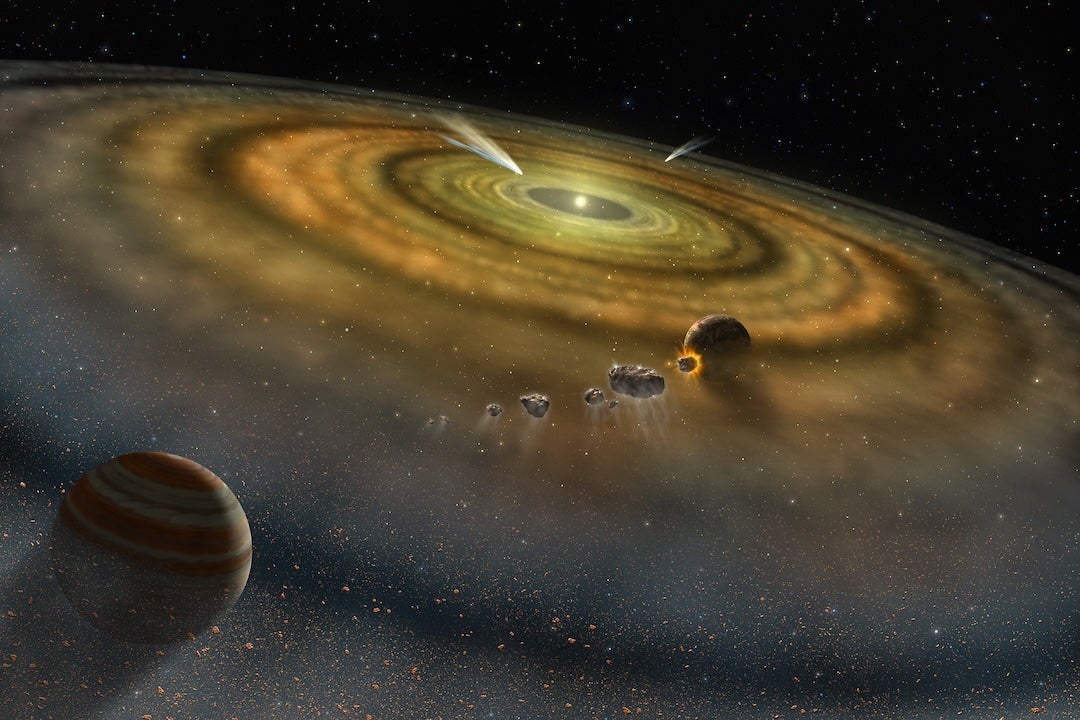
Over 4.5 billion years ago, nitrogen and phosphorus, which traveled through space in gas and dust, were incorporated into these small planetary bodies. As the planetesimals formed, they developed crystallized metallic cores; when they were degraded or destroyed, iron meteorite fragments from their cores were released into space. Most iron meteorites are now found in the asteroid belt between Mars and Jupiter, which separates the inner solar system stretching from Mercury to Mars from the outer solar system stretching from Jupiter to Neptune.
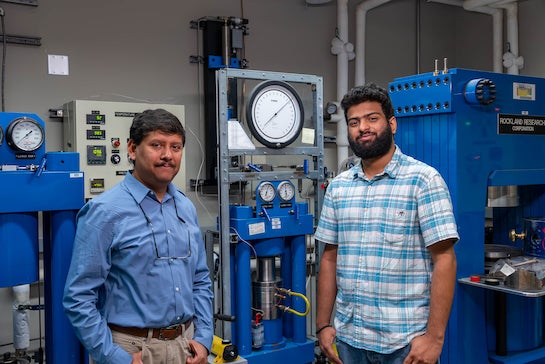
The researchers, led by Rice professor Rajdeep Dasgupta, recreated the formation of planetesimal bodies from both the inner and outer solar system. To do so, they took the chemicals that made up these iron meteorites and cooked them in a high-pressure, high-temperature facility. This provided insight into how much phosphorus and nitrogen were in these early planetary bodies and, from that, where these life-essential elements were located at the beginning of the solar system: in the inner or outer solar system.
The team’s analysis showed that the ratio of phosphorus to nitrogen was lower in iron meteorites’ asteroidal bodies from the inner solar system than in those from the outer solar system.
This ratio of elements, though, was different from the ratios observed in later planetesimals that chondrites came from. Chondrites from the inner solar system have a higher phosphorus-to-nitrogen ratio, which gradually decreases from the inner to outer solar system.
“As Jupiter grew in size,” Pathak said, “it slowly began to block the transport of phosphorus and nitrogen, resulting in a gradual decrease in the observed ratios found in chondrites, which formed as much as 2-3 million years after the iron meteorite bodies.”
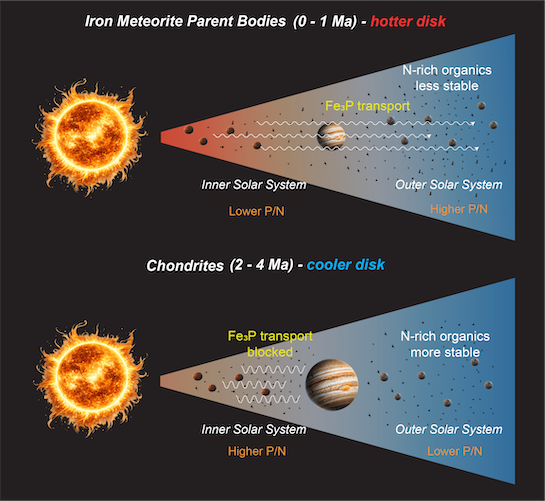
While the changes in the ratios were different between the two generations of planetesimals, one thing was the same: The phosphorus-to-nitrogen ratio was closest to the life-supporting ratio found on Earth in the inner solar system. This study, along with other work in the field, suggests that these life-essential elements didn’t come from the outer solar system then move inwards as previously thought. Instead, they may have been sourced from the first-formed planetesimals in the inner solar system.
“We think this finding tells us how the dust and consequently the planetesimal compositions in the inner versus outer solar system evolved within the first few million years, affected by Jupiter’s growth and gradual cooling of the gas-dust medium,” said Dasgupta, the W. Maurice Ewing Professor of Earth Systems Science and the director of the Rice Space Institute Center for Planetary Origins to Habitability.
This was funded by NASA (80NSSC18K0828 and 80NSSC22K0635.)