
For nearly 130 years, scholars have drawn on W.E.B. Du Bois’ theory of “double consciousness” to explain how Black Americans navigate their identities in a society shaped by white supremacy. But researchers have struggled to measure those experiences.
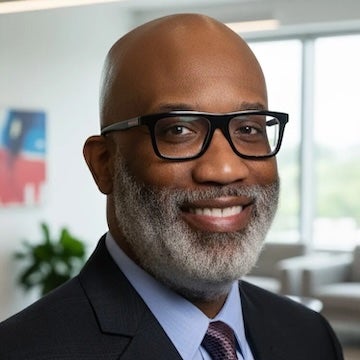
Now, Rice University sociologist Tony Brown and his collaborators have developed new survey tools to help bridge that gap.
Their study, published in Du Bois Review: Social Science Research on Race, offers researchers a way to examine how racial inequality influences identity and everyday experiences.
“This research matters because W. E. B. Du Bois is the father of U.S. sociology,” said Brown, distinguished professor of sociology. “The Atlanta Sociological Laboratory is U.S. sociology's epicenter. Du Bois insisted that studying the Black community required familiarity and proximity. Too many mainstream sociologists today prefer to study racial inequality from the comfort of their offices at predominantly white institutions, never interacting with those they study, never seeing firsthand the damage white supremacy causes. In contrast, our emic research centers the perceptions of Black Americans.”
Du Bois introduced double consciousness in 1897 and expanded on the idea in his 1903 book, The Souls of Black Folk. His theory describes the experience of seeing oneself through the eyes of others while navigating the tensions of being both Black and American.
Brown and his colleagues developed 19 survey questions using responses from more than 2,000 Black adults. The questions measure three central elements of the theory:
- The veil: The systemic racial barriers that shape opportunities and experiences.
- Second sight: The ability to recognize and understand how racism operates in society.
- Two-ness: The internal tension that can arise when racial identity and expectations of American identity conflict.
Their analysis found evidence that the questions captured three distinct but related aspects of double consciousness.
“In everyday life, double consciousness represents a never-ending external and internal struggle,” Brown said. “It is exhausting. How can Blacks develop authentic identities and reach their full potential in a nation where they were once property? How can they develop a way of seeing themselves as competent and worthy, when so many whites deny the existence of and their role maintaining white supremacy?”
What the findings reveal
The researchers also explored how these experiences relate to happiness, education, gender and political attitudes.
One finding stood out: Participants who perceived greater systemic racial barriers tended to report lower levels of happiness. However, those who scored higher on second sight, or understanding how those barriers operate, reported slightly higher levels of happiness.
The results suggest that recognizing racial inequality and understanding how it works may relate differently to people’s well-being. The findings show associations, not cause and effect.
“One question that motivates my research agenda is whether racial consciousness is an advantage or disadvantage to Blacks,” Brown said. “This research suggests it may be both. Understanding how the veil works tends to demoralize you. You understand the dire implications for your life, your children’s lives and their children’s lives. You understand white supremacy is permanent. Yet you are nobody’s fool. Second sight allows you to see through the veil and avoid the trap of two-ness. Your worth is no longer tied to whites’ estimation of your worth.”
The research also opens the door to new questions about how double consciousness varies across generations, educational backgrounds, workplaces and communities.
By giving scholars a way to measure Du Bois’ theory, Brown and his colleagues hope to deepen understanding of how racism relates to identity, well-being and political attitudes.
“First, I hope scholars investigate psychological consequences of the veil, second sight and two-ness,” Brown said. “Such research would begin to address whether racial consciousness is helpful or harmful emotionally. Second, I hope scholars investigate the relationship between formal education and the veil, second sight and two-ness with special emphasis on college/university attendance. Are colleges and universities truly educating Black youth or inscribing the desire to be white and acculturate? Third, I hope scholars develop a conceptual model suggesting how the three constructs in Du Bois’ double consciousness interrelate. For example, if Blacks report high levels of second sight, do they then experience low levels of two-ness?”
Brown co-authored the study, “W.E.B. Du Bois’ Theory of Double Consciousness: Developing Survey Measures Capturing the Veil, Second Sight, and Two-Ness,” with Quintin Gorman Jr. of the University at Buffalo and Fred Oswald, a former Rice faculty member now at the University of California, Irvine.