

When Amelie Carlton asked her Rice University students how many knew their FICO credit score, only three raised their hands.
There were 50 students in the room.
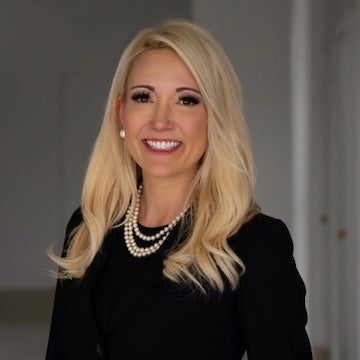
For Carlton, a senior lecturer in economics, the moment illustrated a surprising gap in what even the brightest college students know about managing money.
“These individuals are brilliant,” Carlton said. “They just don’t have access to this knowledge.”
As financial literacy education gains momentum across the country, Rice is helping students build the skills to navigate financial decisions they’ll face long after graduation.
That’s the idea behind ECON 211: Money Matters, a relatively new course developed by Carlton at the request of economics department chair Flavio Cunha. Launched in fall 2025, the three-credit course covers everything from budgeting and credit scores to mortgages, insurance, investing and retirement planning.
But students aren’t just learning financial concepts. They’re putting them into practice.
Through an interactive budgeting simulation, students navigate a virtual version of life after college, finding a job, paying rent, buying a car and managing everyday expenses. Along the way, they encounter unexpected costs and learn how financial decisions affect their savings and credit.
Later in the semester, students build simulated investment portfolios, comparing their stock selections with a diversified index fund to understand risk and long-term investing.
For Rice alumna Maria Eduarda Musa ’26, those lessons became especially relevant when she started her first full-time job this summer as a capital markets analyst at Realterm in Washington, D.C.

When it came time to select her employee benefits, Musa said she felt prepared to make decisions with her long-term financial goals in mind, including enrolling in her employer’s 401(k) retirement plan.
“The most valuable thing I learned in Money Matters was how the decisions I make today can impact my future and retirement,” Musa said. “Money Matters helped me be attentive to what I was electing.”
She also pointed to the stock portfolio simulation as one of her most valuable classroom experiences.
“It went beyond theory and let me put what I learned into practice,” she said.
Carlton also brings financial professionals into the classroom to offer practical perspectives on homebuying, insurance and retirement planning.
The course reflects a broader national push to strengthen financial literacy education with more states introducing personal finance requirements for high school students and universities exploring ways to prepare young adults for financial independence.
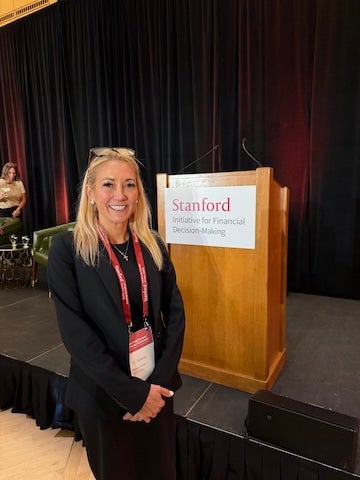
Carlton drew inspiration from Stanford University economist Annamaria Lusardi’s work in financial education. After learning about Carlton’s approach to teaching Money Matters, Lusardi personally invited her to participate in Stanford’s recent Teaching Personal Finance Conference, which brought together more than 200 educators and other participants to exchange ideas about improving financial education.
For Carlton, who previously worked as an energy commodities trader before pursuing graduate studies, the greatest reward isn’t simply teaching students about money. It’s seeing them put that knowledge to work.
She recalled another former student who returned to tell her she’d helped her mother create a budget, review credit scores and explore refinancing the family mortgage.
Carlton hopes those lessons continue paying off long after students leave Rice.
“We talk about the time value of money and compound growth,” she said. “The goal of this course is to provide a tool kit for economic and financial decision-making. Hopefully, this knowledge will exponentially improve their financial outcomes over time.”