
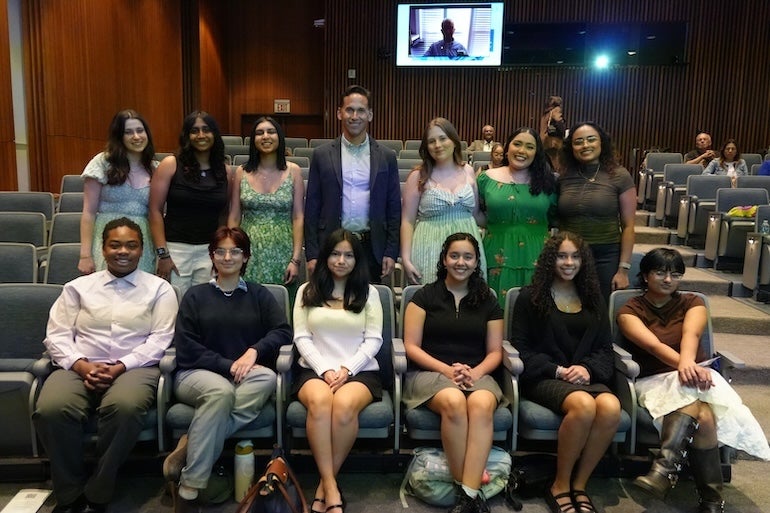
The room is quiet as the video begins to play. On screen, a man’s voice cuts through.
“I’ve been locked up for 21 years for a crime that I didn’t commit.”
Students sit shoulder to shoulder, watching closely. Some take notes. Others lean forward, studying every detail. These are not just school projects. They are part of an effort to move real cases forward.
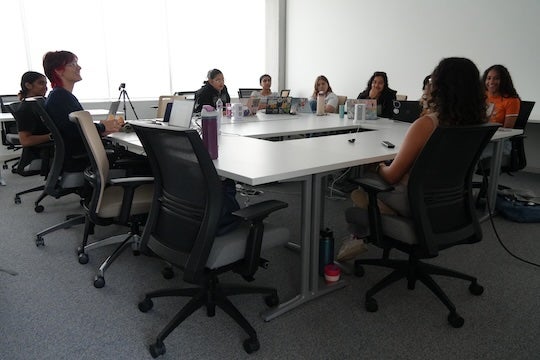
“Making an Exoneree is a class where students work with people in prison to reinvestigate cases that may involve wrongful conviction,” said Kavya Padmanabhan, a lecturer in sociology who teaches the course at Rice University. “Students produce a documentary at the end of the semester that advocates for that person and highlights the injustices they endured.”
Each team produced a nine-minute film built on months of research, interviews and case analysis. But the documentaries were only one piece of the work. Students also built websites, launched social media campaigns and developed advocacy materials designed to bring attention to each case, work that in some instances could support parole efforts or connect individuals with legal representation.
The course was created at Georgetown University in 2018 by Marc Howard, a professor and attorney, and Marty Tankleff, a criminal defense attorney who was wrongfully convicted as a teenager and later exonerated. Howard and Tankleff grew up together in New York. On the first day of their senior year of high school, Tankleff discovered his parents had been murdered and was later charged and convicted of the crime. Howard, then a student journalist, began investigating the case for his high school newspaper and became convinced his friend had been wrongfully convicted.
Tankleff spent nearly two decades in prison before his conviction was overturned. Howard later returned to school to pursue a law degree, contributing to the effort to overturn Tankleff’s conviction in 2007. Tankleff also became an attorney.
“I’ve dedicated my life to helping other wrongfully convicted people like Marty,” Howard said. “We have our students do for other wrongfully convicted people what I tried to do for Marty.”
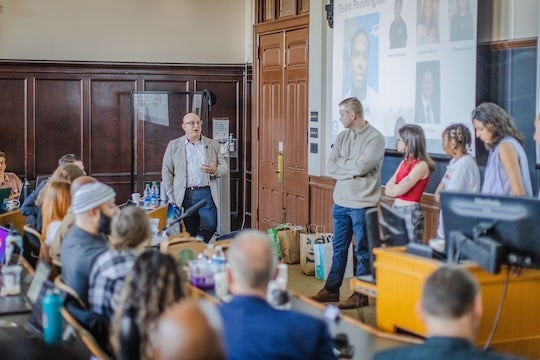
Together, the two launched Making an Exoneree, building a college course that allows undergraduate students to reinvestigate potential wrongful conviction cases and advocate for people they believe may have been wrongfully convicted.
This year, Rice became the fifth university to adopt the program through the Sociology department. The inaugural class included 12 students divided into four teams, each assigned to a different case in Texas, Oklahoma or Alabama. Student teams across the broader program have helped secure the release of 13 incarcerated individuals. In other cases, the work has helped bring legal representation, parole consideration or renewed public attention.
“They’ve gotten people lawyers. They’ve gotten people parole,” Padmanabhan said. “That all matters.”
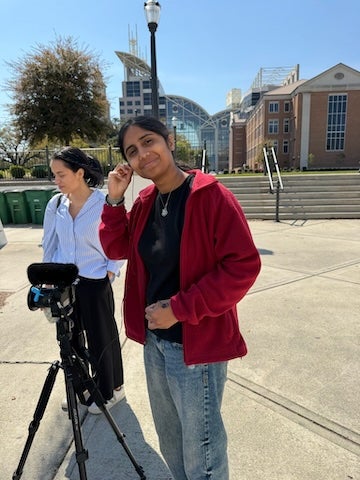
Over the semester, students drove hours across Texas and neighboring states to interview family members, visit communities connected to the cases and meet incarcerated individuals face to face. They carried cameras into prison visitation rooms, living rooms and small-town courthouses while learning, often for the first time, how to conduct sensitive interviews, gather footage and build documentaries around emotionally difficult and legally complex cases.
Students were tasked not with writing legal briefs but with building documentaries capable of generating public attention around the cases.
“There isn’t always a smoking gun,” Padmanabhan said. “A lot of what we’re working with is gray.”
Jessaly Chavez, a senior majoring in political science and Latin American studies, spent the semester investigating the case of Jacob Cobb, who was incarcerated at 16 and has spent more than two decades in prison for the murder of his grandmother. Through their research, Chavez and her team identified inconsistencies and gaps in the investigation, findings they believe raise serious questions about the conviction.
Cobb is now approaching parole eligibility, making the timing of the work especially significant.
“I came into this thinking we would just analyze a case,” Chavez said. “But now I understand how much responsibility comes with that.”
Chavez said one of the most meaningful parts of the semester was building a relationship with Cobb beyond the details of the case itself.
“I think that in that way, we’ve really been able to connect with Jacob and make him feel seen,” Chavez said.
Across the other teams, students examined a range of cases that revealed similar concerns. One team investigated the conviction of Leonard Coleman, an Alabama man, sentenced to life in prison for the killing of his child’s mother, however his supporters point to a confession from another individual who later died by suicide.
Another group focused on Daniel Hamilton, who has spent more than three decades in prison after being convicted in the death of his girlfriend’s 18-month-old daughter in a case students say raised serious medical and evidentiary questions. A third team examined the case of John Hamilton, an Oklahoma City obstetrician-gynecologist serving a life-without-parole sentence after being convicted in the 2001 killing of his wife in a case where students say key evidence was never tested.
In each instance, the work was not about a single breakthrough but about identifying patterns, inconsistencies and overlooked details that could shift how a case is understood.
For many students, the investigative work was only half the challenge.
Most entered the class with little or no experience in documentary filmmaking, interviewing or field reporting. Over the semester, they learned how to operate cameras, conduct interviews and shape hours of emotionally difficult material into nine-minute advocacy films.
Junior Amra Amir, who is majoring in political science and sociology, said the challenge became figuring out how to translate months of research into a story people would pay attention to. Her team spent months investigating Coleman’s case while simultaneously producing a documentary designed to reach audiences beyond the courtroom.
“How do you get people to pay attention and care in such little time?” Amir said. “When you’re in it, it’s like, why wouldn’t you care?”
Freshman Carly Alin, who is double-majoring in social policy analysis and sociology with a minor in environmental studies, said the process pushed students far outside their comfort zones.
“You get to build something that will go beyond this class,” Alin said.
Her team uncovered new witness information while revisiting Coleman’s timeline and also launched social media pages to continue building public awareness around the case.
“It’s just been really an incredible journey,” Alin said.
For Veronica Zuniga, a freshman studying political science and history, the emotional weight of the work often lingered long after class ended.
“Working on the documentary late at night, I just think about our program participant, and that keeps me going,” Zuniga said.
Her team investigated the conviction of Daniel Hamilton, who has spent more than 30 years in prison after being convicted in the death of his girlfriend’s 18-month-old daughter. Students examined disputed shaken baby syndrome findings, medical records and evidence surrounding Hamilton’s physical condition following back surgery shortly before the child’s death.
“This is a once-in-a-lifetime chance to really make a change for something that I truly believe in,” Zuniga said.
Alika Jimenez, a junior majoring in psychological sciences and Zuniga’s teammate, said the emotional complexity of the case became especially clear while interviewing Hamilton’s former girlfriend, who lost both her daughter and, eventually, her relationship with Hamilton.
“It wasn’t until we were beginning to interview her that I realized how deeply traumatic this experience was,” Jimenez said. “She not only lost her child but her family with Dan.”
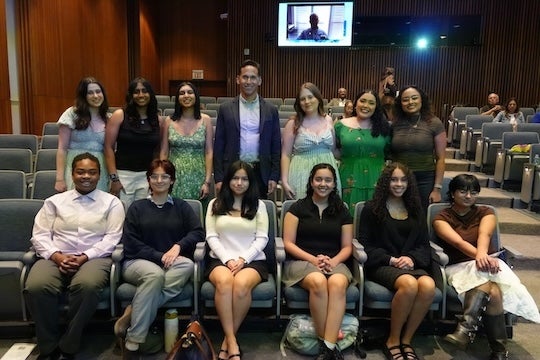
Padmanabhan said the class demanded far more than traditional coursework.
“This is a course that you take knowing that you are going to change someone’s life,” she said.
Through documentaries, websites and social media campaigns, students worked to bring public attention to cases they believed deserved a second look.
“Publicity can be as important as the legal work,” Howard said.
For Howard, bringing the program to Rice carries additional meaning. His father attended the university in the early 1960s and helped lead a student movement to integrate the campus during a time of segregation. To Howard, the connection reflects a broader throughline.
“To think that my father opened the door to students of color at Rice and now to have this program here working to correct injustice, that’s a beautiful full-circle moment,” he said.
Back in the classroom, the documentaries continued to play. Students watched, critiqued and revised, working to make each story clearer and more compelling.
The semester may be over, but for many of the students and the people whose cases they investigated, the work is far from finished.