
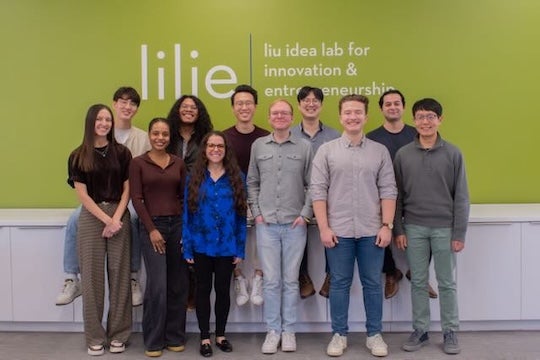
The Liu Idea Lab for Innovation and Entrepreneurship (Lilie) is thrilled to introduce the latest Rice Innovation Fellows 2026 cohort, a dynamic group set to lead the future of scientist- and engineer-driven spinout ventures from Rice University labs.
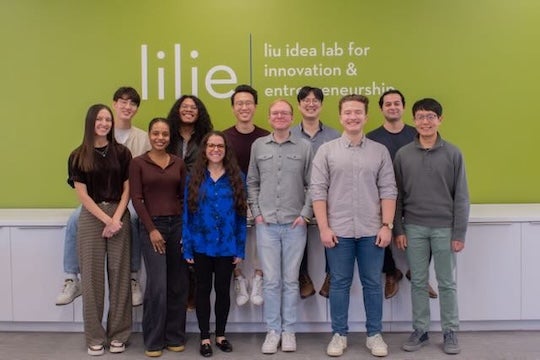
“These fellows aren’t just advancing science — they’re building the future of industry here at Rice,” said Kyle Judah, Lilie’s executive director. “Alongside their faculty members, they’re stepping into the uncertainty of turning research into real-world solutions. That commitment is rare, and it’s exactly why Lilie and Rice are proud to stand shoulder-to-shoulder with them and nurture their ambition to take on civilization-scale problems that truly matter.”
Launched in 2022 as one of President Reginald DesRoches’ inaugural entrepreneurship initiatives and supported by Provost Amy Dittmar, the Rice Innovation Fellows program equips doctoral students and postdoctoral researchers with the tools, training and support to transform groundbreaking ideas into impactful ventures. The program helps participants turn breakthrough research into real-world impact by exploring industry applications in partnership with campus labs.
Through Lilie, fellows receive equity-free funding, coworking space and a year of tailored education and mentorship. Alumni have raised over $30 million in funding and grants, joined the Activate and Chain Reaction Innovations Fellowships and entered top programs such as the Texas Medical Center’s Cancer Therapeutics Accelerator and the Rice Biotech Launch Pad.
This year’s 11 fellows are doctoral and postdoctorial students and researchers with breakthrough ideas that show serious commercial promise in health care, materials science and industrial chemistry.
2026 Innovation Fellows
Ehsan Aalaei, Bioengineering, Ph.D. ’27 | Professor Michael King Laboratory
Ehsan Aalaei is developing new therapeutic approaches designed to stop cancer from spreading.
Matt Lee, Bioengineering, Ph.D. ’27 | Professor Caleb Bashor Laboratory
Matt Lee’s work uses AI to design the genetic instructions behind new, more effective therapies.
Thomas Howlett, Bioengineering, Postdoctoral ’28 | Professor Kelsey Swingle Laboratory
Thomas Howlett is developing a self-administered, nonhormonal treatment for heavy menstrual bleeding, a condition that affects nearly 1 in 3 women.
Jonathan Montes, Bioengineering, Ph.D. ’25 | Professor Jessica Butts Laboratory
Jonathan Montes and his team are developing a fast-acting, long-lasting nasal spray for reliable relief from both chronic and acute anxiety.
Siliang Li, BioSciences, Postdoctoral ’25 | Professor Caroline Ajo-Franklin Laboratory
Siliang Li is developing noninvasive devices that can quickly monitor important gut health signals.
Gina Pizzo, Statistics, Lecturer
Gina Pizzo’s work focuses on using data-driven models to predict crop performance and soil health, helping farmers, lenders and insurers make better-informed decisions.
Alex Sadamune, Bioengineering, Ph.D. ’27 | Professor Chong Xie Laboratory
Alex Sadamune’s work focuses on scaling the production of high-precision neural implants, addressing a major bottleneck in bringing neurotechnology from lab to clinic.
Jaeho Shin, Chemistry, Postdoctoral ’27 | Professor James M. Tour Laboratory
Jaeho Shin is developing next-generation semiconductor and memory technologies to push the frontier of computing and AI.
Will Schmid, Electrical and Computer Engineering, Postdoctoral ’25 | Professor Alessandro Alabastri Laboratory
Will Schmid is developing scalable technologies to recover critical minerals from high-salinity resources, strengthening domestic supply chains for essential materials.
Khadija Zanna, Electrical and Computer Engineering, Ph.D. ’26 | Professor Akane Sano Laboratory
Khadija Zanna’s work focuses on building machine learning tools that help companies deploy advanced AI while seamlessly navigating complex international regulations.
Ava Zoba, Materials Science and Nano Engineering, Ph.D. ’29 | Professor Christina Tringides Laboratory
Ava Zoba’s research focuses on creating implantable devices to better monitor brain function after surgical removal of brain tumors, enabling faster intervention and treatment.
For more information about Rice Innovation Fellows, visit entrepreneurship.rice.edu/innovation-fellows.