
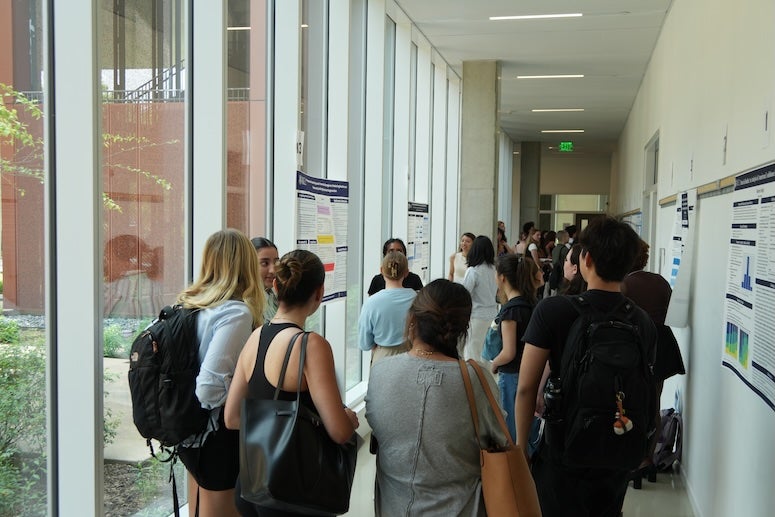
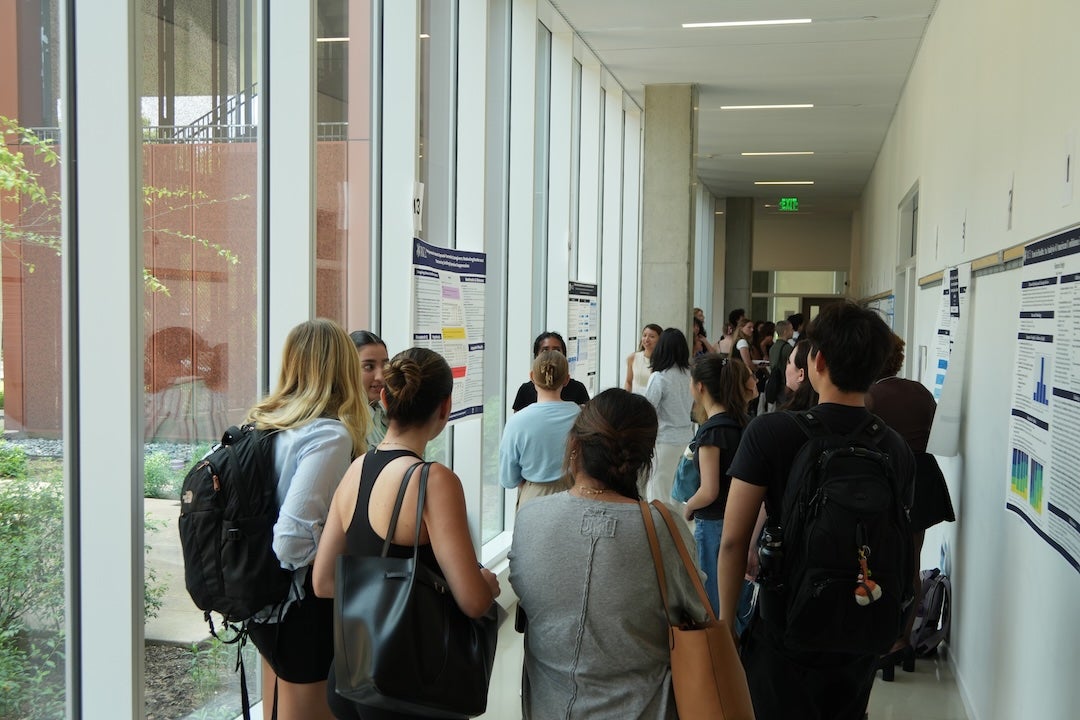
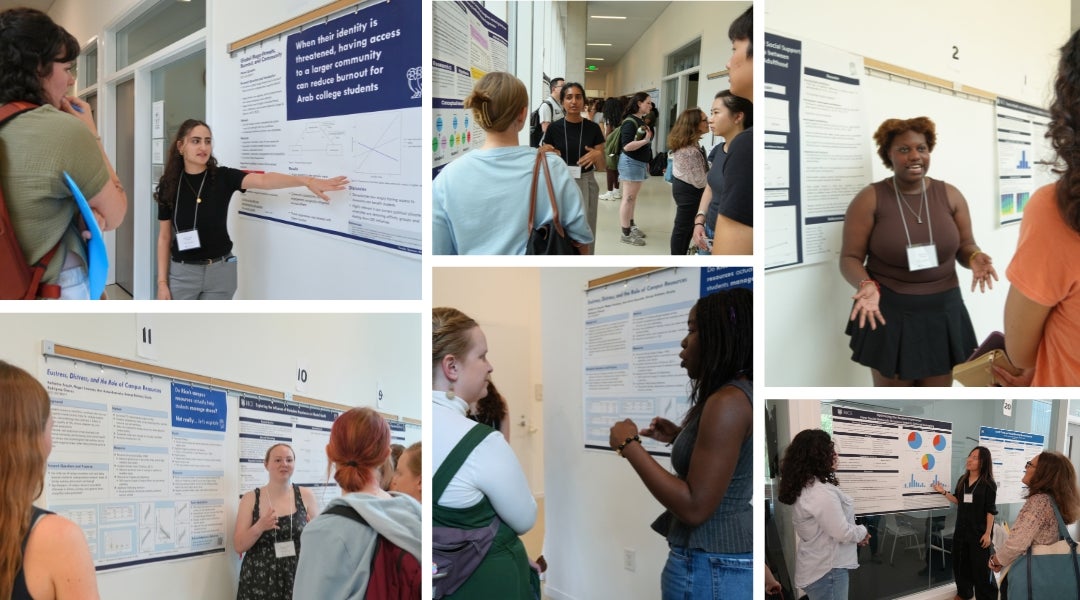
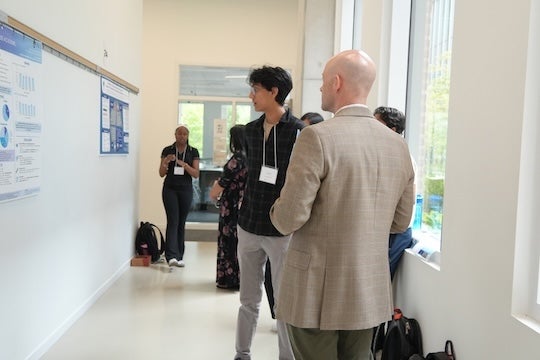
Kraft Hall was buzzing with energy and a little bit of chaos as Rice University undergraduates transformed its corridors into a packed showcase of original research and creative ideas during the Social Sciences Undergraduate Research Symposium.
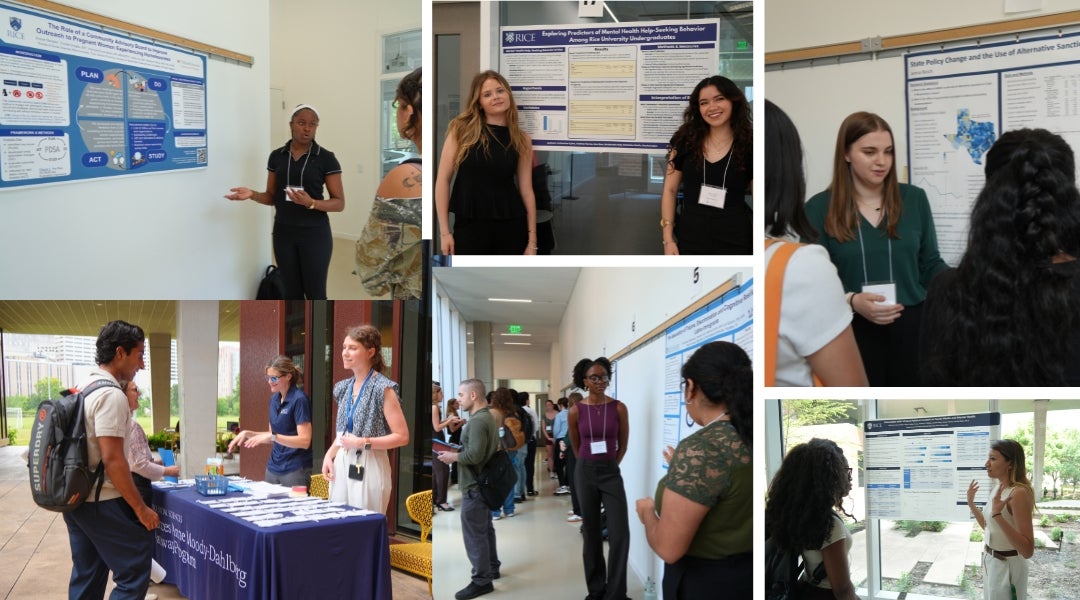
Hallways became makeshift presentation stages as students explained their projects to anyone walking by, including professors, classmates and curious passersby. The air was filled with conversation, rapid explanations and the occasional scramble to keep posters taped to the walls.
But beyond the noise and movement was something more meaningful. Students were asking real questions about the world around them and using research to find answers.
Many of this year’s projects were rooted in lived experience, tackling issues such as mental health, women’s health, public trust and social behavior.
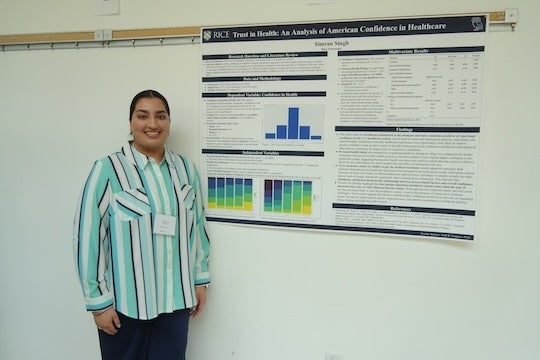
One project that stood out examined trust in the U.S. health care system, a topic that affects nearly everyone.
“I found that satisfaction with health care experiences matters more than insurance type or cost of care alone,” said sophomore Simran Singh, whose work earned both best poster for research findings and best overall poster honors.
Her interest in the topic grew out of the COVID-19 pandemic and the role public perception played in how people responded to care.
“Health care affects everyone, yet trust in the system is often overlooked,” she said.
What she discovered challenged common assumptions.
“Once health care satisfaction was included, cost and insurance were no longer the strongest predictors,” Singh said. “That showed me how powerful personal experiences with providers can be.”
Another project focused on how social and economic factors shape preventive health behaviors in the United States.
Junior Njwi Achoh, whose research earned best poster for research methods, examined how factors such as income, employment, gender and marital status influence cholesterol screening.
“My research looks at how preventive health behaviors are shaped not just by individual choices but by social and structural factors,” Achoh said.
Her interest in the topic was shaped in part by personal experience.
“As an ICU nurse, my mother works with predominantly male veterans,” she said. “Hearing about her experiences, along with broader conversations about how men engage less with the health care system, sparked my curiosity.”
One of her findings challenged initial assumptions.
“I expected that married individuals would be more likely to get screened,” Achoh said. “But widowed individuals had the highest rates, likely because they tend to be older and already more engaged with the health care system.”
Senior Chloé Khuri explored how the menstrual cycle and premenstrual symptoms relate to depressive symptoms, an area she said remains underrepresented in research. Her work earned best methodological approach in the oral presentation category.
“In science, we often look within ourselves to find the questions we want to answer,” Khuri said.
After noticing shifts in her own mood and hearing similar experiences from peers, she began exploring the connection between hormonal cycles and mental health.
Her research also highlights a significant gap in the field.
“Less than 0.5% of neuroimaging research focuses on women’s health,” she said. “This research matters because it is addressing a major gap and pointing to patterns that may affect a large population.”
That focus on real-world application extends beyond individual experience to broader systems and policy.
Freshman Andrew Yang, part of a student team whose research earned best research findings in the oral presentation category, examined how charter school systems have shaped education outcomes in New Orleans following Hurricane Katrina.
“Our research used a synthetic control model to understand how charter school systems affected education outcomes,” Yang said.
The team was drawn to the topic after encountering New Orleans’ unique school system in a social policy course and discovering publicly available data that allowed them to explore the issue further.
What they found, however, was not as straightforward as expected.
“We were unprepared for the difficulty of analyzing publicly available data,” Shanti Majumder said. “We had to approximate missing data, make crucial assumptions and think like real economists.”
Their work underscores the importance of evidence-based approaches to education reform at a time when outcomes are declining nationwide.
“We hope our research sparks conversations around evidence-backed education reforms,” he said.
Senior Alexandra Xu’s project examined how people regulate emotions in daily life and how that relates to eating disorder symptoms. Her work earned best overall oral presentation.
“Eating disorders are often treated as niche topics, but they deeply impact population health and well-being,” Xu said.
Her research challenges the idea that coping strategies are inherently good or bad.
“There is a time and place for all strategies,” she said. “Understanding how people respond to stress is critical to preventing and treating disordered eating.”
Together, the projects presented at the symposium reflected a broader theme: Students are not just learning research methods — they are using those tools to explore questions that are personal, timely and deeply connected to real-world challenges.
“Every year our undergraduate students showcase a breadth of unique, timely and high-caliber research during SSURS, and this year was no exception,” said Rachel Kimbro, dean of the School of Social Sciences. “We are extremely proud of these students, who are offering evidence-based solutions to some very real and very relevant societal challenges.”
Many of the projects, including several award-winning entries, were conducted under the guidance of faculty and graduate student mentors, including professor Todd Ferguson.
“It is such an amazing experience to watch students transform their natural curiosity about the social world into research projects where they discover something for themselves,” said Todd Ferguson, assistant teaching professor of sociology and director of the Social Sciences Quantitative Methods Program and Religion and Public Life Center. “I love giving students the tools they need to conduct actual social scientific research.”
Hosted by the School of Social Sciences and supported by the Moody-Gateway Program, the symposium serves as an annual milestone for undergraduate researchers, showcasing the depth and diversity of student work across disciplines. The event highlights how students are not only learning research methods but applying them to real-world questions with the potential for broader impact.
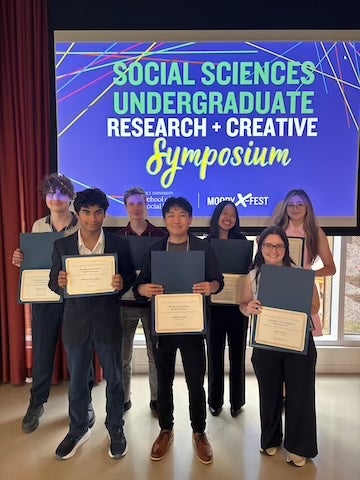
2026 SSURS Award Winners
Posters
- Best poster, research methods: Njwi Achoh
- Best poster, research findings: Simran Singh
- Best poster, visualization/presentation: Ashley Robles, Maria Hernandez, Abby Perez
- Best overall poster: Simran Singh
Oral presentations
- Best methodological approach: Chloé Khuri
- Best research findings: Andrew Yang, Shanti Majumder, Mason Istre, Erik Hill
- Best overall presentation: Alexandra Xu