
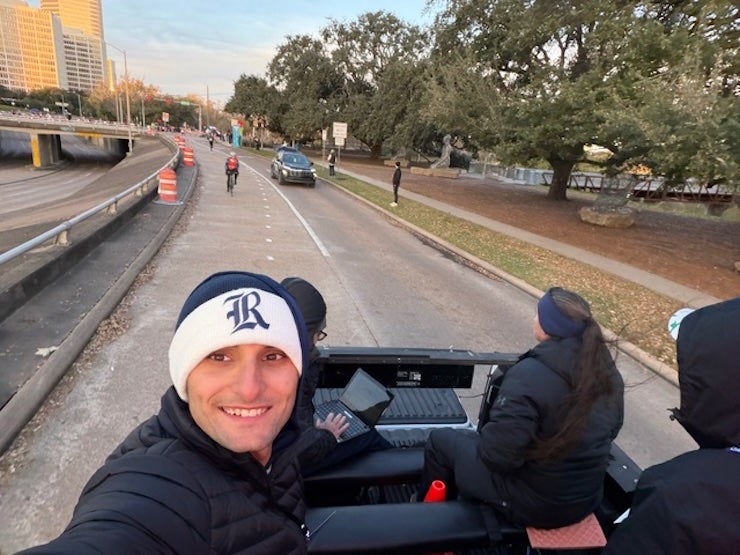
Before the sun rises while most of the city is still asleep, Rice University students are already in position at the Chevron Houston Marathon.
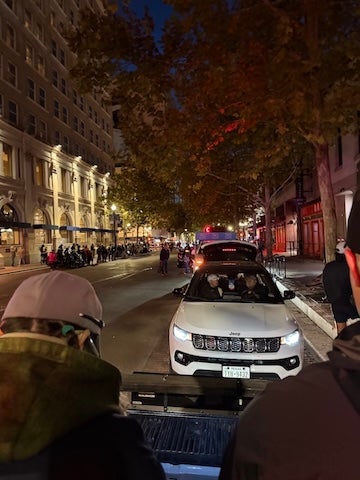
Photo courtesy of Benjamin Tijerina.
They brace against the cold, climb into pace vehicles, check race clocks and take up positions just feet from the day’s elite competitors. From lead trucks to finish line operations, students step into a carefully coordinated system where timing, communication and attention to detail matter at every turn.
For Rice students, marathon weekend is more than checking off a volunteer or community service commitment. It is an opportunity to step inside the preparation, coordination and shared effort required to transform Houston into a global stage for distance running and to see firsthand the collaboration required to make race day possible.
“It really emphasizes how much attention and preparation is required for this event,” said senior Benjamin Tijerina, a political science and business major who volunteered as a lead vehicle split taker. “So many people from all parts of the country and the world come together behind the scenes to put on a really incredible event. I feel lucky to be a small part of it.”
Tijerina’s role placed him in the bed of the lead vehicle for the women’s half marathon at this year’s event Jan. 11, where he relayed mile and kilometer splits from race timers to the broadcast team and shared observations about how the race was unfolding in real time. He also operated the race clock mounted atop the vehicle, which serves as a visual reference for elite runners.
Tijerina is one of many Rice student-athletes who volunteer during marathon weekend. Students from the track and cross country teams regularly step into specialized roles supporting elite races and media operations, using their understanding of pacing and race dynamics to help shape how the competition is covered and understood.
That trust has been built over years, said Jon Warren, head coach of Rice’s men’s cross country and track and field programs, who has worked with the marathon broadcast team for decades.
“They have a great understanding of what the athletes are going through and what nonathletes may be interested in,” Warren said. “Usually the Rice track guys want to do this year after year.”
From Warren’s perspective, students working on pace vehicles and inside lead trucks play a critical role in race coverage.
“The folks who work in the trucks are vital,” he said. “As a marathon administrator once put it, they are the eyes of the world for what is really happening. Did the athlete surge? Is someone who fell off the pace coming back? They allow us to look like we know what we’re talking about.”
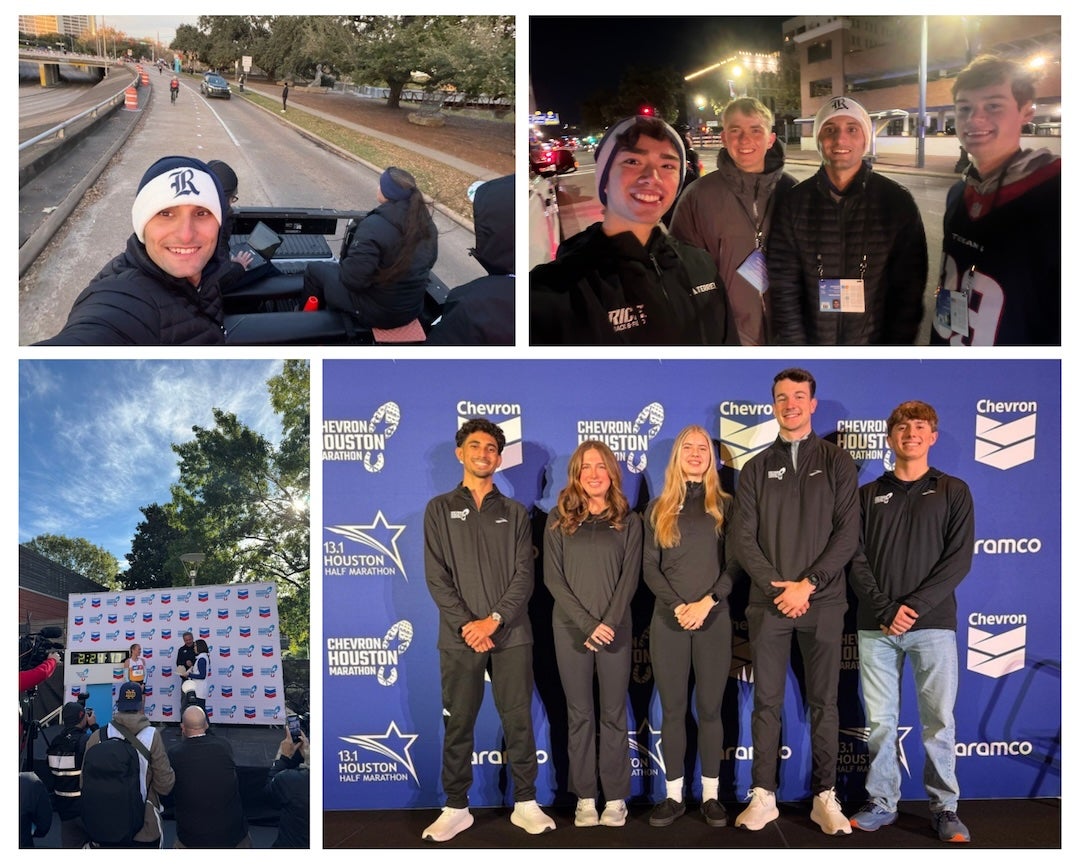
Photos courtesy of Benjamin Tijerina and Nathan Turman.
Warren said the exposure also gives students a rare view of the complexity behind marathon weekend — an experience that extends beyond athletics.
“The organization it takes to put on the entire weekend’s events is massive,” he said. “Being exposed to all that complexity is a very valuable learning opportunity.”
For Jackson Moran, a member of the men’s cross country and track teams and a student in the Master of Social Policy Evaluation program, volunteering as a split clock operator during the men’s half marathon connected athletic experience with academic curiosity.
“Representing Rice and my team is definitely a point of pride, especially on a stage as prestigious as the Houston Marathon,” Moran said. “It’s also interesting to see the way the city prepares for and benefits from an event of this scale.”
Other Rice students supported elite runners once they crossed the finish line. Nathan Turman, who is double-majoring in business and sport management, volunteered for the fourth year as an elite athlete escort, guiding top finishers from the finish area to the podium, media interviews, drug testing and postrace press conferences.
“This role connects both my passion for running and my interest in the sport industry,” Turman said. “You get an inside look at how major sporting events operate, while being surrounded by people who love the sport.”
Rice students have filled behind-the-scenes marathon roles for decades, Warren added, becoming a familiar presence during race weekend.
“I think we’ve had guys on trucks and in other areas for a couple of decades now,” he said. “People know they’re from Rice. In fact, Des Linden once referred to them as ‘the Rice guys on the trucks.’”
Linden, an American marathon runner and the 2018 Boston Marathon champion, is among the most accomplished athletes in the sport — underscoring how well known Rice volunteers are within elite running circles.
As Houston’s largest one-day sporting event, the Chevron Houston Marathon depends on a vast network of coordination that stretches well beyond the racecourse itself. For Rice students, volunteering offers a rare chance to be part of something that shapes the city for a day — supporting elite athletes, contributing to an event that draws thousands of participants and visitors and seeing firsthand how sport, logistics and civic life intersect on a major stage.