
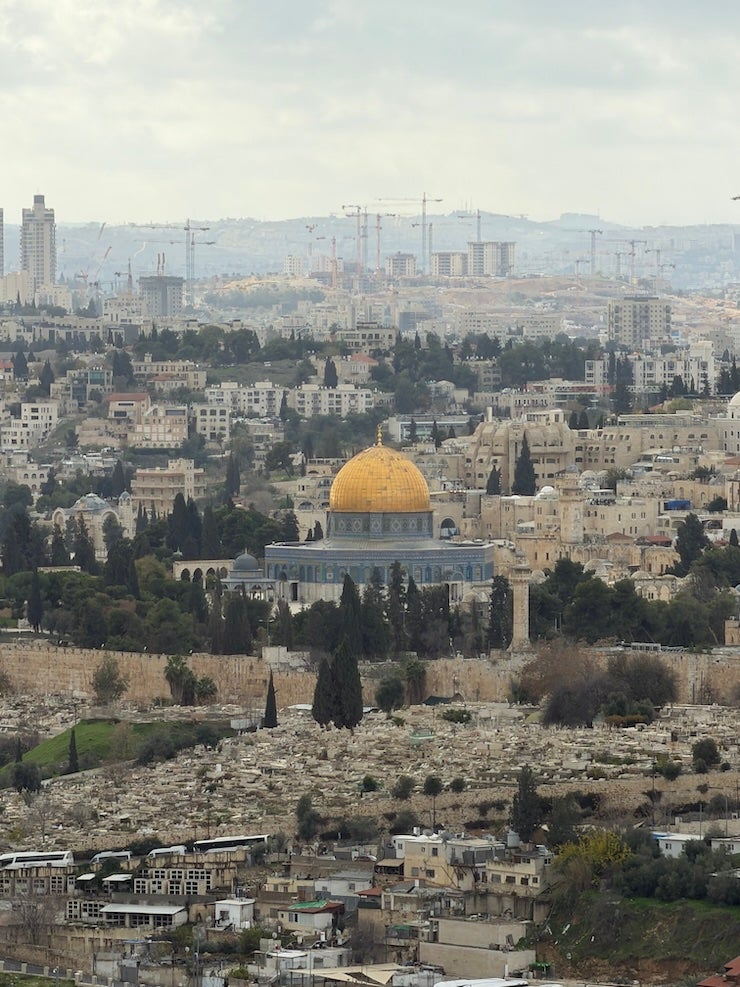
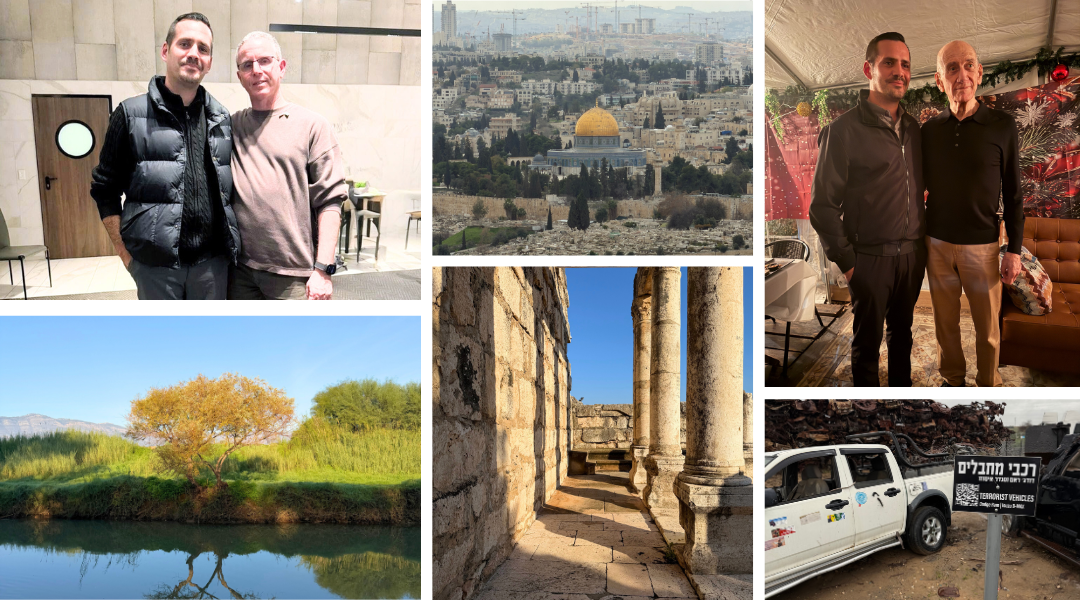
Craig Considine, senior lecturer in sociology at Rice University, recently returned from Israel after participating in the Jewish National Fund-USA Faculty Fellowship, a nearly two-week program that brings American academics together with Israeli scholars, civic leaders and cultural institutions. Considine traveled with faculty from across the U.S. from Dec. 27 to Jan. 9, gaining firsthand experiences that he said are already shaping how he approaches teaching about culture, identity and global society.
During the trip, fellows met with Israeli academics across disciplines, visited university research centers and took part in briefings with civic and political leaders. The itinerary also included visits to culturally and religiously significant locations — including the Western Wall in Jerusalem — and trips to regions that highlighted the country’s social, historical and geographic complexity.
Some of the most impactful moments, Considine said, came through direct encounters with people whose lives reflect that history in deeply personal ways. He met Holocaust survivor Ruth Bellinger, a resident of Israel who survived the Warsaw Ghetto, and Ohad Ben Ami, who was abducted from his home in Kibbutz Be’eri during the Oct. 7, 2023, attacks and spent more than a year in Hamas captivity.
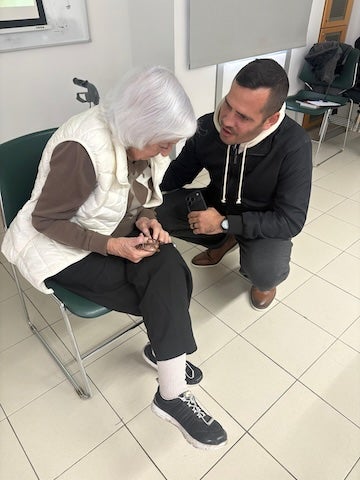
Considine said those conversations added a human dimension to events often discussed only in the abstract.
“Being able to hear personal testimonies — to sit with people and listen to their stories — makes history and conflict real in a way nothing else can,” he said.
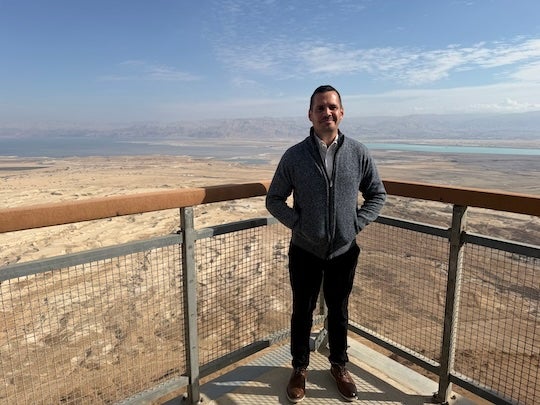
The group also visited Kibbutz Re’im, the site of the Nova music festival massacre, and traveled to Masada overlooking the Dead Sea, where the scale of history felt both distant and immediate.
“Those moments — quiet reflection, hospitality, cultural exchange — created a tangible connection to history,” Considine said. “They helped me better understand how faith, identity and resilience intersect in everyday life.”
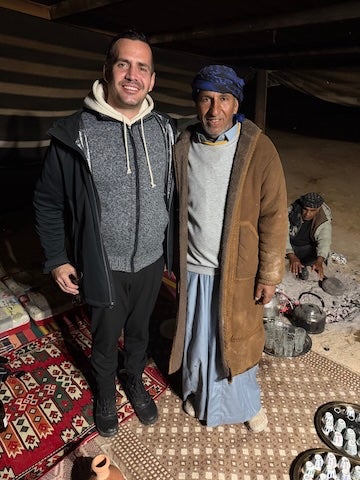
In addition to these personal encounters, Considine met with former Israeli Prime Minister Ehud Olmert and spent time with Sheikh Salman, a Bedouin Muslim who hosted the group in his traditional tent in the Negev Desert — an experience that stood out as a moment of warmth and dialogue across cultures.
The fellowship also gave Considine opportunities to engage directly with Israeli scholars across disciplines, discussing shared research interests and approaches to questions of religion, culture and social change.
“Connecting U.S.-based academics with Israeli academics is a key part of this program, and I was excited for those conversations,” he said.
That combination of scholarly exchange and lived experience, Considine said, has already begun shaping how he thinks about teaching and learning at Rice. Visiting places such as the Jordan River and Capernaum — sites central to religious and historical traditions — reinforced for him the value of learning through presence.
“It’s an honor to represent Rice in a program like this,” he said. “Experiences that challenge you to see the world differently always find their way into your teaching, and this trip was another opportunity to grow both personally and professionally.”