
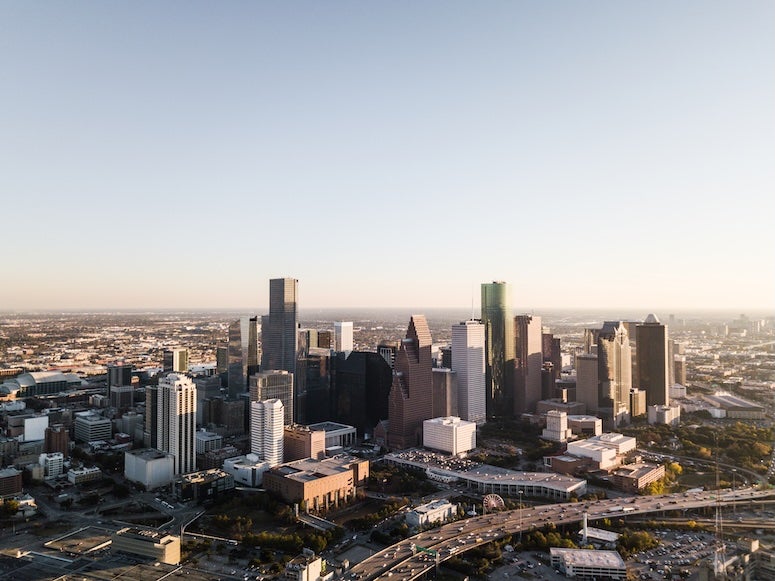
Houston has long been known for its booming economy, but new research from Rice University suggests the region is still paying the price for an oil crash that happened more than a decade ago.
The collapse of oil prices between 2014 and 2016 sent shock waves through Houston’s economy. And while the region has continued to grow, researchers found it has fallen behind other metropolitan areas in job creation and earnings.
“When you look at what’s happened in other locations, we’re losing ground,” said Flávio Cunha, director of the Center for Economic Mobility at Rice’s Kinder Institute for Urban Research. “Our economy is growing, but it’s no longer growing at the rate it used to.”
In the new analysis, researchers from the institute compared Houston’s economic performance with 54 metropolitan areas significantly less dependent on oil and gas to better understand the downturn’s long-term impact.
The findings reveal just how much ground Houston has lost.
The city continued adding jobs after the oil crash but at a slower pace than researchers estimate it would have otherwise. By 2019, the region had approximately 240,000 fewer private-sector jobs than projected based on the economic trajectory of 54 metropolitan areas less dependent on oil and gas. Employment was approximately 15% lower in goods-producing industries and 4% lower in services, relative to that comparison.
The impact extended to earnings. From 2015 to 2019, income per resident was approximately 13% lower relative to the comparison group, while workers who remained employed earned roughly 10% less.
But perhaps the most striking finding is how long the effects have lasted.
“What really surprises me is not that there was this change. It’s that this change has been long-lasting,” Cunha said. “We followed it up to 2024, and we still don’t detect that the economy has recovered from that one shock.”
The findings highlight how Houston’s dependence on oil and gas can affect opportunities across the broader economy, even as the region continues to grow. They also illustrate how global economic forces, often beyond local leaders’ control, can have lasting consequences for jobs, wages and economic mobility.
For Cunha, the research raises an important concern about Houston’s ability to withstand future economic shocks, even as the region invests in education and workforce development.
“We may invest in people and get individuals the right credentials to occupy new, higher-paying jobs, but what I’m worried about is that we may not see any improvement in economic mobility if we have a similar shock in the oil price or the energy industry changes dramatically,” he said.
Researchers say understanding these economic vulnerabilities and evaluating initiatives aimed at improving economic mobility will be essential to helping Houston prepare for future challenges.
The Kinder Institute will host a free webinar, “Economic Mobility in the Houston Area,” Nov. 10 from 10 to 11 a.m. Researchers will discuss the report’s key findings, including changes in employment, earnings and migration patterns, followed by a live Q&A. Register for the webinar.
To schedule an interview with Flávio Cunha or learn more about the research, contact Kat Cosley Trigg, media relations specialist at Rice, at Kat.Cosley.Trigg@rice.edu.