
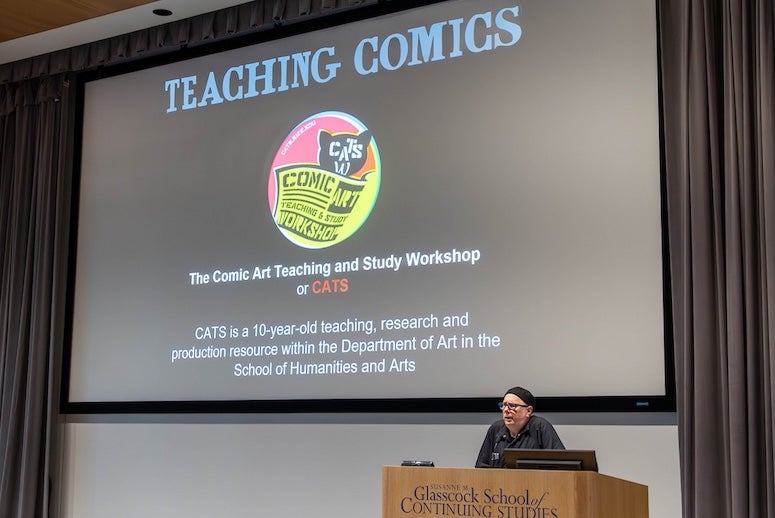
Art teachers, artists and comics enthusiasts gathered at Rice University Feb. 20 for Teaching Comics, a one-day symposium exploring how comics can function as both creative practice and classroom tool.
Hosted by the Department of Art and the Center for Education, part of the Susanne M. Glasscock School of Continuing Studies, the event combined a keynote by British artist and activist Sue Coe with hands-on workshops, printmaking demonstrations, collaboration time for sharing best practices among educators and tours of the university’s new Sarofim Hall and the Moody Center for the Arts.
More than 60 participants from 15 Houston-area school districts attended the symposium, and teachers received six hours of continuing professional education credit through the Glasscock School.
“Opportunities like the Teaching Comics symposium reflect our deep commitment to honoring teachers as creative leaders,” said Brenda Rangel, assistant dean for the Center for Education. “At the Center for Education, we believe the arts and educators who bring them to life play a vital role in helping students think critically, communicate visually and see the power of imagination as a force for change. By creating professional learning experiences that celebrate innovation and artistic practice, we’re not just supporting teachers — we’re investing in the future of learning itself.”
Associate professor Christopher Sperandio opened the day by highlighting Rice’s growing investment in comics as scholarship and practice.
“At Rice University, we do a lot with comics. Many of my colleagues use comics in the classroom, and I teach comics as part of the regular curriculum,” Sperandio said.
At the center of that work is the Comic Art Teaching and Study Workshop, or CATS.
“CATS is a research space, a teaching space and a making space — a place where students can experiment, print, exhibit and really live in the future of comics,” Sperandio said, describing the program as intentionally outward-facing with workshops, exhibitions and even a study-abroad course in Paris. “We run workshops, we take students’ work abroad, we exhibit internationally — we’re trying to make comics education truly global.”
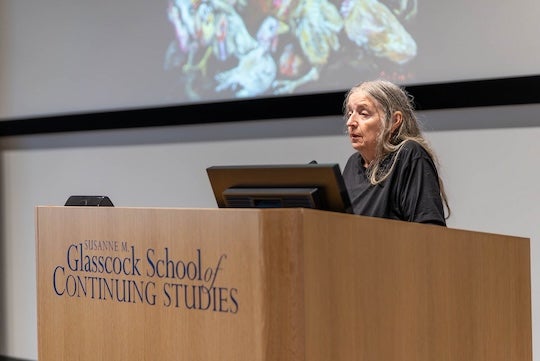
The emotional core of the symposium was Coe’s morning keynote. Drawing from decades of work documenting injustice, she framed art as an act of witnessing.
“Everything I’ve done comes from that moment of realizing something was really wrong with this world,” she said.
Calling her approach “reportage,” Coe emphasized drawing from life rather than from screens. She regularly visited slaughterhouses where livestock are processed for food consumption to draw.
“If you’re drawing from life, you’re slowing down time,” she said. “You can exchange ideas. You’re not stealing, you’re witnessing.
“You can’t take a camera into most of these places, but you can take a pencil.”
Shortly after hearing from Coe, participants rotated through risograph printing, comics-making sessions and facility tours, trading lesson plans and leaving with fresh prints and new ideas.