
As people increasingly interact with individuals from different faith traditions at work, in school and throughout their communities, interest in religious literacy is growing.
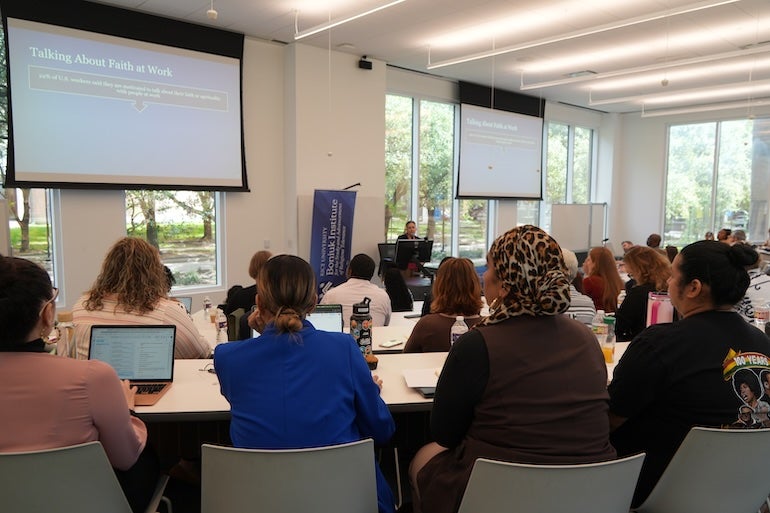
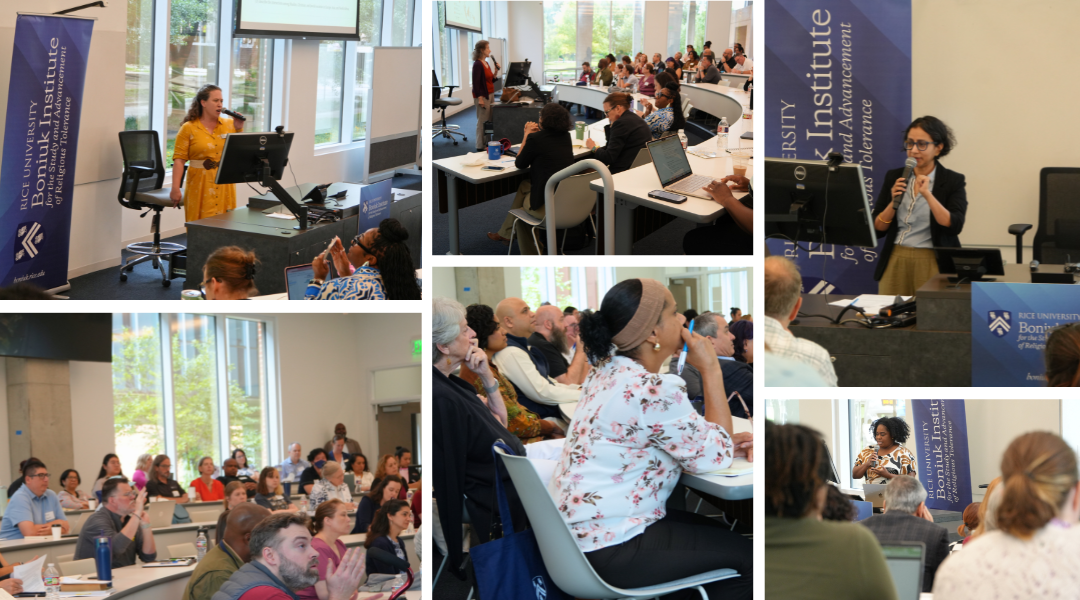
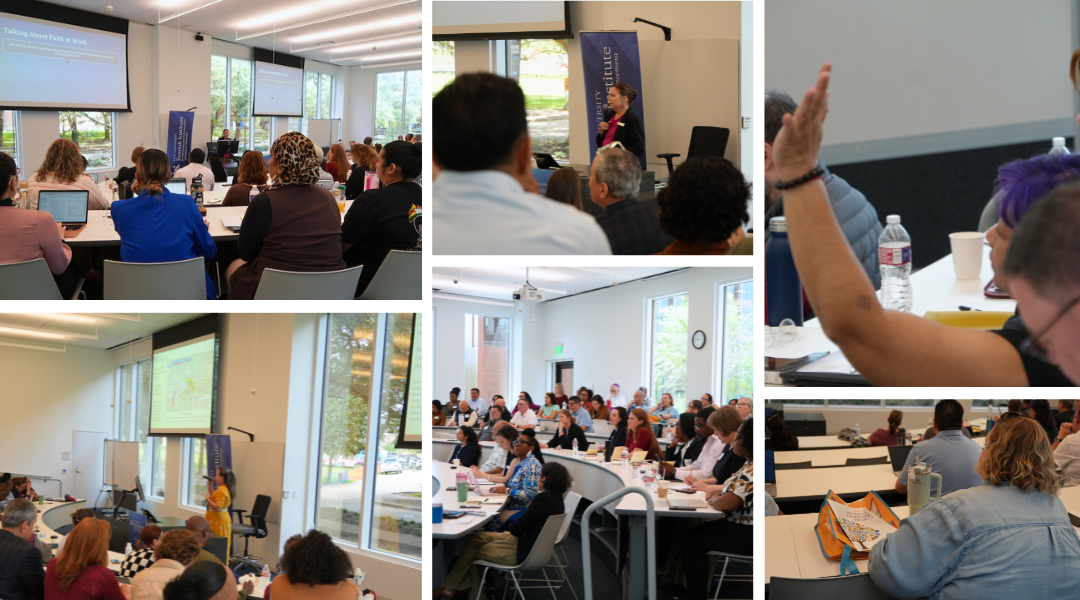
That growing interest was evident at Rice University’s 2026 Religious Literacy Series, hosted by the Boniuk Institute for the Study and Advancement of Religious Tolerance. This year’s program welcomed 82 educators, nonprofit professionals, museum staff and community leaders from across the Houston area. When Elaine Howard Ecklund became director of the Boniuk Institute four years ago, attendance at the annual series was modest — in the 10-15 range.
Through lectures, discussions and interactive teaching modules, participants explored the beliefs, symbols and cultural contexts of major world religions while discussing how those insights can be applied in classrooms, workplaces and communities.
“In general, religious literacy is a term that has gained traction in recent years as people realize that it is a kind of civic necessity to live in a pluralistic society,” Ecklund said. “We encounter people of different faiths in workplaces, schools and communities, and religious literacy helps us understand and be respectful of this pluralism. At its very best, it opens a path for further exploration, learning and empathy.”
The audience reflected that mission. Participants included educators from school districts across Houston and its suburbs alongside representatives from the Museum of Fine Arts, Houston, the Rothko Chapel, the Institute for Spirituality and Health at the Texas Medical Center, nonprofit organizations and several departments across Rice.
“The attendance numbers and incredible array of people who came reinforce what we’ve seen in our research,” Ecklund said. “It shows that Houstonians care about maintaining the pluralistic fabric of our society and are invested in the work that needs to be done to maintain and further it.”
Selecting this year’s theme, Global Religion and Symbolism, was intentional, said Aishwarya Lakshmi, an associate director at the Boniuk Institute and lead of the series.
“We live in an image-driven culture, and globally, religious symbols are sometimes the lightning rods around which conflicts coalesce,” Lakshmi said. “It is important to understand the symbols within their contexts and how they get used, so we can play our part as informed rather than reactionary citizens in the various communities we participate in, whether real or virtual.”
Throughout the day, participants explored Hinduism, Buddhism, Christianity, Islam, Judaism, African Indigenous religions, faith in the workplace and the intersection of religion, immigration and civic life.
“The focus on religious symbolism allowed us to draw out the timelessness of the symbols within each religious tradition and also their dynamic and shifting nature in lived life,” Lakshmi said. “I also see the growth in participation as a sign of a desire for harmony and a willingness to do the work that is needed to achieve it.”
One session explored how Buddhist symbols communicate values that extend well beyond a single faith tradition.
“Symbols are not just pictures,” said Anne Klein, professor of religion at Rice. “They are living expressions of crucial human qualities such as wisdom and kindness.”
Klein said Buddhist symbols offer a language for expressing values that resonate across cultures and beliefs.
“They are a language expressing qualities appreciated by religious and nonreligious alike,” Klein said. “In terms of actual values and behavior, there is tremendous commonality among religious traditions. Religious literacy helps us understand these, helps us appreciate each other.”
Klein said the series gives participants the opportunity to gather ideas they can share in their own classrooms and communities.
“I hope they find something they can bring to their students that will inspire a life of creative, positive participation in their own traditions and values, whether they see themselves as religious or not,” Klein said. “Even those of us who don’t consider ourselves religious are profoundly shaped by the religious traditions around us.”
For Ecklund, the Religious Literacy Series reflects Rice’s commitment to serving the broader Houston community.
“Events like these show that Rice is committed to the city in creating sustainable futures from a healthy civic perspective,” Ecklund said. “The educators and community leaders who participate go on to touch many more lives, and the impact of the work we do continues to widen.”
The Boniuk Institute hosts the Religious Literacy Series annually, bringing together scholars, educators and community leaders to explore topics that help participants better understand religion’s role in public life. The Boniuk Institute grants continuing education credits to teachers and certificates of completion to professionals at conclusion.