
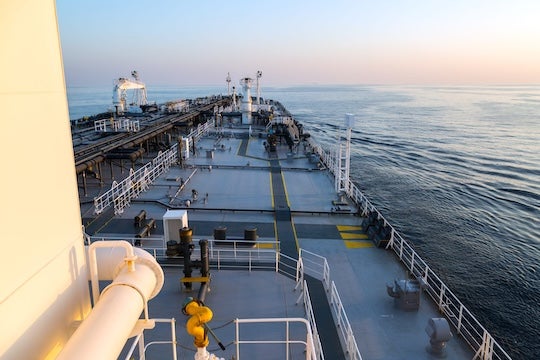
Energy security has become central to how global leaders are weighing policy responses and considering the risks of further escalation regarding the conflict surrounding the Strait of Hormuz, according to the experts on the latest episode of “Baker Briefing,” the foreign and domestic policy podcast from Rice University’s Baker Institute for Public Policy.
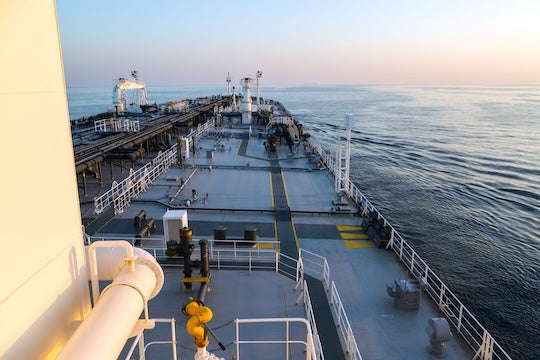
The conversation made clear that sharp price volatility, regional dislocations and short-term spikes in crude are being driven less by market “mispricing” and more by real, physical supply constraints.
“I’ve heard many times statements to the effect of ‘markets are mispricing risk,’” said Kenneth Medlock, senior director of the Baker Institute’s Center for Energy Studies. “I just have to tell you, that’s nonsense. What markets are actually doing is internalizing physical detail about supply and demand in real time, literally every second of every day.
“So when you see what’s actually happening in the market with regard to spot price, particularly in the crude oil market and increasingly in the natural gas market, you’re talking about one of the most fungible globally liquid commodities on the planet. The amount of information that is constantly being fed to traders is unparalleled. So make no mistake, what you see in the current market environment is about market clearing. It is about where a certain number of barrels that are available actually can be consumed and at what price that clears.”
Beyond oil, the episode underscores the far-reaching consequences of disruption across interconnected supply chains, including liquefied natural gas, fertilizers and industrial inputs like helium, revealing the depth of global dependence on Persian Gulf transit routes. Although markets are adjusting in real time, prolonged instability could trigger inflationary pressures, supply shortages in vulnerable regions and intensified competition for energy resources.
Strategically, the conversation emphasizes a critical paradox: Even as military strikes degrade aspects of Iran’s conventional capabilities, its ability to threaten maritime transit and influence global markets remains intact. This creates a scenario in which Iran may emerge with enhanced leverage, particularly if it can sustain disruptions at relatively low cost. Policymakers therefore face a complex trade-off between continued escalation and an imperfect diplomatic resolution, with energy security, economic stability and geopolitical risk tightly intertwined.
Overall, the episode frames the conflict not just as a regional crisis but as a systemic shock to global energy and trade networks — one that could accelerate long-term shifts toward supply diversification, infrastructure investment and strategic “de-risking” across energy markets.
Listen to the entire episode here, and find more episodes of Baker Briefing here.