
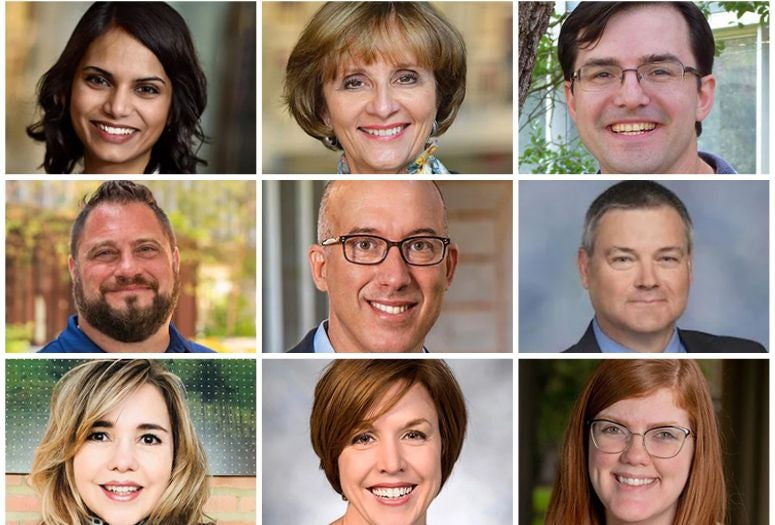
Nine Rice University faculty members received the 2026 George R. Brown Award for Superior Teaching, which honors Rice’s top instructors based on votes from alumni who graduated within the past two, three and five years.
Rice News asked the recipients to share one moment in the classroom they will never forget and why. These are their responses.
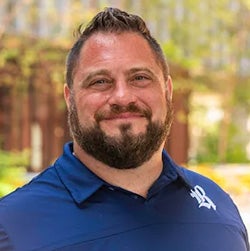
James DeNicco, director of principles of economics program and associate teaching professor of economics
The moment that sticks out the most was actually from my first class. Coming to Rice, I was a bit nervous. I knew I would be teaching high-caliber students. I had some of those very human moments of self-doubt about whether I would fit in at an elite university. I had only been teaching a couple of years, so I was just starting to find myself in the classroom. I have always leaned into my energy and enthusiasm to keep my students engaged. My natural inclination was to double down on that and just go for it.
While singing little snippets in the classroom is a regular occurrence these days, as painful as that must be to my students’ ears, I had not yet let my guard down enough at that point for those sorts of shenanigans. I embedded a song in my slides at the point where I introduce macroeconomics. I explained to them how I fell in love with economics while taking an economic development class, which showed me the real human side of the field. I told them learning economics helps us understand how to help lift people up, raise their standards of living and create an environment where they have the resources to thrive. I clicked on the slide and “Heal the World” by Michael Jackson started playing. I sang along, and they looked at me like I was a little crazy, but by the time the chorus came, they had let their guard down, joined in and were singing enthusiastically along with me. I knew I was in the right place.
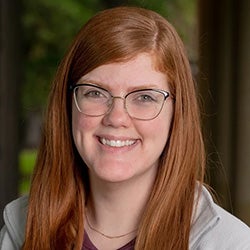
Kasey Leigh Yearty, assistant teaching professor of chemistry
The moment I will never forget is sitting across the desk from one of the most extraordinary students I’ve ever known, sharing some fajitas I’d ordered and trading stories back and forth with her and my colleagues. She had recently received some of the toughest news a person can hear, and I am forever grateful for the opportunity to see her smile, laugh and talk about her love of chemistry despite everything she was going through. My colleagues and I miss her very much and think of her often.
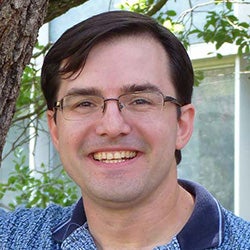
Jamie Catanese, associate teaching professor of biosciences
I will never forget my first day as a college professor. It was over 11 years ago, and I was teaching a lab course. On the first day, I was with my co-instructor as she was going over the syllabus with the students. We were talking about lab safety and how we disinfect bacterial cultures with bleach. One of the students made a comment, to which I replied in agreement, and she said, “Solid!” I was puzzled and made the comment slowly, “But it’s a liquid.” She laughed. It was in that moment that I thought, “What have I gotten myself into?” I am still not fully there in understanding their lingo, but I think the students know my sincerity in getting to know them and helping them learn. Teaching moments are always present, and you never know when one will show up.
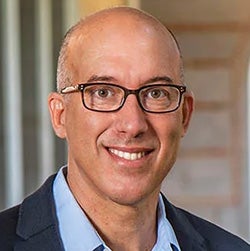
Luis Duno-Gottberg, the Lee Hage Jamail Professor of Latin American Studies
There is this idea that the best teaching is rigidly planned, but sometimes it’s the opposite; the moments that matter most are unscripted. I call them “teaching moments.” They arrive without warning and are harder to navigate than any syllabus.
I want to share two, because their differences reveal a range of possibilities, from radical events to everyday class interactions.
The first happened abroad, years ago. I had built a careful, well-mapped program. Then overnight, a national crisis — the death of the country’s president — shut everything down. Museums, meetings, the whole itinerary … gone. I had a beautiful syllabus [that was rendered] completely useless.
Airports were closed. We couldn’t return to the United States. I joked, “This wasn’t in the lesson plan.” Yet the historical moment became the class, and the streets and our bus became our classroom. We talked, listened and tried to make sense of what was unfolding. Students spoke with locals about fear, history and uncertainty. At one point, someone leaned over and said, “This is the most I’ve ever learned without taking a single note.” It was a teaching moment.
The second happened this semester — less dramatic but equally powerful. During a discussion on natural disasters and epistemological frameworks, a student quietly called out an assumption I had made. I paused, then laughed and instead of moving on, I stayed with it. I admitted my surprise and let the class watch me rethink in real time. The room opened up. Another teaching moment.
Two different settings shared the same truth: Teaching isn’t about perfect delivery. It’s about presence and creativity — noticing when something real is happening and having the courage to follow it.
Students may forget the lecture I spent hours preparing. They won’t forget the moment learning became real.

Sabia Abidi, assistant teaching professor and director of bioengineering undergraduate studies
There are so many! As a junior undergraduate student in the classroom, I remember one of my favorite professors calling on students to derive equations on the board. It was terrifying and empowering. I remember in the beginning of the semester wondering how we could ever learn all the material, and then at the end of the semester, waiting for any opportunity to share our new skills. As an instructor, I am fortunate to have memorable moments every year. I will share an example from a capstone course. What I remember the most are the faces of my seniors during the first day of the capstone when we share information about the experience and the accolades. They have such an ambition to excel; it’s truly infectious. I receive a similar heart-warming feeling at the engineering design showcase every time any of our teams win an award. Their faces and their joy truly drive our desire to help them in any way possible.
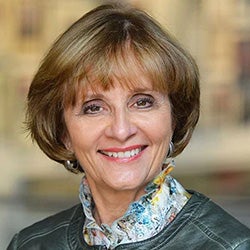
Roberta Anding, lecturer in nutrition and health sciences
I was teaching my nutrition class on Sept. 11. The towers were falling and students came to class. I saw students looking for help, wisdom and answers. I told them to go and call their family and friends. It was at that moment I realized Rice is more than an educational institution. It is a family. We leaned on each other for the rest of that semester and beyond. Rice is truly a community based in integrity and care. The bond between faculty and students makes Rice an amazing place to be.
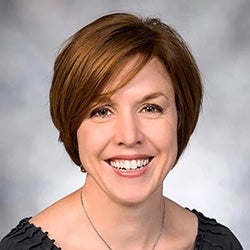
Marcia O’Malley, the Thomas Michael Panos Family Professor in Mechanical Engineering
One of the courses I teach is a hands-on, project-based course in the design of mechatronic systems. The first project that students undertake is the design of a DC motor from scratch. I give them only the enamel wire and some magnets. In the span of about two weeks, they must design, build and demonstrate their motors. Each time I teach the course, I am energized by the excitement that students feel when they see theory put to practice and the satisfaction on their faces as they see their creations spin.

Fabiola López-Durán, associate professor of art history and associate director for the Center for Latin American and Latinx Studies
It is difficult to pick just one unforgettable moment in the classroom, as my teaching has never been confined to a traditional classroom. It has unfolded in places as varied as a community garden in Aubervilliers-Saint Denis — the poorest neighborhood in Paris, a museum in New York, an art school in Havana, a plantation in Brazoria County, a collector’s home in São Paulo and even aboard a boat along the Houston Ship Channel. Across these and other spaces, I’ve shared countless meaningful moments with Rice students that I will never forget. What I think unites them all is a conviction: Real learning happens through dialogue, through discomfort and through critical thinking.
One evening in Rio de Janeiro, after spending an afternoon discussing art and politics in front of an extraordinary collection of Brazilian modernism in the elegant home of an art collector, I took my students to attend a dance rehearsal and participate in a community celebration in Maré, one of Rio’s largest favelas. There, alongside community leaders, we listened as dancers shared their struggles and aspirations. We felt our privilege sharply, but we also felt their talent, richness and resilience. Discomfort gave way to vulnerability, then tears and finally joy. We didn’t just listen and observe; we engaged, reflected on the world around us and left convinced that there is no true learning without action.

Philip Kortum, professor of psychology
My most memorable day of teaching was my first day at Rice. I was returning to academia after spending well over a decade in industry, and I was more than a little nervous about getting back into the classroom, especially given Rice’s reputation as an excellent teaching school. Once I started teaching that morning, the students were so genuinely curious and excited to be there that all my trepidation faded into the background and made me realize that I was at exactly the right place.