
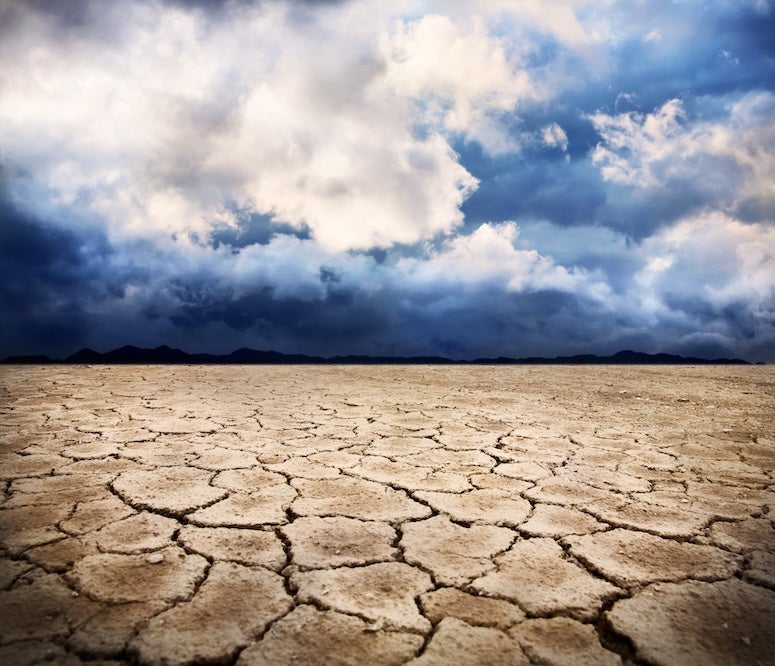
In much of Asia, the effects of climate change are felt through the increase of extreme weather events, especially water-related ones. Droughts are becoming more common in mainland Southeast Asia, while periods with unusually large amounts of rainfall are increasing in Central Asia. Rice University’s Na Wang and Sylvia Dee were interested in understanding if these two extremes were related to one another, despite being geographically distant. The researchers’ findings were recently published in Nature Geoscience.

“Understanding patterns in these climate extremes can help affected communities build climate resiliency and prepare for water-related disasters,” said Dee, an associate professor of Earth, environmental and planetary studies and the senior author on this study. “We wanted to know if the increase in both droughts and extreme precipitation were happening independent of one another, or if they were being driven by the same large-scale climate factors.”
To do so, Dee’s team needed to look far back in the region’s climate history — a much longer history than recorded weather data could provide. So they turned to paleoclimate records, sets of data created by natural sources like tree rings, sediments and ice sheets that hold evidence of long-ago weather patterns. For example, the varying width of tree rings can indicate which years in a tree’s life were dryer or wetter. Sediment layers, taken from places like lake beds or salt marshes, can provide another clue. Darker layers indicate wet periods, while lighter ones indicate dry periods. By carefully analyzing and combining different types of records created by nature, scientists can reconstruct weather patterns from thousands or even millions of years ago.

“We used paleoclimate records gathered together for the region to reconstruct historic moisture patterns in mainland Southeast and Central Asia going back thousands of years,” said Wang, a Rice alumna and the first author on this paper. “Then we used climate model simulations to look at the mechanisms driving simultaneous precipitation and drought extremes, investigating potential physical pathways that could be linking them.”
The models showed that concurrent drought and extreme precipitation had been occurring in mainland Southeast Asia and Central Asia for the last two thousand years. This meant, Wang explained, that even though drought and extreme precipitation were diametrically opposed events, they were linked to one another by large-scale climate patterns.
The team then compared the current drought and high precipitation periods to the historical record. While the periods of drought and high precipitations have always been a regular feature of weather in the region, the researchers found that the frequency of these events had recently, and significantly, increased.
“If we look at the recent drought record in mainland Southeast Asia, what stands out is not only that these are among the most extreme droughts of the past millennium, but also that droughts are occurring much more frequently,” Wang said. “We also now know that this high drought frequency is linked to increased periods of precipitation in Central Asia. Model projections suggest that under future warming scenarios, the connection between hydroclimate extremes in these two regions will not only persist but the frequency of short-term extreme events is also expected to increase.”
Extreme hydroclimate events, like droughts or high precipitation periods, often have the greatest impact on their ecosystems and surrounding communities. An increase in frequency of these events, regardless of their severity, can have drastic impacts.
“These results highlight the importance of understanding extreme weather and climate change as an evolving system, rather than focusing on isolated events,” Dee said. “In order to understand, respond to and predict climate change, we have to first understand the climate system’s baseline state using its past as prologue for future risks.”
This work was funded by the U.S. National Science Foundation Paleoclimate Perspectives on Climate Change (2102814 and 102812).