
Imagine a pacemaker that helps a patient’s heart recover after surgery, then safely dissolves into the body when it is no longer needed. Or a tiny sensor that monitors healing tissue for weeks before disappearing, eliminating the need for another procedure to remove it.
These technologies are moving closer to reality, and Rice University mechanical engineer Raudel Avila is helping address a fundamental challenge in their development: How do you design electronics that remain reliable while gradually breaking down?
Avila, an assistant professor of mechanical engineering, studies the mechanics of advanced materials and electronic systems with a particular focus on technologies that can interact with the human body. His work merges the fields of engineering, materials science and medicine, where understanding how materials stretch, bend, respond to forces and degrade over time is essential to developing the next generation of medical devices that disappear when no longer needed.
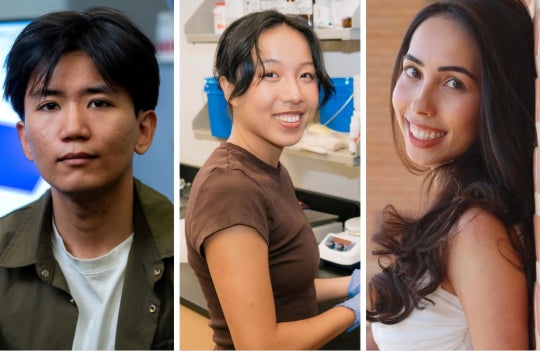
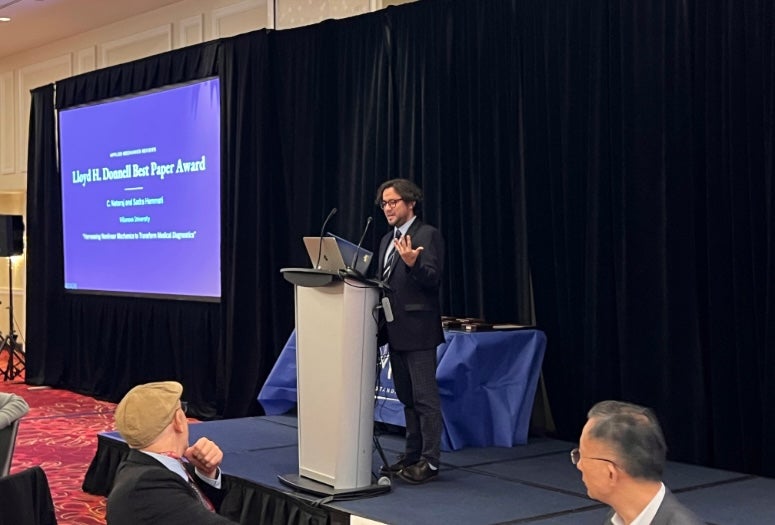
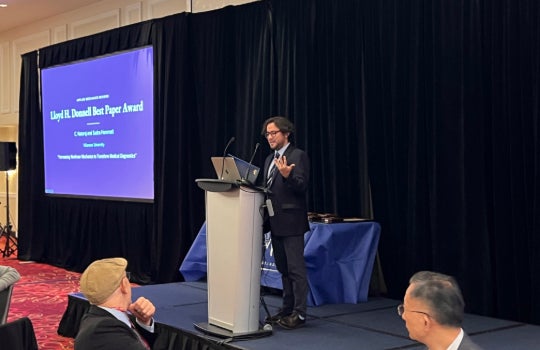
Last year, he collaborated with Rice mechanical engineering students Pei Liu, Chihtong Lee and Nicole Carusetta to author a perspective paper examining the rapidly advancing field of bioresorbable electronics — devices engineered to function for a predetermined period before safely dissolving through natural physical and chemical processes. The paper, published in the Journal of Applied Mechanics, recently earned the 2026 Journal of Applied Mechanics Award from the American Society of Mechanical Engineers, which recognizes outstanding work by early-career researchers.
Unlike conventional electronics designed to last indefinitely, bioresorbable electronics are temporary systems that can be programmed to operate for days, weeks or longer, depending on their intended purpose.
“We’re accustomed to thinking about electronics as things that should last as long as possible,” Avila said. “But in medicine, there are situations where the most useful device is one that performs a specific function and then disappears. The challenge is understanding how to engineer that entire process, from operation that is reliable to degradation that is safe and controlled.”
One of the central challenges is that a dissolving device does not simply become smaller over time. As its materials interact with surrounding fluids and tissues, its mechanical properties change, potentially affecting how well it reacts, maintains contact with tissue or transmits electrical signals. A device designed to monitor a healing heart, for example, must remain flexible enough to accommodate the organ’s continuous movement while maintaining its electrical functionality. At the same time, its components must degrade at carefully controlled rates. Factors such as deformation, temperature, acidity, water exposure and material composition can all influence how quickly that happens.
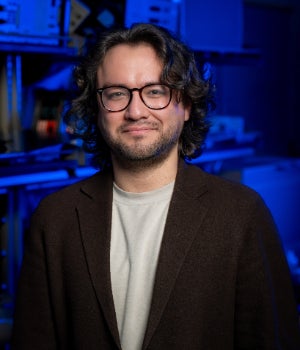
Avila emphasizes the importance of transient mechanics, which is how a material’s mechanical properties evolve throughout its lifetime. Computational modeling is especially important to this effort. By predicting how materials respond to mechanical forces and chemical reactions as they dissolve, engineers could design devices that perform reliably for a prescribed period then track how they gradually lose their structural integrity.
“It’s not enough to know how a device behaves when it’s first implanted,” Avila said. “These implants are rarely stress free. Deformation during implantation and subsequent organ motion introduce stresses that can alter both how the device degrades and the mechanical loads it can withstand as it interacts with the surrounding tissues. These coupled effects are difficult to isolate and quantify experimentally. This is where predictive modeling becomes essential.”
Applications for these types of devices extend beyond things like temporary pacemakers. Bioresorbable electronics are also being explored for nerve stimulation, drug delivery, wound healing, physiological monitoring and other instances where permanent implants may be unnecessary or not ideal. Among the possibilities highlighted in the paper are flexible devices that wrap around nerves, sensors that track changes in tissue and implants that gradually transfer mechanical loads to healing bone. Beyond the human body, bioresorbable electronics are finding applications in sustainable environmental sensing, including precision agriculture, where they can track changes in soil moisture and other soil properties.
Challenges in the field remain, including the need for more sophisticated computational models that can predict how multiple materials degrade together under real-life physiological conditions and experiments that capture how these changes affect device performance during use. Still, Avila says the principles of transient electronics are exciting, not just for the medical field but for broader applications, including more environmentally sustainable technologies.
“We’re rethinking a long-standing assumption in engineering, which is that durability and permanence are always a goal,” Avila said. “The ability to control not only how a material performs but also how that performance evolves over time opens new possibilities for technologies whose lasting legacy lies in the purpose they serve, not their permanence.”