
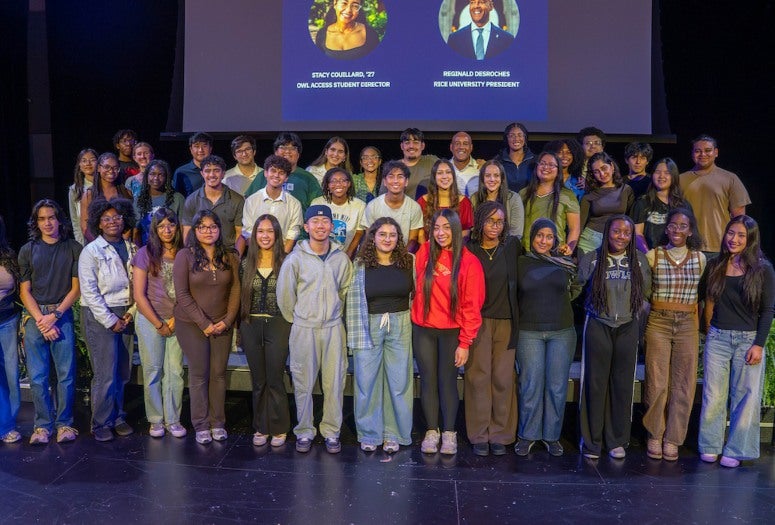
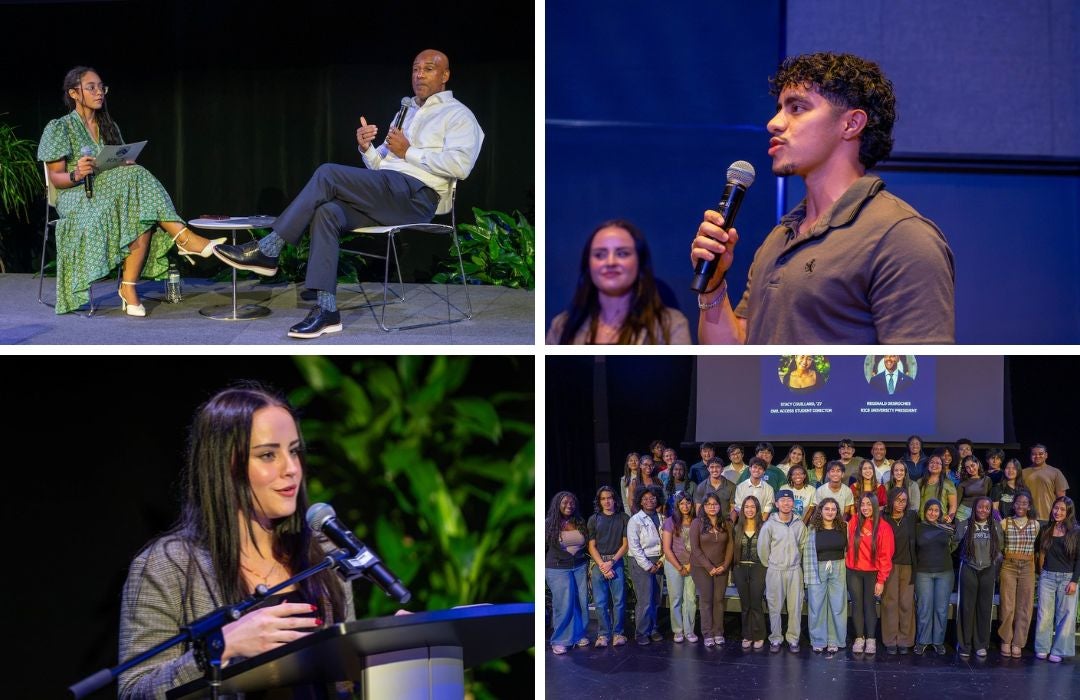
Rice University celebrated First-Generation and Limited-Income (FGLI) Week in November, bringing students, faculty, staff and university leadership together to recognize the experiences, achievements and contributions of FGLI students. The week highlighted Rice’s commitment to creating a campus community where students from all backgrounds feel supported, valued and empowered to succeed.
FGLI Week included plenty of opportunities to get involved including a CareerSpring Lunch and learn, National Quest Day, a first generation industry panel and mixer and a vision board session to embrace the FGLI experience.
A highlight of the week was a fireside chat featuring President Reginald DesRoches, moderated by senior Stacy Couillard, a pupil and Owl Access student director. The conversation explored the challenges and strengths of the FGLI experience, the importance of institutional support and the university’s continued commitment to student success.
DesRoches shared his personal journey as a first-generation student born in Port-au-Prince, Haiti, and raised in Queens, New York. The son of immigrant parents, he reflected on how his family’s sacrifices shaped his educational journey, from attending the University of California, Berkeley, to becoming a leader in higher education. He described arriving at Berkeley without fully understanding the unwritten expectations of college life, including building relationships with faculty, attending office hours, networking and pursuing research opportunities.
A central theme of the discussion was the hidden curriculum: the unwritten expectations, institutional knowledge and social networks that influence students’ college experiences. DesRoches recalled discovering that some students had access to decades of previous exams through established networks, giving them advantages he had not known existed.
He emphasized that universities must make these expectations more visible, particularly for students who do not arrive with established networks or access to institutional knowledge. At Rice, programs such as Owl Access, the Sallyport Fellows Program and the Rice Emerging Scholars Program help students navigate these challenges and build pathways to success.
The conversation also addressed resilience, belonging and overcoming self-doubt. DesRoches reflected on struggling with the academic rigor at Berkeley and questioning whether he belonged in an engineering environment where he saw no faculty members of color. He credited discipline, persistence and his parents’ example for helping him persevere. Sharing his experience of failing a section of his doctoral-qualifying examination before ultimately earning a perfect score on his retake, he encouraged students to view setbacks as opportunities for growth.
“Don’t let a setback or a failure get you down; use it as an opportunity to grow and to get better,” DesRoches said.
Looking toward Rice’s future, DesRoches connected FGLI student success to the university’s Momentous strategic plan. He emphasized that meaningful support extends beyond financial aid and graduation. FGLI students should have access to the full Rice experience, including undergraduate research, study abroad, student organizations, leadership and professional development opportunities. He reminded students that they should never feel that their presence at Rice is an act of charity but rather recognize that they belong and deserve the same opportunities as their peers.
“This is your university,” he said. “Take advantage of all the things.”
During the audience discussion, students raised questions about family expectations, mentorship, self-advocacy and carrying the lessons of the FGLI experience into their professional lives. DesRoches encouraged students to seek opportunities, build relationships with mentors and advocate for themselves, even when doing so feels uncomfortable. He also shared advice from Ruth Simmons, Rice presidential adviser and a President’s Distinguished Fellow: “Be yourself. Be your natural self.”
He encouraged students to embrace their identities rather than feel pressured to change to fit into the Rice community.
DesRoches also expressed his hope that FGLI graduates would maintain their connection to the university and return to mentor and support future generations of students. He highlighted Rice’s culture of care as something students should carry with them beyond graduation and into their communities.
FGLI Week celebrated the strength, resilience and diverse perspectives that FGLI students bring to Rice. The fireside chat reinforced that student success requires more than access to higher education; it requires a community committed to belonging, mentorship, opportunity and continued support.
“I often say the strength of Rice is that we bring people from all different backgrounds and perspectives, and we put them in this incredible residential college system where people can learn from each other,” DesRoches said. “That’s just as powerful as the time that you spend in class. It’s learning from people from very different backgrounds. The FGLI students bring a very different perspective to the university, and it adds to everybody’s experience. I’m very committed to maintaining and finding ways to support the program.”