
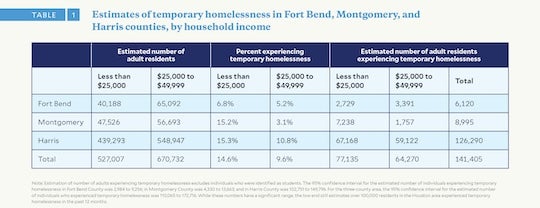
An estimated 141,000 Houston-area residents experienced temporary homelessness in the past year, according to a new survey by Rice University’s Kinder Institute for Urban Research.
The study finds about 1 in 20 residents temporarily needed to live somewhere such as in a hotel/motel or Airbnb, someone else’s home, outside, in a car or tent or in an overnight shelter. The number is more than double for residents making less than $50,000.
Federal guidelines traditionally measure homelessness as people living on the streets or shelters. However, there are many more forms, such as doubling-up, couch surfing or living in long-stay hotels or motels. New research from the Kinder Institute’s Houston Population Research Center provides a first-of-its kind count of these other types of homelessness in the Houston region.
“We see homelessness when it’s on our streets, under our highways and in our shelters,” said Dan Potter, director of the Houston Population Research Center and lead researcher on this survey. “Temporary homelessness, on the other hand, is invisible. However, housing instability, whether we see it or not, matters for people’s health, for children’s education and for economic mobility. Now we have an idea of the size of the problem facing our region.”
In the past 12 months, it is estimated that a total of 141,000 people experienced temporary homelessness in Fort Bend, Harris and Montgomery counties.
“These findings remind us that homelessness rarely begins on someone’s first night in a shelter or on the street. It often starts much earlier, with a housing crisis that families are doing everything they can to overcome,” said Kelly Young, president and CEO of the Coalition for the Homeless of Houston/Harris County. “Across our region, partners like United Way, community organizations and public systems are working every day to help people remain stably housed through prevention and housing stability efforts. Together, those investments create an essential safety net. When a household’s needs extend beyond what prevention programs can address, The Way Home, Houston’s homeless response system, provides the next layer of support to help people regain stability quickly. That’s why Houston needs sustained, flexible local investments that strengthen the entire housing stability continuum, from prevention and diversion to housing and recovery, so fewer people fall through the cracks, and everyone can access the right support at the right time before a temporary crisis becomes long-term homelessness.”
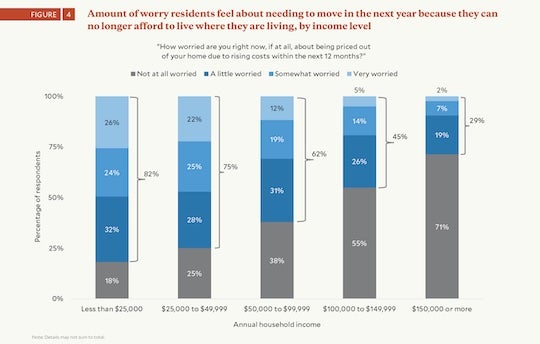
The study also examined the broader challenge of housing affordability in the Houston region. Survey respondents reported that rising home prices, rent and expenses like groceries, higher utility bills and child care are making it more difficult for them to afford their housing. More than half worried they would have to move within the year because of affordability issues. For those making less than $50,000, more than 75% were concerned that housing costs would force them to move.
In early 2026, researchers surveyed about 8,800 adults in English and Spanish who live in Fort Bend, Harris and Montgomery counties — a region comprising 1 in 5 Texans. Respondents were part of the Greater Houston Community Panel, which provides timely survey insights into the experiences of Houston area residents.
To read the full study click here.