

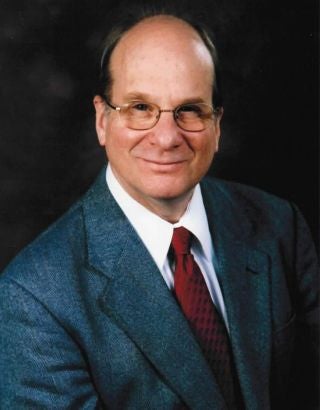
Rice University is mourning the loss of Louis Brus ’65, a visionary alumnus and Nobel Prize laureate who passed away peacefully Jan. 11. Brus, who studied chemistry, physics and math during his undergraduate years at Rice, received the 2023 Nobel Prize in chemistry for the discovery and development of quantum dots, nanosized particles with unique properties used in everything from televisions to LED bulbs.
“Louis Brus’ research seamlessly blended chemistry and physics to pioneer new realms of discovery, exemplifying the curiosity and research excellence that is the best of Rice. He will be deeply missed by all who knew him, while his scientific contributions will continue to shape new paths to discovery for years to come,” Rice President Reginald DesRoches said.
Following his undergraduate studies, Brus earned a doctorate in chemical physics in 1969 from Columbia University, served as a scientific staff officer at the U.S. Naval Research Laboratory and joined AT&T Bell Labs. In 1996, Brus joined the faculty at Columbia, where he ended his career as the Samuel Latham Mitchill Professor Emeritus and Special Research Scientist.
“Louis Brus was an exceptional scientist, a remarkable colleague and a cherished friend to the Rice chemistry community,” said Angel Martí, professor and chair of chemistry who was a close friend of Brus. “Both Rice University and the global scientific community deeply mourn his passing. Today, we honor his enduring legacy, one that lives on through his groundbreaking research, his profound impact on generations of mentees and his contributions to the field.”
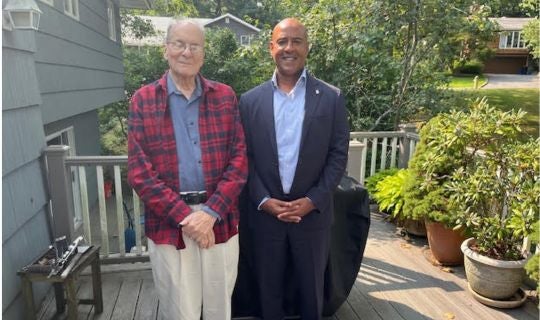
Throughout his career, Brus spoke fondly of his time at Rice, crediting his alma mater for both his lifelong love of history and a rigorous yet broad education. He is remembered fondly by friends in the chemistry department with whom he kept close ties throughout his life.
“Louis was a remarkable man as much as he was a remarkable scientist,” said Peter Rossky, the Harry C. and Olga K. Wiess Chair in Natural Sciences Emeritus and another close friend of Brus. “He was a kind and humble human being who worked on understanding chemical systems solely to learn about the fundamentals of nature, not because he sought accolades for his brilliance. Several years ago, I asked him to serve as an external evaluator on a panel reviewing our chemistry department. In his affirmative answer, he wrote, ‘Anything for Rice.’”