
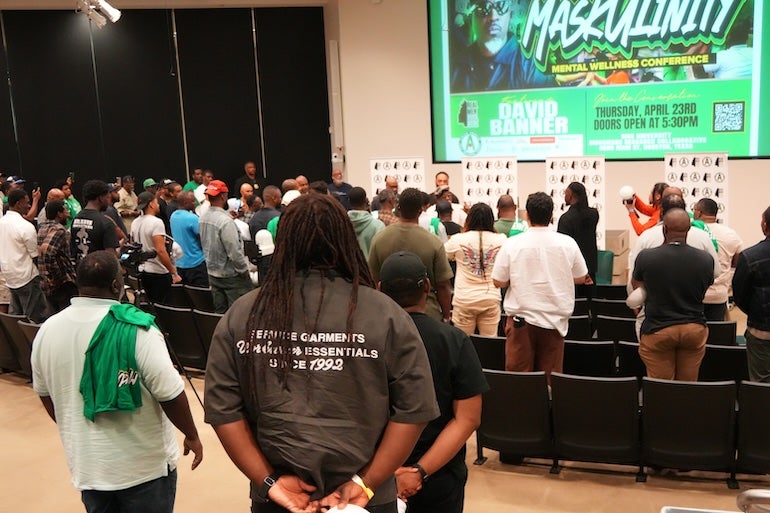
Hundreds of Black men filled the BioScience Research Collaborative April 23, gathering for something that does not happen often enough: an open conversation about mental health.
They came to talk. To listen. And for many, to be heard.
“We’re expecting about 375 Black men from Houston to come through,” said Tony Brown, distinguished professor of sociology at Rice University. “We’re going to talk about ways to protect yourself, ways to be vulnerable and ways to support each other.”
The event, “Real Men Real Talk,” was part of a two-day partnership between Rice’s Institute of Health Resilience and Innovation and the African American Male Wellness Agency, a national organization focused on improving health outcomes for Black men and their families.
The timing is significant.
“We’re in a mental health crisis nationally,” said Christopher Fagundes, professor of psychological sciences and director of the Institute of Health Resilience and Innovation. “And for many people, especially Black men, those conversations are still harder to have.”
At Rice, the goal was not just to start the conversation. It was to create a pathway to care.
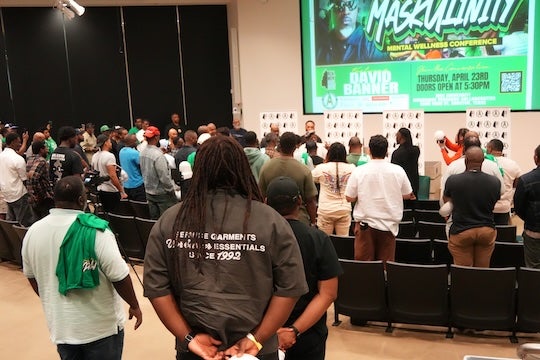
Throughout the conference, participants took part in guided discussions and activities designed to lower the barrier to speaking openly. One exercise centered on a simple but powerful idea: the mask. On the outside, participants wrote how others see them. On the inside, they wrote what people do not see.
The exercise encouraged reflection, but more importantly, it created connection.
“We want men to feel comfortable enough to take off the mask and speak out loud about what’s behind it,” said Donnell Cooper, executive director of the African American Male Wellness Agency, Houston.
The organization operates in more than 20 cities across the country, bringing community-based health programming directly to the people it serves. Houston is one of its major markets, and this year marked its first partnership with Rice.
“This is the start of many opportunities to come,” Cooper said.
The conference also created opportunities for students to engage directly in the work.
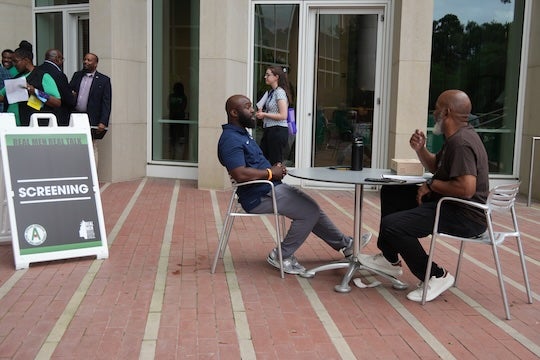
Shenay Franklin, a Rice senior studying psychology and sociology, volunteered at the event, helping guide participants and supporting mental health screenings.
“Mental health is something that’s not talked about,” Franklin said. “Being in an environment like this and being around people who may be going through similar experiences creates a sense of solidarity.”
For Franklin, the experience aligns with her future goals in clinical psychology.
“Any exposure to this kind of environment is important,” she said. “It’s a step in the right direction.”
That step includes access to care.
On-site screenings gave participants the opportunity to assess their mental health using standard measures. For those who needed additional support, counselors were available to provide immediate guidance and referrals.
“The idea is to help people assess their mental health in a comfortable but objective way and connect them with the resources they need,” Fagundes said.
The effort continued beyond campus.
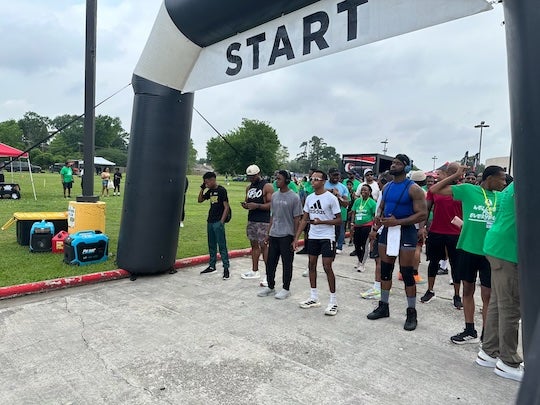
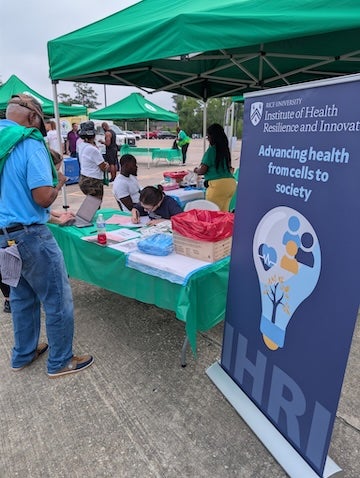
Two days later, the focus shifted to a conversation about physical health during Black Men’s Wellness Day, held at a community site in Houston. The event featured free health screenings, a 5K walk and run and family-friendly activities designed to make care more accessible.
“If you could think about any screening you would get at an annual doctor’s visit, we bring those services into the community for free,” Cooper said.
The approach is intentional.
By combining mental health conversations with physical health screenings, organizers aim to meet people where they are and build trust in familiar, community-centered environments.
For Brown, the partnership reflects a broader mission at Rice.
"We do research here, but we’re also trying to do good in the world,” he said. “I want people to come to Rice and see that there’s a lot going on here that’s important.”
That includes addressing challenges that extend far beyond a single event.
“Health, mental health and social experiences are all connected,” Fagundes said. “If we can intervene early and connect people with resources, the better we’ll all be.”
For many in the room, the impact was immediate.
The conversations were honest. The stories were shared. And for a few hours, something shifted.
“It’s a burden when we’re alone,” Brown said. “But it’s a blessing when we’re together.”