
For more than five decades, Patricia Reiff has explored the forces that shape Earth’s place in space. But when the Rice University professor of physics and astronomy took the stage Jan. 15 for Friends of Fondren Library’s Books That Shaped My World series, her focus shifted from spacecraft and data to the books and people that have influenced how she thinks, teaches and lives.
“I couldn’t think of a single book,” Reiff told the audience gathered at the Farnsworth Pavilion in the Rice Memorial Center. “So I tried to make a selection through my life of different folks and how they influenced me and what I learned from them, because that’s why we’re here.”
Reiff traced her lifelong curiosity to her parents, both physicians, who modeled observation, empathy and intellectual rigor. From her father, she learned decisive problem-solving. “Test only confirms what you thought you knew already,” she recalled. From her mother came a love of reading and nature. “She taught me to observe nature, to understand better, to invest time in other people and to demand excellence,” Reiff said. “She read, and that’s why we’re here — to talk about what books we are reading.”
Libraries became early gateways to discovery, she said.
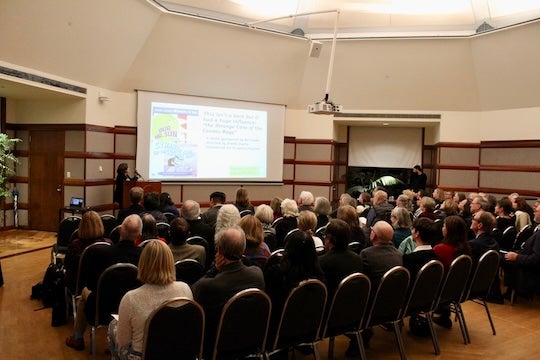
“Being involved in libraries and really understanding what’s there was something I learned from an early age,” she said. “Getting information when you want it is really good for continuing to spark curiosity.”
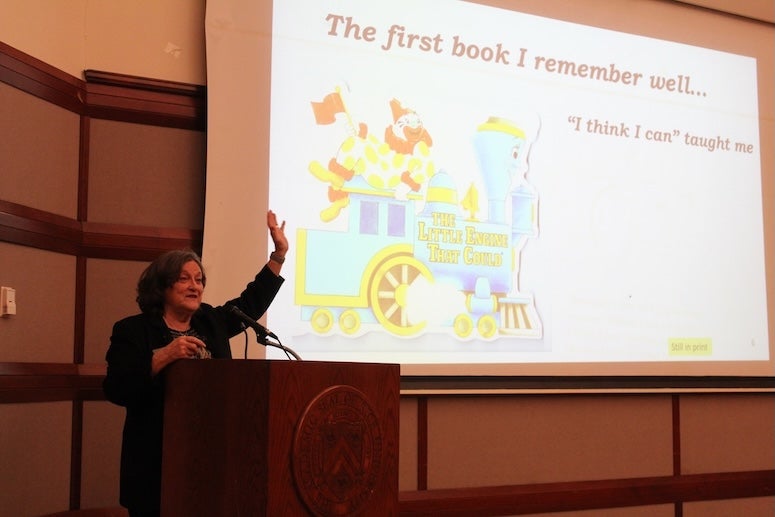
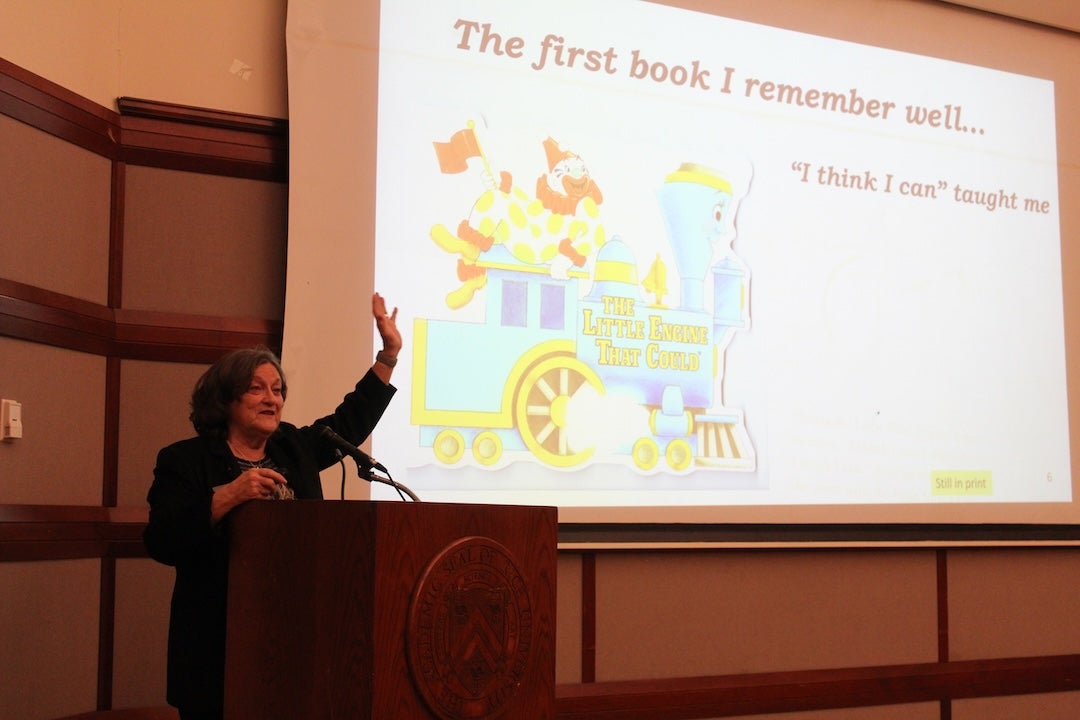
Children’s books also left a lasting imprint. “The Little Engine That Could” taught persistence and optimism — lessons that carried her through graduate school and beyond.
“He saw people who needed help. He helped others. He problem-solved,” Reiff said. “And especially in graduate school, persistence is everything.”
Reiff said science fiction expanded her imagination while reinforcing scientific thinking. She reflected on how books bridge science and faith.
“If the sun is a created object, then you can study it and understand it,” she said. “It gave us the opportunity to understand the heavens because they were no longer our gods. They were just part of our world.”
Ultimately, Reiff said, books endure in ways few other things do. “We write papers — they’re going to be gone,” she said. “But books stay around.”