
The Johnson Owl Deck, sitting on the edge of Harris Gully, is a shaded pavilion with partial walls set at odd angles, designed to accommodate birders watching the nearby trees and thickets near the southern edge of Rice University’s campus. Last Wednesday, more than 100 people visited the pavilion over a 24-hour period, including Judy and Michael Johnson, whose donation made the Owl Deck possible.
“This [Harris Gully] is a mecca for birds,” said Jesi Malowitz, a development manager for the Houston Audubon, whose favorite bird is the black vulture. “If you build it, they will come.”
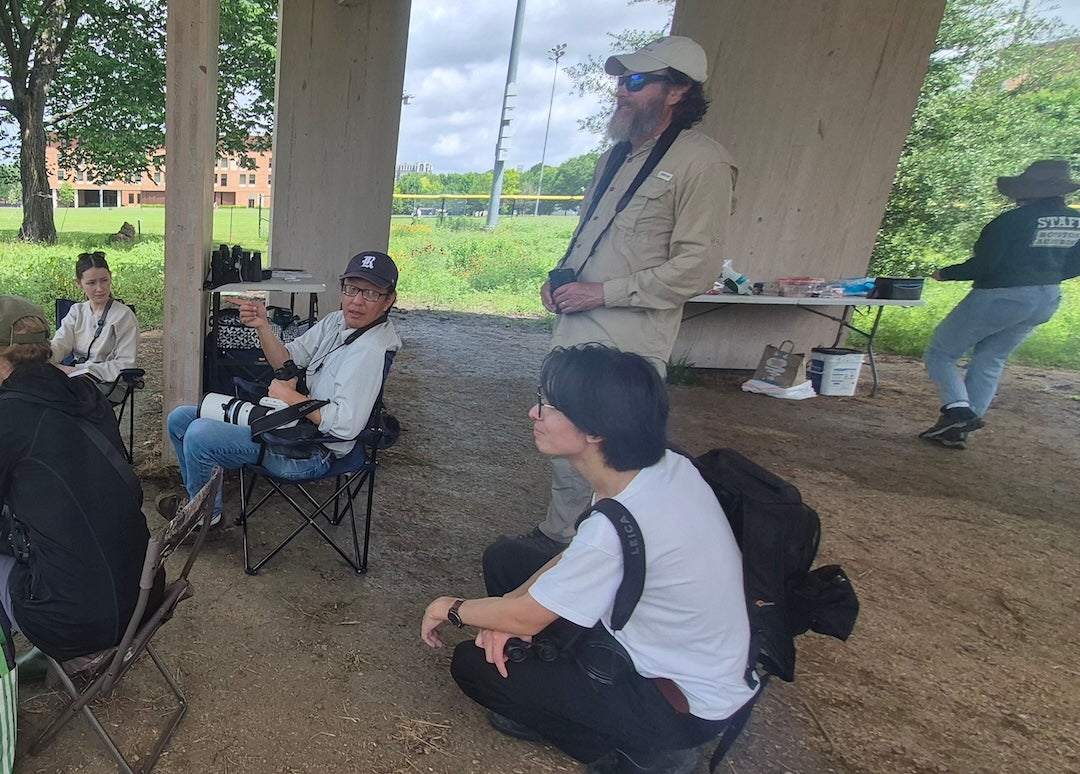
Every spring, Houston Audubon volunteers organize “bird-ins” in which volunteers observe and count birds over a 24-hour period to raise money for the Audubon. This Earth Day marked the first year a bird-in has been hosted at the Owl Deck, raising over $3,000, and it’s hard to imagine a more welcoming location.
“There’s something healing and beautiful about bird watching,” Linda, a community member and big warbler fan, said while sitting peacefully in her camp chair. “Even a little patch [of nature] makes a big difference.”
Cin-Ty Lee, the Harry Carothers Wiess Professor of Geology who claims a fondness for dull brown birds, organized the bird-in. He is the driving force behind, and the central organizer of, Rice’s birding community, leading weekly birding sessions and serving as the faculty adviser for the student birding club.
Rajdeep Dasgupta
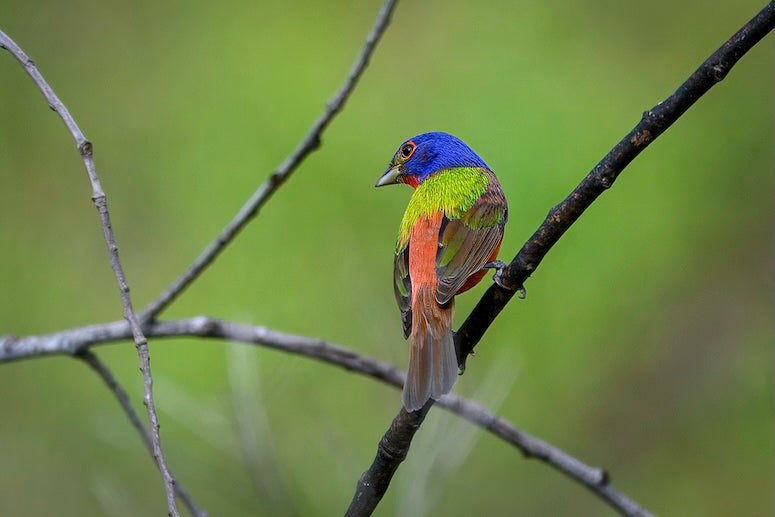
“We are one of the top three birdiest universities in the country,” said Lee, whose advocacy led the transformation of the Harris Gully area into a birding mecca. “Today, we saw 58 species of birds, including 27 indigo buntings that came up from Central America.”
For those wanting a closer look at the birds, a local optics company — Land Sea & Sky — provided binoculars, set out neatly on a table. The company often brings a selection of binoculars to loan out during Lee’s Tuesday morning walks.
“Sometimes, that interest or spark can be ignited if you’re able to see a little bit farther,” said Destinea Cato, a Land Sea & Sky representative whose favorite bird is the rock pigeon, a bird you’re not likely to see at Rice.
“There’s an agreement between the squirrels and the pigeons,” alumna Tanya Pawawongsak ’25, a fellow pigeon fan, jokingly explained. “Rice is for the squirrels, and Hermann Park is for the pigeons.”
Though the pigeons may eschew it, the small patch of land at Harris Gully supports a big community. Pawawongsak, like many bird-in attendees, said the gully is critical for supporting the health of both the 280 species of birds observed at Rice, many of which stop here to rest during a long migration from Central America to Canada or Alaska, and the people, like the student birders who joined the bird-in during the long migration from their first final exam to their last.
In fact, a flourishing student birding club has drastically shifted the average age of the Rice birding population. The students often prefer a Friday evening bird walk to the early morning Tuesday one, but they keep in touch with other birders via group chats.
Freshman Shanti Majumder said he joined the bird-in to meet members of that online community. He had become interested in birding after seeing the Rice student bird club’s booth at the club fair, an interest that had blossomed while he was recovering from a mild concussion over the winter.
“Birding is a very social activity,” said Majumder, whose favorite bird is the black-crowned night heron.
In contrast, junior Anastasia Loiko has been birding since high school. She said she joined the bird-in in hopes of seeing the indigo bunting.
“And I did!” said Loiko, who, after coming to Rice, abandoned the owl as her favorite bird in favor of the Carolina Wren and Japanese Snow Fairy. “I saw so many little birds and love all of them.”